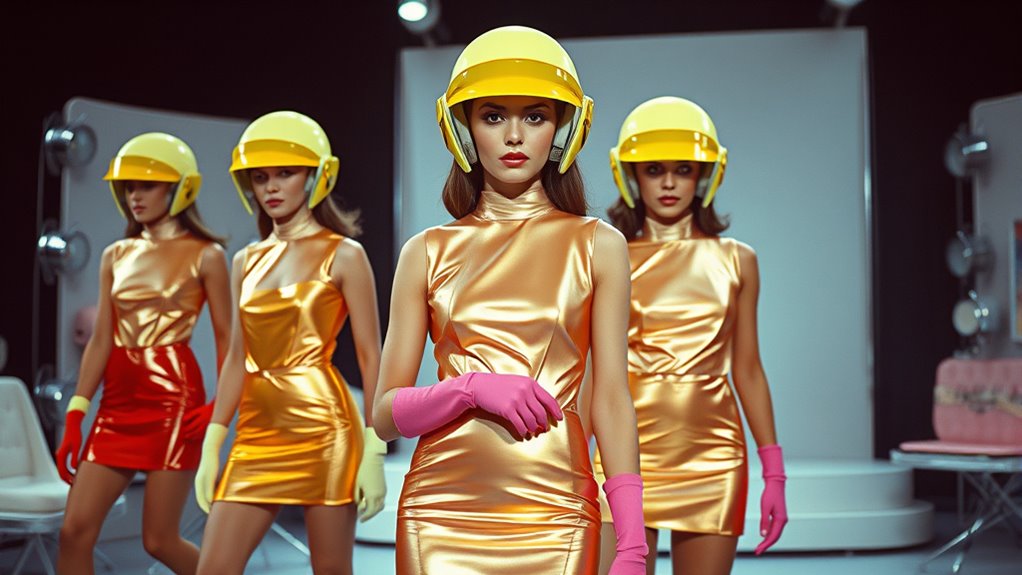

In the 1960s, space age fashion turned heads with innovative plastics, metallic fabrics, and bold geometric shapes inspired by space exploration and science fiction. You’ll see sleek jump suits, mini dresses, and accessories that look more like spacecraft than traditional clothing. The style emphasizes sharp angles, clean lines, and futuristic textures, symbolizing progress and technological optimism. To discover how these futuristic designs shaped fashion trends, explore how innovation and imagination collided in this exciting era.
Key Takeaways
- The 1960s space age fashion incorporated innovative materials like plastics, metallic fabrics, and vinyls to symbolize technological progress.
- Garments often featured bold geometric shapes, sharp angles, and minimalist designs inspired by spacecraft and modern architecture.
- Futuristic silhouettes included jumpsuits and mini dresses resembling spacecraft rather than traditional clothing.
- Fashion emphasized sleek, shiny surfaces and unconventional textures to reflect a forward-thinking, exploratory ethos.
- The style conveyed optimism and curiosity, merging science fiction influences with advancements in manufacturing and materials.
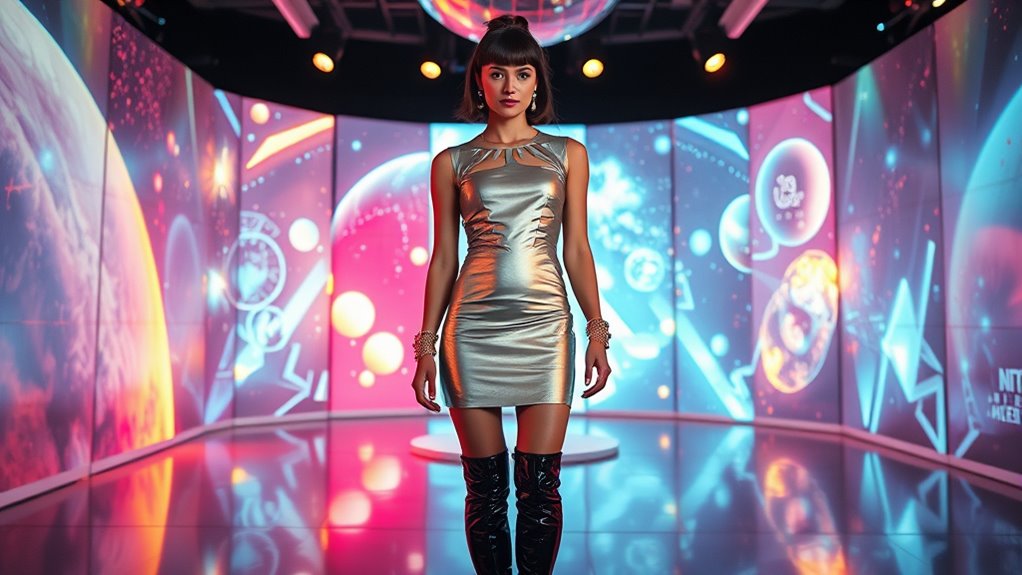
The 1960s marked a revolutionary era in fashion, driven by the excitement and optimism of the space race. During this time, designers embraced a futuristic outlook, experimenting with materials and shapes that reflected humanity’s fascination with the cosmos. You’d notice that space age fashion was characterized by innovative materials like plastics, which transformed how clothing looked and felt. These materials weren’t just functional; they symbolized progress and the future. They allowed for sleek, shiny surfaces and unconventional textures that seemed straight out of science fiction. Think of shiny metallic fabrics, transparent plastics, and vinyls that shimmered under lights—these became hallmarks of the era’s style.
1960s space age fashion featured innovative plastics, metallic fabrics, and sleek designs inspired by the cosmos and science fiction.
Futuristic materials empowered designers to push boundaries, creating garments that looked more like spacecraft than traditional clothing. You might have seen jump suits, mini dresses, and accessories made from these plastics, giving wearers a sense of stepping into the future. The use of these materials also led to bold geometric designs that further amplified the space-age aesthetic. Sharp angles, clean lines, and abstract shapes became commonplace, emphasizing a sense of modernity and innovation. You’d notice how fashion moved away from the ornate and elaborate to embrace minimalism with a high-tech twist. This aesthetic was about transforming everyday wear into statements of progress, combining function with form. Additionally, the development of advanced manufacturing techniques facilitated the creation of complex shapes and innovative textures in fashion. These techniques enabled designers to craft innovative textures that enhanced the futuristic look and feel of garments.
The bold geometric designs were not just decorative—they were a visual language that conveyed the optimism and curiosity of the era. Patterns of triangles, circles, and zigzags appeared on everything from dresses to accessories, often in contrasting colors like metallic silver, white, and black. These shapes echoed the design principles seen in spacecraft and modern architecture, making fashion feel aligned with the technological advancements of the time. As you looked at the clothing, it was clear that the space age influenced every aspect of style, from the way fabrics reflected light to the angular silhouettes that challenged traditional notions of femininity and masculinity. Additionally, the use of futuristic materials was pivotal in creating a sense of innovation and forward-thinking that defined the era’s fashion. The combination of these elements created a distinctive look that still captures imaginations today.
In essence, 1960s space age fashion was about more than just clothing; it was a movement that captured the spirit of exploration and the limitless possibilities of the future. You’d find that the combination of futuristic materials and bold geometric designs created a visual language that still influences fashion today. It was a time when imagination and innovation collided, shaping a style that celebrated progress and the thrill of discovery. This era proved that fashion could be a reflection of technological progress, inspiring new ways to look at what clothing could become.

WINDARS School Backpack for Teen Girls, Cute College Backpacks for Women Students Aesthetic Bookbag Large 15.6 Inch Laptop Bag Middle School Travel Back Pack (Khaki Beige)
- Large Capacity with Multiple Pockets: 20 organized compartments for all essentials
- Spacious and Trendy Design: 12.6x8.4x17.7 inches, 25L capacity
- Fits 13.3 to 16.1 Inch Laptops: Dedicated padded laptop and tablet compartments
As an affiliate, we earn on qualifying purchases.
Frequently Asked Questions
How Did Space Exploration Influence Fashion Industry Trends?
You can see how space exploration influenced fashion trends by embracing space race aesthetics and astronaut-inspired fashion. You might notice metallic fabrics, sleek designs, and bold, futuristic styles that mimic astronauts’ suits. This trend pushed you to try innovative materials like plastics and reflective surfaces, making your wardrobe feel modern and forward-thinking. Space exploration’s excitement and technological advances inspired your style, giving you a glimpse of the future in everyday fashion.
What Were the Main Materials Used in Space Age Fashion?
Did you know that over 80% of space age fashion incorporated innovative materials? You’ll notice fiber innovations like lightweight plastics and metallic finishes that reflected the era’s fascination with the future. These materials allowed designers to create sleek, futuristic looks. You can see how plastics and metallic fibers became iconic, transforming everyday fashion into a statement of progress and exploration, perfectly capturing the spirit of the space age.
Who Were the Key Designers Pioneering This Style?
You should know that key designers like Pierre Cardin and André Courrèges pioneered this style, creating innovative designs that captured the futuristic spirit of the era. Their work was heavily influenced by celebrity trends, making space-inspired fashion more mainstream and glamorous. They pushed boundaries with bold shapes and new materials, inspiring a generation to embrace the excitement of the future through fashion innovation and celebrity influence.
Did Space Age Fashion Have Any Impact on Everyday Clothing?
Imagine you’re wearing a sleek, shiny jacket inspired by space age influence—this shows how the style impacted everyday wear. Space age fashion of the 1960s influenced general clothing trends, making futuristic designs and materials like plastics more common. While not everyone embraced the look, designers incorporated space-age elements, leading to more innovative fabrics and styles in regular fashion, blending science fiction with daily clothing choices.
How Did Public Perception of Futuristic Fashion Evolve During the 1960S?
You see, during the 1960s, public perception of futuristic aesthetics shifted from skepticism to fascination. Society gradually accepted these bold designs, influenced by sci-fi movies and space exploration. You might notice that people started embracing the innovative look, seeing it as a symbol of progress. This evolving societal acceptance made futuristic fashion more mainstream, inspiring designers and everyday wearers alike to experiment with new materials and cutting-edge styles.
Conclusion
As you step into the world of 1960s space age fashion, you don’t just wear clothing—you become a living, breathing embodiment of the future itself. The bold plastics and futuristic designs don’t merely make a statement; they catapult you into a sphere of unparalleled innovation and avant-garde elegance. Embrace this era, and you’ll find yourself effortlessly transcending time, transforming every glance into a glimpse of tomorrow’s fashion masterpiece—truly, a revolution in style that echoes through eternity.