

Conductive threads are special fibers embedded with materials that carry electricity, making them essential for wearable tech textiles. They allow fabrics to connect sensors, LEDs, or circuits directly into clothing without adding bulk, keeping garments flexible and comfortable. These threads enable the integration of functions like health monitoring, mood sensing, or environmental feedback. As you explore further, you’ll discover how innovative these fibers are in transforming everyday apparel into smart, connected devices.

Get your wardrobe favorites delivered free — and shop member deals
- Fast, free delivery on millions of items
- Access to Prime Big Deal Days deals on October 6–7
- Prime Video, Amazon Music and more included
Key Takeaways
- Conductive threads are specialized fibers embedded with materials that conduct electricity, enabling electronic functionalities in textiles.
- They allow fabrics to carry signals, power sensors, LEDs, and circuits without compromising flexibility or comfort.
- Conductive fibers enable smart textiles to monitor health metrics like heart rate and vital signs seamlessly.
- These threads support washable, durable electronic textiles suitable for everyday wearable devices.
- They facilitate the integration of technology into clothing, making wearable tech more practical, stylish, and responsive.
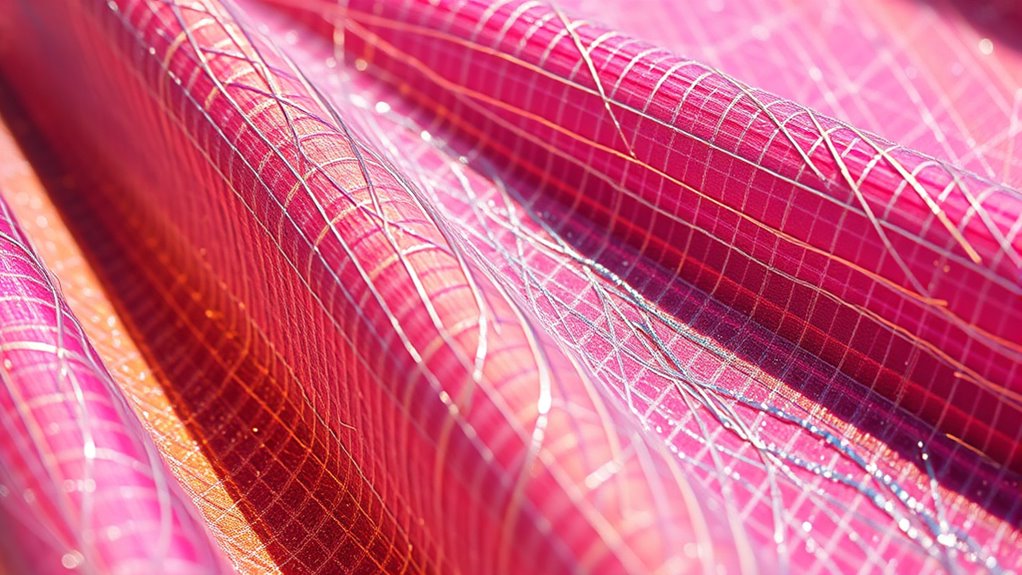
Wearable tech textiles are transforming the way you interact with clothing by seamlessly integrating technology into fabrics. At the core of this revolution are smart fabric innovations that enable textiles to do much more than just provide comfort or style. Instead, these fabrics can monitor your health, adjust to environmental conditions, and even connect to other devices. A key element driving these advances is the use of conductive fiber applications, which turn ordinary textiles into functional electronic platforms. Personal development techniques like mindfulness and self-reflection are also often integrated into wearable health devices to enhance overall well-being.
Conductive fibers are specialized threads embedded with materials that can conduct electricity. Unlike traditional fibers, these conductive threads allow fabrics to carry signals and power small electronic components directly within the textile. This integration means your clothing can include sensors, LEDs, or even small circuits without adding bulk or sacrificing flexibility. By weaving conductive fibers into fabrics, designers create smart textiles capable of sensing temperature, motion, or vital signs, and transmitting this data seamlessly to your smartphone or other devices. Additionally, advances in aura technology enable these textiles to provide real-time feedback on your emotional or physiological states, further enriching their functionality.
Smart fabric innovations leverage these conductive fibers to embed circuitry directly into the weave of the textile. For example, conductive threads can be woven into a shirt to monitor your heart rate or track muscle activity during exercise. The applications extend to wearable health monitors, athletic gear, and even fashion items that light up or change color based on your mood or environment. Because these innovations use flexible, lightweight conductive fibers, the textiles remain comfortable and breathable, maintaining the natural feel you expect from your clothing. Furthermore, ongoing research into washable electronic textiles is making it increasingly feasible to care for these garments without damaging their electronic components.
The beauty of conductive fiber applications is their versatility. They can be integrated into various types of fabrics—knits, weaves, or non-woven materials—allowing for a broad range of design options. This means your smart clothing isn’t limited to stiff, awkward gadgets; instead, it can be stylish, comfortable, and functional all at once. Conductive fibers also enable the development of flexible, washable electronic textiles, making them practical for everyday use.
As this technology advances, you’ll find more clothing items that adapt to your needs, whether that’s through embedded fitness trackers, climate-responsive jackets, or even smart accessories. The ongoing research into smart fabric innovations and conductive fiber applications promises a future where your garments are more than just clothing—they become an extension of your digital life. This integration makes your wardrobe smarter, more interactive, and better suited to meet your lifestyle demands.
conductive thread for wearable electronics
As an affiliate, we earn on qualifying purchases.
As an affiliate, we earn on qualifying purchases.
Frequently Asked Questions
How Durable Are Conductive Threads in Daily Wear?
You might wonder about the durability of conductive threads in daily wear. Generally, they offer good thread longevity, but factors like frequent washing and friction can impact their performance. Dye stability also plays a role, as colors may fade over time. To keep them in shape, follow care instructions carefully. With proper maintenance, conductive threads can last quite a while, making them suitable for everyday wearable tech applications.
Can Conductive Threads Be Machine Washed?
You might wonder if conductive threads can be machine washed. It’s best to adhere to the care labeling and laundry instructions provided with your wearable tech textiles. Generally, gentle cycles and cold water help preserve the conductive properties. Avoid harsh detergents or high heat, which can damage the threads. Proper care ensures your conductive threads stay functional longer, so always check the specific care instructions for your garment.
Are Conductive Threads Environmentally Friendly?
Thinking conductive threads are the eco-friendly superheroes of textiles? Not quite. While they’re made with some eco-friendly materials, their sustainability depends on sustainable manufacturing practices. You’re better off checking if the entire product uses eco-friendly materials and ethical production. Remember, not all “green” labels are created equal. So, if you want truly sustainable wearables, look beyond just the threads and focus on the whole process.
What Safety Precautions Exist for Conductive Textiles?
When working with conductive textiles, you should prioritize electrical safety to prevent shocks, and be aware of fire risk due to potential overheating. Always use proper insulation and avoid exposing textiles to high temperatures or open flames. Regularly inspect the conductive threads for wear or damage, and follow manufacturer guidelines. Taking these precautions helps guarantee safe use and minimizes hazards associated with electrical conductivity and fire risks.
How Do Conductive Threads Affect the Comfort of Clothing?
You might notice that conductive threads can impact your clothing’s comfort. They can reduce fabric flexibility, making garments feel stiffer or less stretchy. Sometimes, these threads cause skin irritation, especially if they’re not well-coated or if you have sensitive skin. While they enable tech features, it’s important to choose garments with soft, flexible conductive materials to stay comfortable and avoid discomfort during wear.
Conclusion
As you explore wearable tech textiles, it’s fascinating how conductive threads seamlessly blend fashion with function. Sometimes, the simplest innovations—like a tiny thread—can unexpectedly transform your daily life, turning your clothing into interactive devices. It’s as if technology and textiles were destined to meet, creating a future where your wardrobe does more than just look good. Embrace these surprises, and you’ll discover that the smallest details often have the biggest impact.
Evergreen bestsellers Picks
bestsellers
As an affiliate, we earn on qualifying purchases.