

Armani has revealed its preferred buyers after the founder’s passing, highlighting LVMH and L’Oréal as top contenders. The company plans to sell at least 15% within 18 months, with up to 54.9% available over five years, primarily to these strategic partners. LVMH’s focus on luxury aligns with Armani’s brand, while L’Oréal’s long-standing beauty relationship makes it an attractive option. If you want to explore how this could reshape the brand’s future, keep going.

Get your wardrobe favorites delivered free with Prime
- Fast, free delivery on millions of items
- Prime Video, Amazon Music and more included
- Member-only deals all year
Key Takeaways
- Armani’s sale process prioritizes L’Oréal, with explicit purchase rights granted to them in the company’s will.
- LVMH and Luxottica are also designated as preferred buyers, with LVMH viewed as the most likely candidate for a full or major stake.
- The structured process requires at least 15% of Armani to be sold within 18 months of Armani’s death, favoring strategic partnerships.
- L’Oréal’s role reflects a preference for collaboration, leveraging its long-standing relationship with Armani’s beauty line.
- The process aims to balance legacy preservation with growth, with oversight maintained by the Armani Foundation.
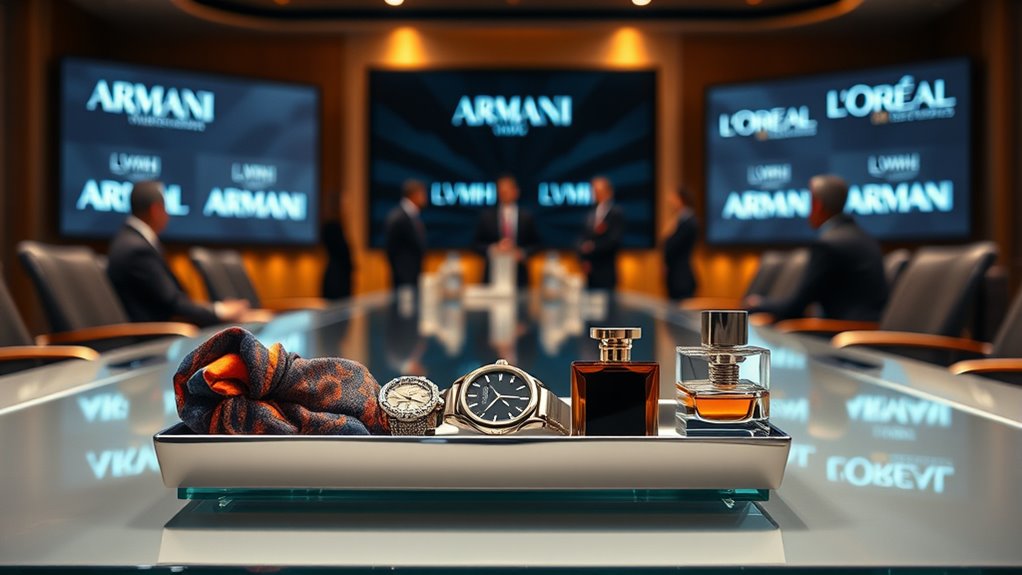
Following the recent passing of Giorgio Armani, the luxury icon has designated LVMH, L’Oréal, and Luxottica as preferred buyers for his fashion and beauty empire. This decision kicks off a structured process to sell company assets, with a clear timeline and specific conditions. You need to understand that Armani’s will requires the sale of at least 15% of the company within 18 months of his death. If no deal materializes with these preferred buyers, the company must go public, opening the doors to a broader range of investors. Over the next five years, the same buyer could acquire up to 54.9% more stake, allowing for significant consolidation under a single entity or consortium. The Giorgio Armani Foundation retains a minimum 30% stake, ensuring ongoing influence over the brand’s future direction. The foundation will also oversee the implementation of Armani’s philanthropic projects, ensuring his social vision continues. L’Oréal’s role as a preferred buyer isn’t surprising given its long-standing relationship with Armani. The beauty giant has been producing Armani’s beauty line for nearly four decades, demonstrating a deep integration into the brand’s core operations. Armani’s will explicitly grants L’Oréal purchasing priority, indicating a preference for continuing this partnership rather than pursuing a full acquisition independently. L’Oréal expressed being “touched and honored” by the designation, but insiders suggest the company might prefer a stake purchase or a strategic partnership over outright ownership. LVMH’s interest is rooted in its status as the world’s leading luxury conglomerate, owned by Bernard Arnault. Industry insiders have long speculated about LVMH’s desire to acquire Armani, and this official designation confirms it. Arnault himself has acknowledged Armani’s immense talent, comparing it favorably to Dior’s founder, which signals respect and strategic intent. Given LVMH’s scale, resources, and expertise, most analysts believe it’s best positioned to preserve Armani’s legacy and elevate it within its portfolio. LVMH’s involvement is seen as the most probable scenario for a full or substantial acquisition, aligning with their broader strategy of dominating global luxury markets. Luxottica joins the list as a preferred buyer mainly because of its existing relationship with Armani in eyewear and luxury accessories. The company plans to move its global headquarters to Paris, potentially boosting its luxury profile, and has expressed pride at being named a preferred buyer. While Luxottica might not aim for a full acquisition, it could participate in a collaborative or selective manner, leveraging its commercial ties and expertise to align with Armani’s vision. Overall, the structure set by Armani’s will balances legacy preservation with market-driven growth, leaving the luxury industry watching closely as the future of Armani unfolds.
Frequently Asked Questions
What Specific Assets Is Armani Considering Selling?
You’re considering selling shares in your luxury empire, including your fashion, beauty, and eyewear businesses. This involves a phased sale of a significant portion of Giorgio Armani Group, starting with 15% within 18 months and potentially up to 55% over three to five years. The assets also include your broader brand management operations, all aimed at maintaining your legacy while attracting strategic buyers like LVMH, L’Oréal, or EssilorLuxottica.
How Will These Potential Deals Impact Armani’s Brand Identity?
Imagine stepping into Armani’s shoes—these deals could reshape your brand identity. If a big buyer like LVMH or L’Oréal takes over, you risk losing some creative control, as they might prioritize profits over your minimalist, luxury ethos. However, with careful partnerships and licensing, you can preserve your heritage while gaining resources for growth. The key is balancing expansion with maintaining your unique style, like a well-crafted masterpiece in a rapidly changing world.
What Are Lvmh’s Strategic Goals With These Acquisitions?
LVMH’s strategic goals with these acquisitions are to strengthen its position as the top luxury conglomerate, diversify its portfolio, and expand its global reach. You’ll see LVMH aiming to boost market power, foster long-term growth, and create synergies across brands. They want to block competitors, leverage Armani’s assets, and enhance cross-brand collaborations, ensuring sustained leadership in the luxury industry while adapting to evolving market trends and consumer demands.
How Does L’Oréal Plan to Integrate New Brands?
Imagine a symphony where every instrument plays in harmony—you’re part of L’Oréal’s seamless integration plan. You’re leveraging advanced AI, digital tools, and agile operations to quickly absorb new brands. You focus on consumer experience, fast product renewal, and supply chain modernization to guarantee rapid, sustainable growth. With strong leadership and collaboration across teams, you blend innovation with brand identity, making each acquisition a crucial, thriving part of your global portfolio.
Are There Any Regulatory Hurdles for These Transactions?
You’ll face significant regulatory hurdles if these transactions proceed. Authorities like the European Commission, U.S. FTC, and China’s market regulator will scrutinize the deals for market dominance in luxury and beauty sectors. You must navigate complex approval processes, especially considering overlaps in market share, inheritance rules, and competition laws in key jurisdictions. Additionally, transparency and compliance with ESG standards will be essential to gain regulatory clearance and avoid delays or sanctions.
Conclusion
You can see the changing landscape of luxury and beauty brands, with Armani eyeing LVMH and L’Oréal as potential buyers. It’s clear that the market’s up for grabs, and no one wants to be left holding the bag. As these giants look to expand their portfolios, staying ahead of the curve means understanding who’s in the race. Keep your ear to the ground — in this game, it’s all about who makes their move first.
Halloween Picks
halloween
As an affiliate, we earn on qualifying purchases.