
To understand price tags and codes, look for symbols that show care instructions, origin, and recycling info. Scan barcodes to quickly access product details like price and inventory through a scanner or smartphone app. Recognize common barcode patterns such as UPC or EAN to verify authenticity and consistency. Familiarizing yourself with these signals helps you make informed choices and spot discrepancies. Keep going, and you’ll discover even more ways to decode product info effortlessly.

Get your wardrobe favorites delivered free — and shop member deals
- Fast, free delivery on millions of items
- Access to Prime Big Deal Days deals on October 6–7
- Prime Video, Amazon Music and more included
Key Takeaways
- Learn common symbols and icons indicating care, recycling, and origin to quickly interpret product information.
- Identify barcode types (UPC, EAN) and understand their structure for decoding product details.
- Use barcode scanners or smartphone apps to quickly read and verify product codes.
- Recognize manufacturer and product codes within barcodes to confirm authenticity and pricing.
- Cross-check price tags with online or store databases for accuracy and to spot discrepancies.

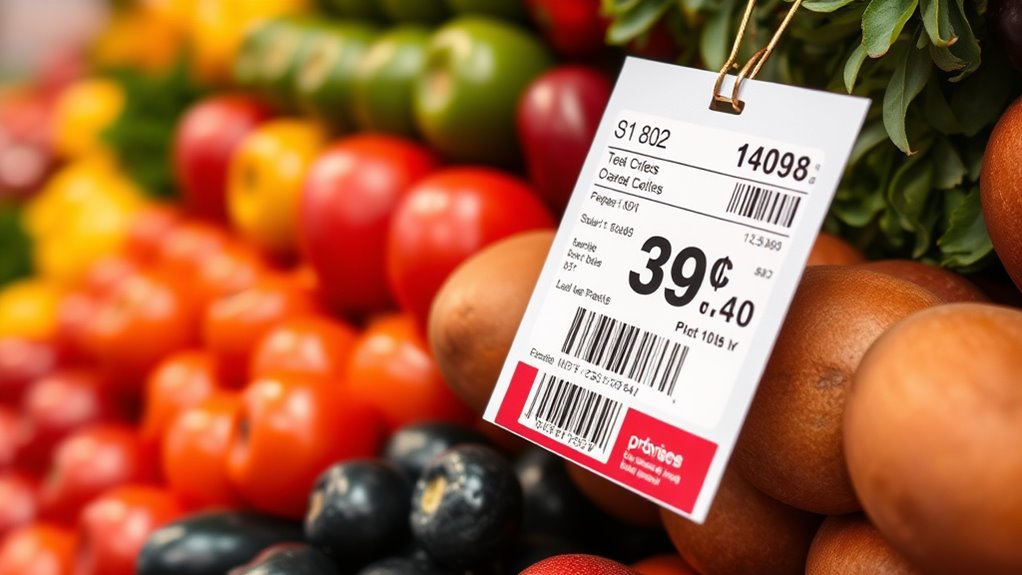
Have you ever wondered what all those numbers and symbols on a price tag really mean? It might seem like a jumble of digits, letters, and icons, but each element serves a purpose. Understanding tag symbols and how they relate to barcode decoding can help you make smarter shopping choices, track product details, and even spot potential scams. When you look at a price tag, you’re seeing a combination of information that’s been encoded for quick reference by store scanners and inventory systems.
Tag symbols are the small icons or codes printed directly on the label, often including icons that indicate special care instructions, country of origin, or recycling information. These symbols are designed to be universally recognizable and can tell you essential details at a glance. For example, a washing machine icon indicates how to clean a garment properly, while a recycling symbol shows how to dispose of packaging responsibly. Learning these symbols allows you to interpret product care instructions and environmental information without needing to read lengthy text.
The most common method for decoding product information quickly is barcode decoding. Barcodes are the series of black and white lines you see on almost every product, which store a wealth of data. When you scan a barcode, the scanner reads the pattern of lines and translates it into a numeric or alphanumeric code. This code typically contains details like the product’s unique identifier, manufacturer, and sometimes even stock levels. Once decoded, this information can be used to retrieve the item’s price, inventory status, and other relevant data from the store’s database. Understanding how barcode decoding works gives you insight into how products are tracked and managed in retail environments, making you more aware of the logistics behind your shopping experience.
Beyond just scanning, you can also learn to read some of the printed codes manually. Many barcodes follow standards like UPC or EAN, which have specific structures. The first few digits usually identify the manufacturer, while the remaining digits specify the particular product. Recognizing these patterns can help you verify if a product is genuine or if a price seems inconsistent with its barcode. Such knowledge also empowers you to cross-check prices online or in-store, ensuring you’re paying the correct amount. Additionally, recognizing product authenticity through barcode analysis can help prevent counterfeit purchases.
In essence, understanding tag symbols and mastering barcode decoding transforms you from a passive shopper into an informed consumer. It helps you decipher the information embedded in price tags, recognize product care instructions, and verify product authenticity. By paying attention to these details, you enhance your shopping experience, making it more efficient and aware. The next time you pick up an item, take a moment to observe the symbols and the barcode—what they reveal can be more than just a price; they tell a story about the product’s origin, handling, and history.
As an affiliate, we earn on qualifying purchases.
Frequently Asked Questions
Are All Store Price Tags Standardized Globally?
Not all store price tags are standardized globally. You’ll find variations in pricing symbols and store branding, which can differ from country to country or even store to store. These differences help identify the retailer and the currency used. As you shop, pay attention to these cues, because they tell you about store policies and regional pricing practices. This knowledge helps you compare prices more effectively across various stores worldwide.
How Do I Interpret Sale or Clearance Codes?
Did you know that over 60% of shoppers rely on clearance signals to find deals? To interpret sale or clearance codes, look for specific symbols, colors, or abbreviations like “CLR” for clearance, or percentage discounts. Discount codes often accompany these signals, indicating the final price. Pay attention to these clues on the tags; they help you identify discounted items quickly and snag the best deals during sales or clearance events.
Do Price Tags Indicate Product Expiration Dates?
Price tags typically don’t show product expiration dates directly. Instead, they focus on product freshness and shelf life indicators, which help you determine if the item is still good to buy. Look for labels or stickers with expiration or sell-by dates, often printed separately from the price. Always check these dates carefully, especially for perishable items, to make certain you’re purchasing fresh products that meet your needs.
Can Price Tags Tell Me About Product Origin?
Yes, price tags can reveal product origin. While many tags focus on price and barcode, some also include manufacturing location or country of origin. Look for small print or codes that specify where the product was made. This info helps you decide based on your preferences for local or imported goods. By checking these details, you gain insight into the product’s origin directly from the price tag, making your shopping more informed.
Are There Privacy Concerns With Scanning Price Barcodes?
Scanning price barcodes generally doesn’t raise significant privacy concerns, as they mainly contain product information, not personal data. However, some barcode privacy issues exist if store systems collect data on your purchases or location. To safeguard data security, be cautious with store apps and opt-out of data collection when possible. Staying informed about barcode privacy helps you make smarter choices and ensures your personal information remains secure.
Conclusion
Think of price tags and codes as a secret language, like clues in a treasure map. When you decode them, you unveil the story behind each item—its value, freshness, and origin. So next time you shop, wield your newfound knowledge like a treasure hunter with a keen eye. With every code cracked, you become more confident in your choices, turning a simple shopping trip into an adventure where you’re the expert uncovering hidden gems.
Fall Picks
fall essentials
As an affiliate, we earn on qualifying purchases.