To design a low-seating living room, focus on incorporating modular furniture with clean lines and plush cushions for comfort. Choose a soothing color palette with neutrals or pastels to create an airy, relaxing vibe, and balance bold hues for visual interest. Use soft lighting like floor or table lamps to enhance the cozy atmosphere. Keep accessories minimal for a sleek look, and experiment with textures and arrangements to personalize your space—exploring these elements can transform your room into a stylish retreat.
Key Takeaways
- Select low-profile furniture with clean lines and plush cushions to create a modern, relaxed atmosphere.
- Use a cohesive color palette with neutral or pastel shades to enhance the low-slung aesthetic.
- Incorporate modular pieces for flexibility and easy reconfiguration of the seating arrangement.
- Opt for soft, diffuse lighting with warm tones to promote a cozy and inviting environment.
- Keep accessories minimal and textures varied to maintain a sleek, stylish, and personalized space.
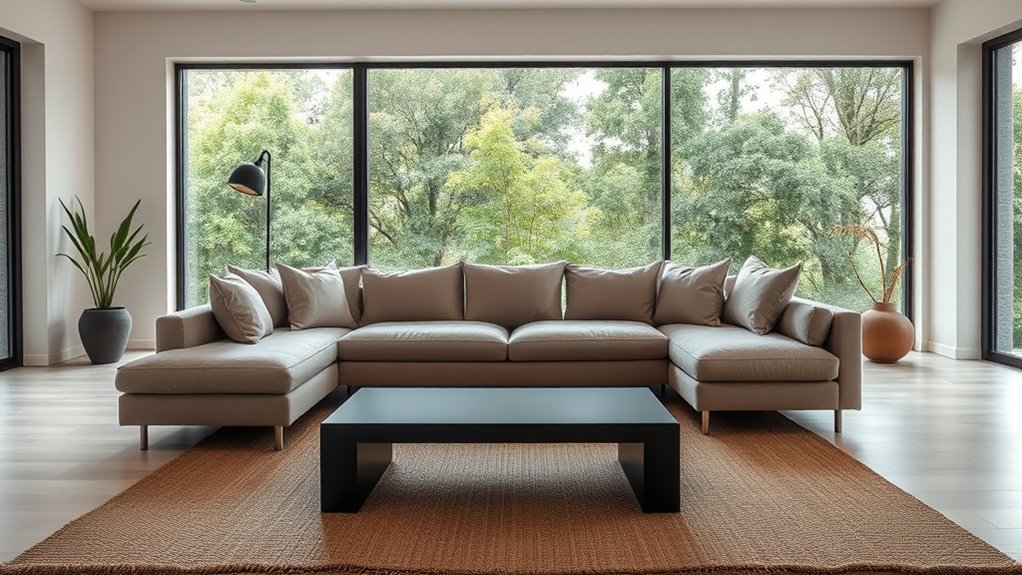
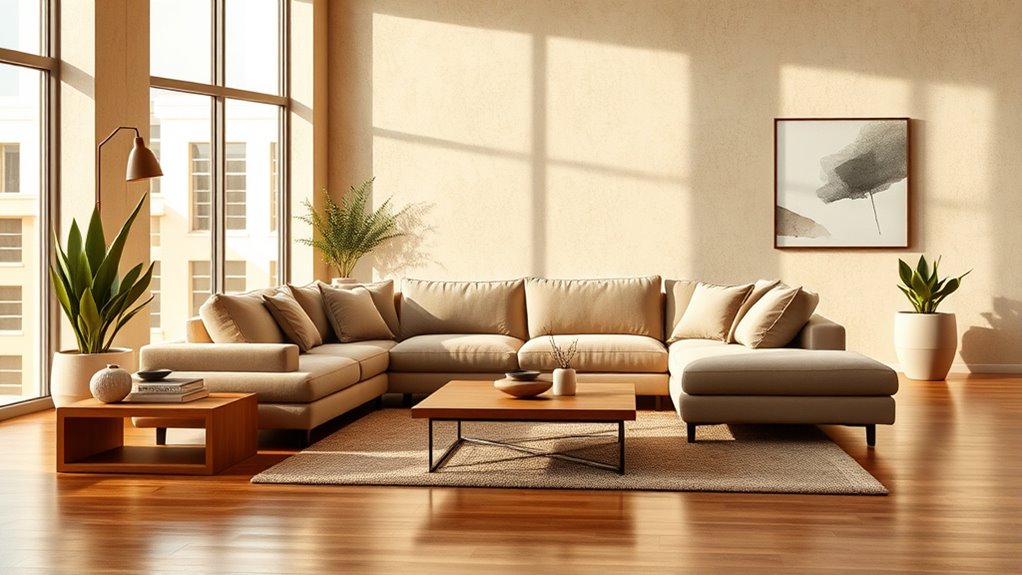
Creating a low-seating living room can instantly transform your space into a modern, relaxed retreat. When you opt for low-profile furniture, you invite a sense of openness and comfort that encourages unwinding. Modular furniture plays a key role here because it offers flexibility and customization, allowing you to craft a layout that’s both functional and stylish. You can choose pieces that connect seamlessly or stand alone, giving you the freedom to adapt your space as your needs evolve. This type of furniture also makes it easier to create a cohesive look, especially when paired with a carefully chosen color palette. Selecting a harmonious set of colors, such as neutrals or soft pastels, can emphasize the low-slung aesthetic while keeping the room feeling airy and inviting. Bright, bold hues can add energy, but sticking to a consistent palette ensures your space remains balanced and sophisticated.
When designing a low-seating living room, think about how the furniture’s height influences the overall vibe. Low sofas, poufs, and ottomans naturally encourage a laid-back atmosphere. To enhance this relaxed feel, choose pieces with clean lines and plush cushions that invite you to sink in. Incorporating modular furniture allows you to reposition elements easily, whether you want a more intimate conversation area or a sprawling lounge. It also helps in optimizing space, especially if your room is smaller. When selecting your color palette, consider shades that complement the furniture’s low profile. Light colors can make the space appear larger, while darker tones add coziness and depth. Mixing textures within your chosen palette—such as soft fabrics, woven rugs, or matte finishes—can add visual interest without overpowering the simplicity of the design. Additionally, understanding furniture styles can help you choose pieces that best suit your aesthetic and functional needs.
Lighting also plays a vital role in reinforcing the low-seating concept. Opt for ambient lighting that’s soft and diffuse, avoiding harsh overhead fixtures. Floor lamps and table lamps with warm bulbs can create a cozy atmosphere that highlights the relaxed vibe of your furniture setup. Keep clutter minimal to maintain a sleek, streamlined appearance. The real secret to a successful low-seating living room lies in balance: your furniture, color choices, and accessories should work harmoniously to evoke comfort and sophistication. Don’t be afraid to experiment with different modular arrangements or color combinations until you find what feels right for you. This approach ensures your living space feels personalized, welcoming, and effortlessly modern.

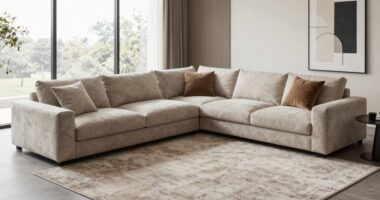
CUGOAO 150" Modern Boneless Sectional Couches for Living Room,Oversized Modular Sectional Sofa,Extra Deep 6 Seater,Plush Comfy Cloud Couch with Flexible Layout,No Assembly Required,Beige Chenille
Spacious & Fully Modular Design: With an expansive modular layout, this CUGOAO sectional modular sofa can be easily…
As an affiliate, we earn on qualifying purchases.
As an affiliate, we earn on qualifying purchases.
Frequently Asked Questions
How Do I Choose the Right Low-Seating Furniture for My Space?
To select the right low-seating furniture, consider your space optimization needs and how the pieces will fit without cluttering. Opt for lightweight materials like wood or upholstered options for comfort and durability. Measure your area carefully to guarantee the furniture complements your layout, leaving enough room for movement. Prioritize versatile designs and neutral tones, so your space feels open and inviting while providing functional, stylish seating that suits your lifestyle.
What Are the Best Colors to Make a Low-Seating Room Feel Spacious?
If you want your low-seating room to feel spacious, opt for a light color palette like whites, soft beiges, or pastels that reflect light beautifully. Add accent hues sparingly to create depth and interest without cluttering the space. The right combination of neutral tones and subtle pops of color keeps the room feeling open and airy, inviting you to relax and enjoy your expansive new haven.
How Can I Incorporate Storage in a Low-Seating Living Room?
You can incorporate storage in a low-seating living room by choosing multi-functional furniture like ottomans or low tables with hidden compartments. Decorative storage options, such as baskets or stylish crates, blend seamlessly into your decor while providing extra space. Use these clever solutions to keep your space tidy without sacrificing style, making your low-seating room both functional and visually appealing.
What Lighting Options Complement Low-Seating Designs?
Brighten your low-seating living room with beautiful, balanced lighting. Opt for ambient lighting, like soft ceiling fixtures or wall sconces, to create a cozy glow. Add task lighting, such as stylish floor lamps or table lamps, for focused functionality. This combination provides a comforting, clear-cut charm, ensuring your space feels inviting and well-lit without overpowering your sleek, low-profile furniture.
Are There Ergonomic Considerations for Prolonged Sitting on Low Furniture?
Yes, ergonomic support and posture alignment are essential for prolonged sitting on low furniture. You should choose cushions or lumbar supports that promote good posture and reduce strain. Adjust your seating position regularly to avoid discomfort, and consider adding footrests to keep your legs at a comfortable angle. These steps help maintain ergonomic posture, preventing fatigue and discomfort during extended periods of sitting on low furniture.

Asuprui Plush Fabric Ottoman Footrest – 20"x14" Soft Foam Pouf with Removable Cover Perfect for Living Room, Bedroom & Dorm(Linen)
【Ultra-Plush Pouf Ottoman – The Ultimate Cozy Footrest for Relaxation】Sink your feet into pure luxury with our Ultra-Plush…
As an affiliate, we earn on qualifying purchases.
As an affiliate, we earn on qualifying purchases.
Conclusion
A low-seating living room creates a cozy, inviting space that encourages relaxed conversations. Some might think it’s less practical or uncomfortable, but with the right cushions and thoughtful layout, it becomes surprisingly functional and comfortable. Don’t let concerns hold you back—embrace the relaxed vibe and enjoy your stylish, intimate space. Once you experience the inviting atmosphere, you’ll see that low seating isn’t just trendy; it’s also incredibly welcoming and versatile.

luckystyle Dimmable Floor Standing Tall Lamp, 12W Led Bulb with Lampshade, Foot Switch, Remote Custom Color Temperature Pole for Bedroom, Office, Kids & Living Room, Black
Multi-Function Dimmable Lamp: Vertical lamp includes an 12W dimmable LED bulbs that can be set to different color…
As an affiliate, we earn on qualifying purchases.
As an affiliate, we earn on qualifying purchases.

DEZENE Striped Throw Pillow Covers 18×18 Set of 2 Beige Textured Boucle Chic Morden Boho Accent Farmhouse Square Decorative Couch Pillow Covers for Home Decor Bed Sofa Living Room
PREMIUM MATERIAL: The front side is made of thicked Boucle fabric, back side is made of canvas. Thick…
As an affiliate, we earn on qualifying purchases.
As an affiliate, we earn on qualifying purchases.