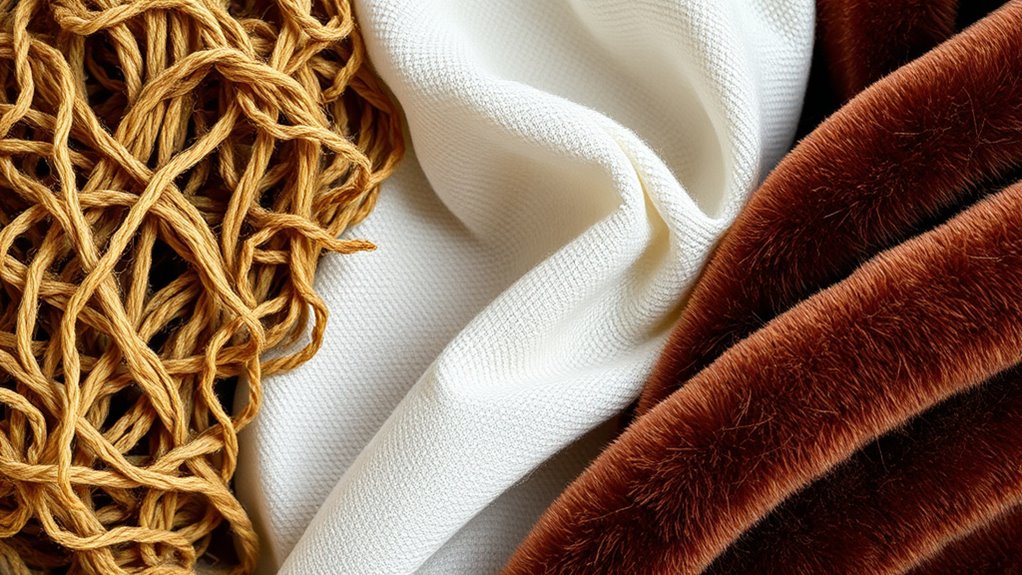

By combining jute, linen, and velvet, you create a rich textural contrast that adds depth and visual interest to your design. Jute’s roughness pairs beautifully with the smooth, natural feel of linen, while velvet’s plush surface introduces a luxurious shine. Woven patterns between these materials can unify or highlight contrasts, guiding the eye and emphasizing surface qualities. Exploring these textures and their interplay reveals how subtle details and thoughtful combinations can elevate your creative projects. Keep exploring to uncover more about mastering this technique.

Get your wardrobe favorites delivered free — and shop member deals
- Fast, free delivery on millions of items
- Access to Prime Big Deal Days deals on October 6–7
- Prime Video, Amazon Music and more included
Key Takeaways
- Combining jute, linen, and velvet creates visual interest through contrasting textures, from roughness to smoothness.
- Woven patterns serve as visual connectors, adding intricate detail and rhythm between different materials.
- Color pairing enhances contrast, with earthy tones for jute, cool shades for linen, and jewel tones for velvet.
- Light interaction varies: velvet reflects, while jute and linen absorb light, emphasizing their natural qualities.
- Thoughtful use of texture and color develops layered visual narratives, increasing depth and engagement.

Textural contrast plays a pivotal role in enhancing visual interest and depth in art and design. When you combine different textures like jute, linen, and velvet, you create a dynamic interplay that invites the eye to explore each surface’s unique qualities. One way to amplify this effect is through woven patterns, which add intricate detail and rhythm to your composition. These patterns can emphasize the natural roughness of jute or the smoothness of velvet, making each material stand out while complementing others. Pairing textures with thoughtful color choices further elevates the overall effect. For example, contrasting warm, earthy tones of jute with cooler shades of linen can create a balanced, harmonious look, while deep jewel tones in velvet can add a touch of luxury against more subdued backgrounds. When you pay attention to color pairing, you influence how textures interact, guiding the viewer’s focus and mood. Incorporating textural harmony into your design encourages a seamless transition between different materials, enhancing overall cohesion. In practical terms, weaving woven patterns into your design can serve as a visual bridge between these different textures. Think of a tapestry that combines the roughness of jute with the sleekness of velvet, where the woven pattern acts as a transition, tying the elements together seamlessly. The pattern’s complexity or simplicity can set the tone—more intricate weaves evoke richness, while straightforward patterns lend a modern, minimal feel. By consciously choosing woven patterns and matching them with appropriate color pairings, you craft a layered, engaging visual narrative that highlights the strengths of each material. You should also consider how light interacts with these textures. Velvet, with its plush surface, reflects light differently than jute or linen, which tend to absorb it. This interaction can be accentuated through strategic color pairing—dark velvet with metallic accents, for instance, enhances its richness, while pairing linen with soft pastel shades emphasizes its breezy, natural quality. When you combine woven patterns with well-chosen colors, you create contrast not just in texture but also in light and shadow, adding depth and dimension to your work. Ultimately, understanding how woven patterns and color pairing work together allows you to manipulate visual tension and harmony in your art or design. The key is to experiment with different combinations, observing how textures respond to color and weave. With deliberate choices, you’ll develop a layered aesthetic that captures attention and invites closer inspection, making every piece more compelling through the thoughtful use of textural contrast.
jute linen velvet throw pillow covers
As an affiliate, we earn on qualifying purchases.
As an affiliate, we earn on qualifying purchases.
Frequently Asked Questions
How Does Textile Durability Vary Among Jute, Linen, and Velvet?
You’ll find that linen is quite durable, resisting fabric aging and tear resistance well over time, making it suitable for everyday use. Jute, although strong initially, tends to weaken and fray faster with wear, reducing its tear resistance. Velvet, while luxurious, isn’t as durable; it can snag or wear down, affecting its longevity. So, when considering durability, linen outperforms jute and velvet for long-term resilience.
What Are the Best Cleaning Methods for Each Fabric Type?
To clean jute, linen, and velvet, you need specific methods for each fabric. For fabric stain removal, use gentle blotting and avoid harsh chemicals, especially with delicate fabric care. For jute, vacuum or shake out dirt and spot clean with a damp cloth. Linen can often be hand washed or machine washed on a gentle cycle. Velvet requires dry cleaning or careful spot cleaning to maintain its texture and appearance.
How Do Fabric Costs Compare Across Jute, Linen, and Velvet?
You’ll find that fabric costs vary with sourcing and market availability. Jute is generally the most affordable, thanks to its abundant supply and eco-friendly appeal. Linen tends to be pricier due to its quality and limited sourcing options, while velvet’s cost depends on the material (cotton, silk, polyester). Your choice depends on budget constraints and where you source these fabrics, impacting overall costs and availability in the market.
Can These Fabrics Be Combined in Upholstery or Fashion?
You can definitely combine jute, linen, and velvet in upholstery or fashion, as their contrasting textures add visual interest. This textile blending enhances fashion versatility, allowing you to create unique, tactile designs. In upholstery, it provides depth and character to furniture pieces. Just balance the textures carefully to avoid an overstimulating look. Mixing these fabrics can craft sophisticated, stylish pieces that stand out with their rich, diverse textures.
What Environmental Impacts Are Associated With Each Material?
You should consider the environmental impacts of jute, linen, and velvet. Jute and linen are eco-friendly, especially when sourced sustainably, as they’re biodegradable and require less water and chemicals. Velvet, often made from synthetic fibers, can have higher environmental costs due to its production process. Choosing sustainably sourced jute or linen offers biodegradability benefits, reducing long-term waste, while synthetic velvet may contribute more to pollution.
Conclusion
Imagine walking through a gallery of textures, each surface telling its own story. Jute’s rugged charm, linen’s crisp elegance, and velvet’s lush depth blend like a symphony of tactile wonders. Together, they create a vibrant tapestry that awakens your senses and invites you to touch, feel, and explore. Embrace these contrasts, and let your space become a living, breathing masterpiece—where every texture paints a new stroke on your interior canvas.
Halloween Picks
halloween
As an affiliate, we earn on qualifying purchases.