
Inside the atelier, you’ll find a clear hierarchy starting with the master or head designer, who sets the creative vision and oversees quality. Artisans and specialists handle core techniques like textiles or metals, ensuring each piece meets high standards. Apprentices and trainees support tasks while learning craftsmanship skills under mentorship. This structure promotes skill sharing and continuous growth. If you explore further, you’ll uncover how each role contributes uniquely to the atelier’s artistic excellence.
Key Takeaways
- The master or head designer oversees the atelier’s creative vision and final quality control.
- Artisans and specialists execute core craftsmanship techniques, ensuring product excellence.
- Apprentices and trainees learn skills through mentorship, assisting with preliminary tasks.
- Hierarchical roles promote mentorship, knowledge sharing, and skill development within the atelier.
- Collaboration among roles ensures a blend of tradition, innovation, and high craftsmanship standards.
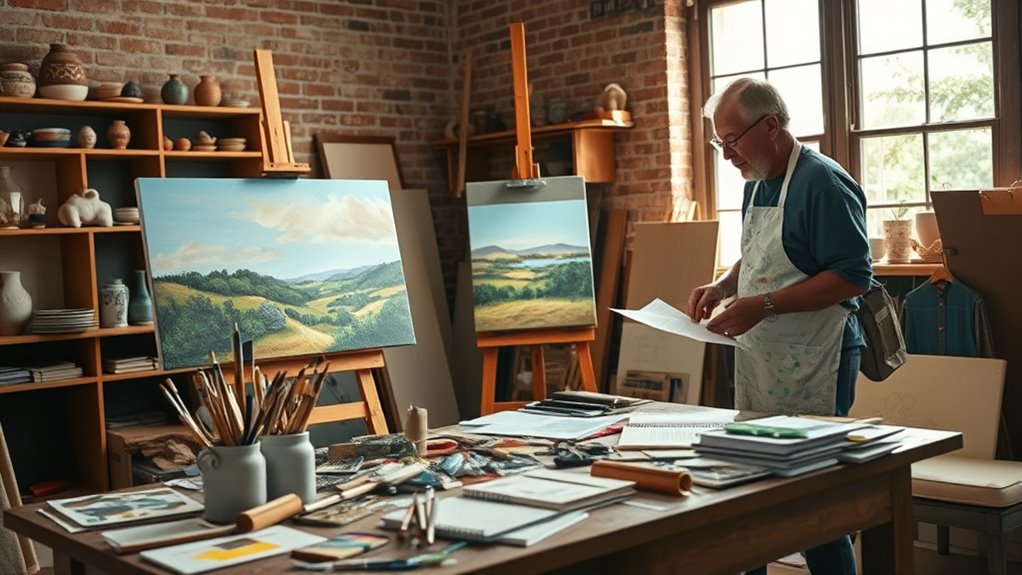
Ever wondered what goes on behind the scenes in a creative atelier? It’s a bustling environment where craftsmanship techniques are mastered and refined, and understanding the atelier hierarchy helps you see how each role contributes to the final masterpiece. From the moment you step inside, you get a sense of structured chaos—an organized flow of talent and skill working in harmony. At the heart of it all, you’ll find a clear hierarchy that guides the creative process, ensuring that each person’s expertise builds upon the last.
A creative atelier’s structured chaos fosters mastery through a clear hierarchy and collaborative craftsmanship.
In most ateliers, the hierarchy starts with the master or head designer. This person sets the vision, oversees the entire operation, and ensures that the craftsmanship techniques are executed to perfection. They’re the creative lead, making key decisions that influence every piece produced. Beneath the master, you’ll find artisans and specialists—those who have honed their craft through years of experience. These artisans are the backbone of the atelier; they bring technical prowess and an intimate knowledge of craftsmanship techniques to their work. Whether they’re working with textiles, metals, or other materials, their skill level determines the quality and uniqueness of each piece.
Next in line are the apprentices and trainees. They’re there to learn, absorb, and refine their skills under the watchful eyes of the more experienced artisans. Apprenticeship isn’t just about copying techniques; it’s about immersing yourself in the atelier’s culture and understanding the nuances of craftsmanship. You might notice that apprentices often handle preliminary tasks—cutting, assembling, or testing materials—before moving on to more complex processes. This structured approach ensures that skills are passed down effectively, maintaining the atelier’s standards across generations. Additionally, the development of craftsmanship techniques is a continuous process that relies heavily on mentorship and practice within the hierarchy.
The atelier hierarchy isn’t static; it fosters mentorship and continuous learning. Every level has its responsibilities, but collaboration is key. The master might give the final approval, but every artisan’s input influences the outcome. It’s a finely tuned system where craftsmanship techniques are shared, tested, and perfected. This hierarchy isn’t about rigid ranks; it’s about creating a seamless flow of knowledge and skill—ensuring that each piece reflects the highest standards of craftsmanship.
Understanding this hierarchy helps you appreciate the craftsmanship techniques involved and the collaborative effort required to create something extraordinary. Each role, from apprentice to master, plays a crucial part in the atelier’s success. It’s a dynamic environment where tradition meets innovation, and mastery is built step by step, skill by skill.
professional atelier sewing tools
As an affiliate, we earn on qualifying purchases.
As an affiliate, we earn on qualifying purchases.
Frequently Asked Questions
How Do Roles Vary Between Different Types of Ateliers?
In different types of ateliers, roles vary based on the atelier hierarchy and role differentiation. You might find a more collaborative environment in artist ateliers, where roles blend and everyone contributes creatively. In contrast, fashion ateliers often have clear distinctions, with designers, seamstresses, and assistants each knowing their responsibilities. Understanding these differences helps you navigate the workspace, adapt to varying expectations, and appreciate how role differentiation shapes the creative process.
What Qualifications Are Needed for Senior Roles?
To qualify for senior roles in the atelier hierarchy, you need a strong background in your craft, often with years of experience and a proven track record. You should demonstrate leadership, technical expertise, and the ability to manage role responsibilities effectively. Formal training or apprenticeships are beneficial, but your skills and dedication matter most. Your experience helps you oversee projects, mentor juniors, and uphold the atelier’s artistic standards.
How Do Titles Influence Daily Responsibilities?
Imagine you’re a senior designer; your title shapes your daily responsibilities within the hierarchical structure. It clarifies your role responsibilities, such as overseeing junior staff or managing project design. Titles influence expectations, decision-making authority, and workload, guiding how you interact with team members. This hierarchical structure guarantees clarity, helping everyone understand their specific duties and how titles directly impact your tasks and leadership within the atelier.
Are There Career Progression Paths Within Atelier Roles?
Yes, there are career progression paths within atelier roles. You can advance through atelier mentorship programs, gaining experience and skills that lead to role specialization. As you develop your expertise, you might take on more responsibilities, mentor new artists, or even move into supervisory or administrative roles. Staying committed to learning and actively seeking growth opportunities helps you climb the atelier ladder, ultimately expanding your professional skills and influence.
How Do Roles Differ Across Cultural or Regional Ateliers?
You’ll notice roles differ across cultural hierarchies and regional terminology in ateliers. For example, in European ateliers, titles like “maître” or “apprenti” are common, reflecting local traditions. In Asian ateliers, roles might emphasize respect and hierarchy differently, often with specific terms. These differences influence responsibilities and authority, shaping how artisans collaborate and progress. Adapting to regional terminology helps you navigate and respect the unique cultural hierarchy within each atelier.
Conclusion
Understanding the various roles and titles in an atelier helps you appreciate the intricate teamwork behind every masterpiece. Did you know that over 60% of ateliers believe clear role distinctions boost creativity and efficiency? By recognizing each person’s unique contribution, you can better collaborate and respect the artistry involved. Whether you’re an apprentice or a master, embracing these roles deepens your connection to the craft and the vibrant community that sustains it.