
If you’re looking for family board games that keep everyone entertained for hours, I suggest exploring popular options like Azul, The Game of Life, Pictionary, and Trouble. These games are easy to learn, fun for a wide age range, and promote social bonding. Whether you prefer strategy, party, or quick challenges, the right game can make your family time unforgettable. Keep going to discover more about these great choices and how they fit your family.
Key Takeaways
- The list includes popular, engaging games suitable for a wide age range, promoting family bonding and fun.
- Games like Azul and The Game of Life offer strategic depth and quick setup for hours of entertainment.
- Family-friendly options such as Battleship and Magnetic Chess are portable and easy to learn.
- The selection balances competitive, cooperative, and social deduction games to suit diverse preferences.
- Each game provides high replay value and features durable components for long-lasting family fun.
Hasbro Sorry! Kids Board Game for Family Fun
Are you looking for a family game that’s easy to learn and guarantees fun for everyone? Sorry! by Hasbro is perfect for kids and adults alike. Designed for 2 to 4 players ages 6 and up, it’s a fast-paced race to move all three pawns to the home space first. The game uses simple card draws that dictate your moves, but strategy is key—you can send opponents’ pawns back to start, adding a fun twist. It’s nostalgic, engaging, and great for family game nights. Plus, it makes a fantastic gift for kids who love friendly competition and lively indoor fun.
Best For: families, kids aged 6 and up, and groups seeking a fun, easy-to-learn board game that promotes friendly competition and indoor entertainment.
Pros:
- Simple rules make it accessible for players of all ages
- Encourages strategic thinking and interaction among players
- Nostalgic design that appeals to both kids and adults
Cons:
- Limited to 2-4 players, which may not suit larger groups
- The outcome can be heavily influenced by luck of the draw
- May become repetitive over extended play sessions
Family Conversation Game with Challenges and Starters
Looking for a family conversation game that brings everyone together through fun challenges and engaging starters? “Do You Really Know Your Family?” is perfect for kids aged 8 and up, teens, and adults who want to spark meaningful discussions and shared laughs. This easy-to-learn card game promotes bonding with questions and silly challenges that encourage players to learn about each other. It’s ideal for family game nights, fostering connection and laughter across all ages. Compact and lightweight, it’s simple to set up and perfect for creating memorable moments, making it a favorite choice for family fun and conversation.
Best For: families and groups of all ages seeking a fun, engaging way to promote conversation, bonding, and laughter during game nights or casual gatherings.
Pros:
- Easy to learn and quick to set up, making it accessible for all ages.
- Promotes meaningful conversations and shared laughs, strengthening family bonds.
- Compact and lightweight design makes it portable for on-the-go family fun.
Cons:
- Limited to English language, which may not suit non-English speakers.
- May require multiple plays to fully explore all questions and challenges.
- Some users might find certain challenges or questions less engaging over time.
BLANK SLATE Family Word Association Game
The BLANK SLATE Family Word Association Game is perfect for groups seeking a lively, social activity that sparks quick thinking and laughter. In this game, players choose a Word Cue card and write a word that completes a phrase, trying to match others’ guesses without hints. It’s simple to learn, quick to play, and encourages players to predict each other’s thoughts. With 8 dry-erase slates and 250 cue cards, it’s ideal for 3-8 players ages 8 and up. Whether at family night or a party, it promotes fun, engagement, and social interaction in just 20-35 minutes.
Best For: families, party-goers, and group gatherings seeking a fun, social game that promotes quick thinking and laughter.
Pros:
- Easy to learn and quick to set up, making it suitable for all ages.
- Encourages social interaction, prediction skills, and family engagement.
- Versatile for various occasions like family nights, parties, or casual get-togethers.
Cons:
- Limited to 3-8 players, which may not suit very large groups.
- Requires dry-erase slates and markers, which could be misplaced or require cleaning.
- May become repetitive if played frequently without new cue cards or variations.
Clue Board Game for Ages 8 and Up
If you’re searching for a family-friendly board game that combines mystery, strategy, and engaging storytelling, the Clue Board Game for ages 8 and up is an excellent choice. It features a reimagined Tudor Mansion setting with a compelling storyline and intriguing characters like Miss Scarlett and Professor Plum. Players race to identify the murderer, location, and weapon by collecting clues and asking strategic questions. The game includes textured weapon tokens, detailed game pieces, and a beautifully illustrated board, making it both fun and visually appealing. Perfect for 2-6 players, it offers endless replay value for family game nights.
Best For: families and casual game enthusiasts seeking an engaging, family-friendly mystery game with strategic elements and beautiful design.
Pros:
- Reimagined Tudor Mansion theme adds a fresh, captivating atmosphere
- Includes textured weapon tokens and detailed game components for enhanced tactile and visual experience
- Suitable for 2-6 players, offering high replayability for family game nights
Cons:
- May take longer to set up and explain rules to younger players unfamiliar with deduction games
- Not ideal for very competitive players seeking complex or advanced gameplay
- Some players might find the storyline and characters less challenging compared to more mature mystery games
Hasbro Gaming Trouble Kids Board Game
Families seeking an engaging, age-appropriate game for children aged 5 and up will find the Hasbro Gaming Trouble Kids Board Game to be an excellent choice. It features the classic Trouble gameplay with a fun Pop-o-Matic bubble for die rolling, making it easy and exciting for young players. Designed for 2-4 players, the game involves racing four pegs around the board to reach the finish zone first. The option to add Power Up Spaces introduces strategic complexity, keeping kids engaged. Its quick setup and simple rules make it perfect for family game nights, encouraging social skills like taking turns and strategic thinking while providing hours of screen-free entertainment.
Best For: Families and children aged 5 and up seeking a fun, easy-to-learn board game that promotes social skills and strategic thinking without screens.
Pros:
- Classic Trouble gameplay with a fun Pop-o-Matic bubble for easy die rolling.
- Suitable for 2-4 players, making it great for family or small group play.
- Quick setup and simple rules, ideal for young children and casual play.
Cons:
- Limited strategic complexity, which might not challenge older or more experienced players.
- May be less appealing to children who prefer more modern or themed games.
- The game relies on luck, which could lead to less consistent winning outcomes.
Taco Cat Goat Cheese Pizza Card Game for Family and Group Play
Taco Cat Goat Cheese Pizza is an excellent choice for family and group play because it combines quick-paced fun with simple rules that everyone can pick up in minutes. It’s perfect for 2–8 players aged 7 and up, making it ideal for family nights, parties, or road trips. The game’s fast rounds, lasting about 10–15 minutes, keep everyone engaged. Players race to slap the pile when words match cards, with action cards adding surprises. Its humorous, unpredictable nature encourages laughter and sharpens skills like focus, pattern recognition, and quick thinking. Compact and portable, it’s easy to bring along for endless, entertaining moments.
Best For: families, teens, and groups seeking a quick, fun, and easy-to-learn card game that promotes laughter and quick thinking.
Pros:
- Fast-paced gameplay lasting around 10–15 minutes, making it perfect for short entertainment sessions.
- Simple rules that are easy for players aged 7 and up to learn quickly.
- Encourages cognitive skills like pattern recognition, focus, and hand-eye coordination while providing humorous fun.
Cons:
- May be too simple or repetitive for players seeking more strategic or complex games.
- The reliance on quick reactions might disadvantage players with slower reflexes.
- Limited to small groups (up to 8 players), not ideal for very large gatherings.
Herd Mentality Family Board Game with Extra Questions
Looking for a lively game that gets everyone laughing and thinking together? Herd Mentality is perfect for big groups of 4-20 players, offering quick, easy gameplay and plenty of replay value. It comes with 20 extra questions that challenge players to guess what others are thinking, adding an extra layer of fun. Earn cows for matching the majority, but beware the pink cow of doom if you’re the odd one out. Suitable for ages 10 and up, it’s ideal for family gatherings like Thanksgiving or Christmas. With its humorous, interactive style, Herd Mentality keeps everyone engaged and giggling long into the night.
Best For: families, friends, and larger groups seeking a humorous, quick, and engaging party game suitable for ages 10 and up.
Pros:
- Easy to learn with quick gameplay, making it perfect for casual game nights
- Encourages social interaction and laughter among diverse age groups
- Includes 20 extra exclusive questions for added variety and fun
Cons:
- May not be suitable for very small groups or fewer than 4 players
- Some players might find the humor or gameplay repetitive after multiple rounds
- Requires at least 10 players for optimal experience, limiting use in smaller gatherings
Battleship Classic Board Game for Kids Ages 7 and Up
Battleship Classic Board Game is an excellent choice for kids aged 7 and up who enjoy strategic challenges and competitive fun. This timeless naval game encourages players to think tactically as they call shots, fire, and aim to sink their opponent’s ships. The game’s simple “Hunt, Hit, Sink, Win” approach makes it easy to learn, while an optional Salvo feature adds complexity for more experienced players. Its portable design, with two battle cases for easy storage and travel, makes it perfect for family nights, trips, or rainy days. Battleship fosters social interaction, strategic skills, and hours of engaging entertainment for the whole family.
Best For: kids aged 7 and up, families, and groups seeking a fun, strategic naval game suitable for all skill levels.
Pros:
- Easy to learn with a classic “Hunt, Hit, Sink, Win” gameplay that appeals to a wide age range.
- Includes portable battle cases for convenient storage and travel, making it ideal for on-the-go play.
- Promotes strategic thinking, social interaction, and family bonding during game nights or trips.
Cons:
- May be too simple for older or more experienced players who seek greater complexity.
- Limited to two players, which could restrict multiplayer options unless multiple sets are available.
- Some players might find the standard version less challenging without using the optional Salvo feature.
The Chameleon Bluffing Board Game for Family and Adults
Are you searching for a game that seamlessly combines fun, strategy, and social interaction for both family members and adults? The Chameleon is an award-winning bluffing game that’s perfect for parties and game nights. Players race to catch the imposter—the chameleon—by using deduction, deception, and careful questioning. With simple rules, quick gameplay, and plenty of secret words, it keeps everyone engaged for about 15 minutes. Whether you’re playing with friends or family, The Chameleon’s mix of bluffing and social deduction makes it a hit. It’s especially great for ages 14 and up, offering hours of lively fun.
Best For: families, adults, and friends seeking a quick, engaging bluffing game that encourages social interaction and strategic thinking.
Pros:
- Easy to learn and quick to play, making it suitable for casual game nights.
- Recognized with awards and accolades, confirming its quality and entertainment value.
- Includes a large variety of secret words to enhance replayability and challenge.
Cons:
- Designed for ages 14 and up, so it may not be suitable for younger children.
- Requires social deduction and bluffing, which may be intimidating for some players.
- Limited to 3-8 players, so not ideal for very large groups.
The Original TAPPLE Family Word Board Game
The Original TAPPLE Family Word Board Game stands out as an ideal choice for families and casual gamers who enjoy quick, engaging activities that challenge their vocabulary and thinking skills. It’s a fast-paced, portable game designed for 2-8 players aged 8 and up, with gameplay lasting around 15-20 minutes. Players race against a built-in timer to name words related to a category, starting with a specific letter. The game’s simple mechanics—pressing letter tabs on the wheel while shouting words—keep everyone involved and on their toes. With its compact size and fun, competitive nature, TAPPLE is perfect for family game nights, travel, or quick get-togethers.
Best For: families and casual gamers seeking a quick, engaging, and portable word game that enhances vocabulary and quick thinking skills.
Pros:
- Fast-paced gameplay that keeps players engaged and energized.
- Portable design with all category cards stored conveniently in the wheel.
- Suitable for a wide age range (8+) and multiple players (2-8), making it versatile for family and group settings.
Cons:
- Limited playtime per round (15-20 minutes) may not satisfy those looking for longer gaming sessions.
- Requires quick thinking, which might be challenging for younger or less confident players.
- Dependence on a timer can add pressure that may reduce enjoyment for some players.
Magnetic Chess Game with Full-Size Stones for Family & Travel
A magnetic chess game with full-size stones offers an engaging, portable challenge perfect for families seeking fun on the go. It includes 20 magnetic stones, a game rope, and a storage bag, making setup quick and simple. Players take turns placing stones upright inside the rope, trying to avoid attraction. When a stone is attracted, it’s collected, adding an unpredictable twist. The goal is to use all stones first. The magnetic tension adds excitement and strategic depth, suitable for ages 4 and up. It’s perfect for travel, camping, or family game nights, promoting thinking, coordination, and bonding in a compact, durable design.
Mattel Pictionary Family Board Game with Markers and Sand Timer
For families looking for an engaging and inclusive game, the Mattel Pictionary Family Board Game with Markers and Sand Timer is an excellent choice. This game celebrates 40 years of fun, encouraging creativity and teamwork for both kids and adults. Players take turns drawing clues while teammates guess, with three difficulty levels and Learn to Draw tutorials for beginners. The all-play rounds boost excitement, and the included erasable markers, game boards, and sand timer make setup quick and reusable. Whether for family nights or gatherings, it guarantees hours of entertainment, laughter, and friendly competition, making it a must-have for any game collection.
Best For: families, friends, and groups seeking an engaging, inclusive, and creative game suitable for all ages that promotes teamwork and laughter during game nights or gatherings.
Pros:
- Encourages creativity and teamwork across different age groups
- Includes multiple difficulty levels and tutorials for beginners
- Reusable components like erasable markers and game boards for easy setup
Cons:
- May require supervision or guidance for very young children on drawing or guessing
- Can take longer to complete if teams struggle with clues or drawing skills
- The game’s humor and guessing may not appeal to those who prefer more competitive or strategic games
Asmodee Azul Board Game, Tile-Placement Strategy
Looking for a family board game that combines beautiful design with strategic depth? Azul is exactly that. It’s an award-winning tile-placement game where players craft stunning Portuguese mosaic patterns using colorful, eye-catching tiles. The rules are simple enough for kids aged 8 and up, but the strategic choices keep adults engaged too. Each game feels fresh, thanks to countless different tile arrangements, making replayability high. With just 30 to 45 minutes per session, Azul is perfect for family nights. Its blend of aesthetic appeal and thoughtful gameplay makes it a mesmerizing choice for all ages, encouraging both creativity and strategic thinking.
Best For: families, casual gamers, and art enthusiasts seeking a visually appealing and strategically engaging board game suitable for players aged 8 and up.
Pros:
- Beautiful, colorful mosaic artwork that enhances visual appeal and immersion
- Simple rules combined with deep strategic options for all skill levels
- High replayability with countless tile arrangements ensuring fresh experiences each game
Cons:
- Limited player count (best for 2-4 players), which may not suit larger groups
- The game length of 30-45 minutes might be too short for players seeking longer gameplay
- Some players may find the scoring system complex to master initially
Hasbro Gaming The Game of Life Board Game for Families
If you’re searching for a family-friendly game that combines fun, quick setup, and engaging decision-making, Hasbro Gaming’s The Game of Life offers the perfect choice. Designed for kids 8+, it accommodates 2-4 players and features quirky careers like ice cream flavor maker or secret agent. The game lets you navigate life’s surprises, choosing vacations like safaris or snorkeling trips, which impact your wealth and strategy. With 115 cards presenting diverse options, the game is easy to learn and perfect for family bonding. Its instant setup and nostalgic appeal make it ideal for casual gatherings, keeping everyone entertained for hours.
Best For: families seeking a quick, engaging, and nostalgic board game that combines fun decision-making with easy setup for 2-4 players aged 8 and up.
Pros:
- Easy and quick setup, ideal for casual family gatherings
- Features unique and quirky career options to enhance gameplay variety
- Encourages decision-making and strategic thinking while being accessible for kids
Cons:
- Limited to 2-4 players, which may not suit larger groups
- May rely heavily on luck due to spinning mechanics influencing wealth
- Some players might find the game less challenging after multiple plays
Factors to Consider When Choosing Family Board Games
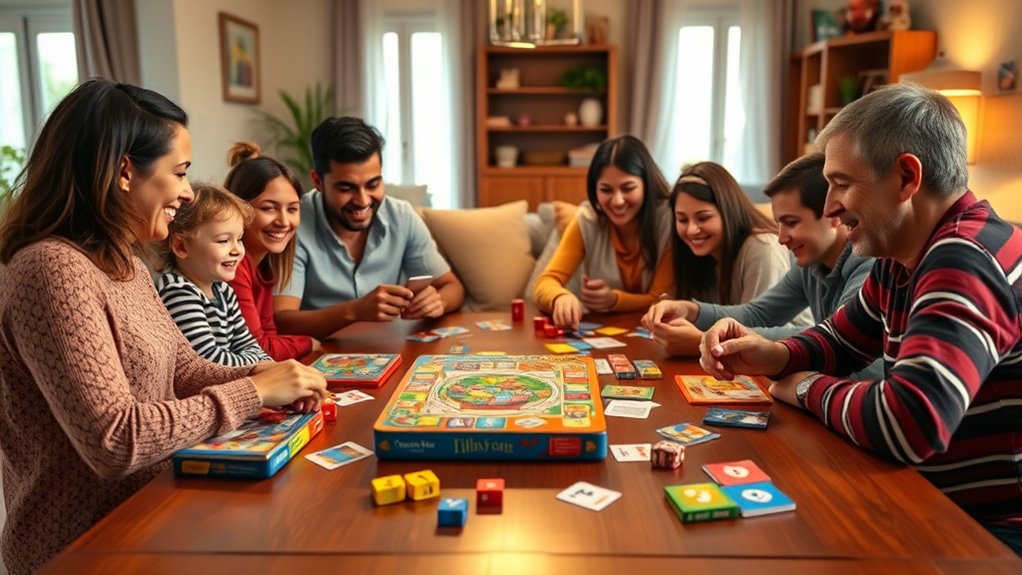
When selecting the right family board game, I consider several key factors to guarantee everyone has a good time. I look at the age range, number of players it supports, and how long the game takes to play. Additionally, I think about how strategic and thematic the game is to match our family’s preferences.
Age Appropriateness
Choosing the right family board game starts with considering the ages of everyone involved. It’s important to select games that match the recommended age range so everyone can enjoy and engage without frustration. Including younger players by choosing age-appropriate games fosters inclusivity and encourages family bonding. Pay attention to the complexity of the rules; simpler rules work better for kids, while older players can handle more strategic gameplay. Also, guarantee the themes and content are suitable for your family’s values and comfort levels. Finally, pick games that can accommodate your family’s size, promoting social interaction and group participation. By keeping age appropriateness in mind, you can find games that are fun, fair, and engaging for all family members.
Player Count Flexibility
Flexible player count is a key factor when selecting family board games, as it allows the game to adapt to different group sizes effortlessly. Choosing games with adjustable rules or multiple modes makes it easy to include more or fewer players without hassle. Games designed for 2-8 players or more provide versatility, letting you scale gameplay depending on who’s around. This flexibility reduces the need to switch between different games, streamlining family fun and making planning simpler. Plus, a game that works well with fewer players still maintains its engagement and strategic depth, ensuring everyone stays involved. Whether it’s a cozy night with just a few family members or a lively gathering, having a game that adapts to varying group sizes is a major advantage.
Game Duration
Ever wondered how to pick a family board game that fits neatly into your busy schedule? Considering game duration is essential. I always look at the average playtime to see if it matches our available free moments. Shorter games under 30 minutes work well for younger kids and quick breaks, keeping everyone engaged without losing patience. For special occasions or dedicated family nights, longer games over 45 minutes can be more rewarding. I also pay attention to how complex the game is; intricate rules can extend setup and learning time, which might be frustrating if you’re pressed for time. Balancing game length with the ages and patience of family members helps guarantee everyone has fun and stays interested throughout the game.
Strategic Complexity
When selecting a family board game, understanding its level of strategic complexity is vital because it determines how much planning, decision-making, and tactical thinking players will need to do during the game. Games with high strategic complexity involve numerous rules, choices, and possible moves, encouraging players to develop long-term strategies and adapt to changing situations. Conversely, simpler games with low strategic complexity are easier for younger players and casual gamers, allowing for quick learning and immediate fun. Striking a balance between depth and accessibility is essential so that the game remains engaging for both seasoned strategists and newcomers. Additionally, the right level of strategic complexity can boost replayability, offering varied experiences through different strategies and decisions each time you play.
Theme Appeal
Have you ever noticed how a game’s theme can make or break the overall experience? When choosing a family board game, I pay close attention to the theme because it directly impacts engagement and enjoyment. A theme that matches our interests keeps everyone invested and excited to play. Bright, colorful designs appeal to all ages, making the game more inviting. I also look for themes related to hobbies, stories, or cultural elements that can build an emotional connection. When the theme aligns with players’ preferences, it encourages repeated play and keeps long-term interest alive. Additionally, consistent design across game components creates an immersive environment, elevating the entertainment value and making the game feel more cohesive and enjoyable for the entire family.
Portability and Setup
Considering how often families like ours want to take games on the go, portability and setup become key factors in choosing the right board game. I look for games that are compact and lightweight, making them easy to carry and store without hassle. Quick setup is essential; I prefer games with simple instructions and minimal pieces that can be ready to play in minutes. Foldable boards or travel-friendly features, like small game components and carrying cases, help make setup and cleanup effortless. I also check if the game’s design allows for easy packing, so I can quickly tuck it away after play. These considerations ensure we spend more time enjoying the game and less time preparing or packing. Ultimately, portable games keep family fun flexible and accessible wherever we go.
Frequently Asked Questions
What Age Range Is Suitable for Each of These Board Games?
Most of these games are great for ages 8 and up, but some, like Candy Land or Chutes and Ladders, are perfect for younger kids around 3 or 4. I recommend checking each game’s box for specific age suggestions, as they’re designed to guarantee everyone has fun without frustration. I find that choosing age-appropriate games keeps the family engaged and makes game night more enjoyable for everyone.
How Long Does Each Game Typically Take to Play?
Most family board games take between 30 minutes to an hour, but some can stretch longer or be played in shorter rounds. For example, classics like Monopoly often last over two hours, while games like Uno or Ticket to Ride typically wrap up in 30-45 minutes. It’s a good idea to check each game’s rules for a more accurate estimate, so you can plan your game night accordingly.
Are These Games Suitable for Players With Visual or Hearing Impairments?
Yes, many of these games are suitable for players with visual or hearing impairments. I’ve found that games with tactile pieces, clear audio cues, or adjustable settings work well. For example, some games offer braille versions or large-print instructions, making them more accessible. I recommend checking each game’s specific accessibility features beforehand to guarantee everyone can enjoy the fun together. Inclusivity makes family game nights even better!
Can These Games Be Expanded With Additional Sets or Variants?
Absolutely, many of these games are designed with expansions or variants in mind. I love adding new sets or house rules to keep things fresh and exciting. For example, some games offer expansion packs that introduce new challenges or themes, which can be perfect for when your family gets tired of the base game. Just check the game’s packaging or website to see compatible expansions—you’ll find lots of options!
What Are the Recommended Number of Players for Optimal Fun?
Think of a game as a cozy campfire, where the right number of friends gathers to share warmth and stories. For me, 3 to 6 players feels just right—enough to create lively interactions without overcrowding the glow. With fewer, it’s intimate; with more, the chaos sparks fun. So, I recommend sticking to this range for the best blend of strategy, laughter, and connection that keeps everyone engaged.
Conclusion
Whether you’re seeking laughs, strategy, or heartfelt conversations, these games will keep your family entertained for hours. Remember, the more, the merrier—because shared moments create lasting memories. With a little patience and a lot of fun, you’ll find that the best games are the ones that bring everyone together. So go ahead, pick one, and let the good times roll—after all, a family that plays together stays together.