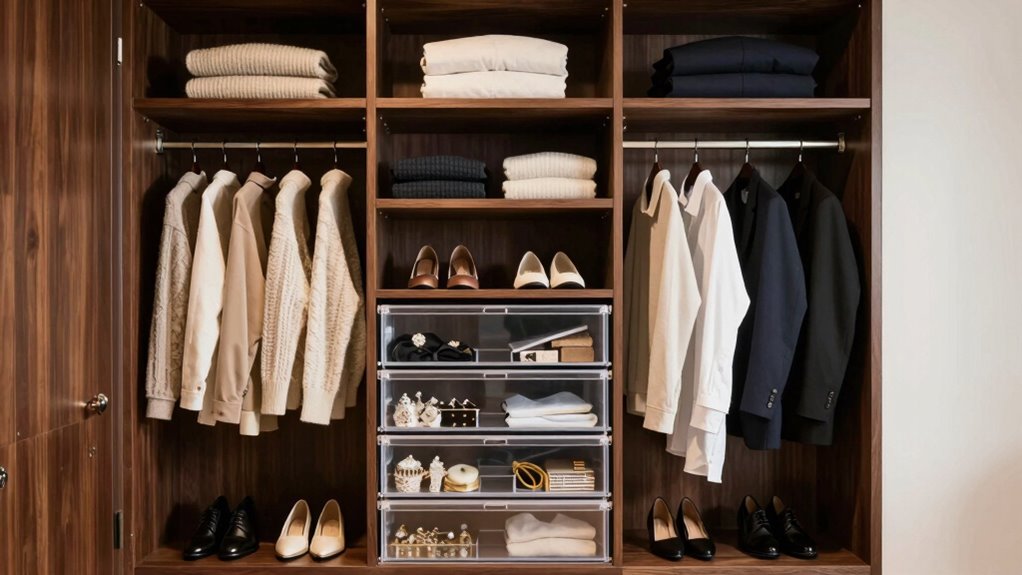

Before purchasing closet storage, assess your needs by evaluating how often you use items and their sizes. Measure your space carefully, noting obstructions and current clutter. Plan a layout that maximizes accessibility with a mix of hanging rods, shelves, and drawers suited to your wardrobe. Keep flexibility in mind for future changes and set a clear budget upfront. Following these steps helps avoid costly mistakes—exploring these ideas further will give you a complete plan.

Get your wardrobe favorites delivered free — and shop member deals
- Fast, free delivery on millions of items
- Access to Prime Big Deal Days deals on October 6–7
- Prime Video, Amazon Music and more included
Key Takeaways
- Assess your current storage needs and categorize items to determine required space and organization priorities.
- Measure available closet dimensions, including height, width, depth, and obstructions, for accurate planning.
- Prioritize flexible, modular storage solutions that can adapt to changing needs and maximize space efficiency.
- Establish a realistic budget to guide selection of storage components and explore DIY options for cost savings.
- Design a logical layout with accessible zones, appropriate hanging, shelving, and lighting for optimal usability.
As an affiliate, we earn on qualifying purchases.
How to Assess Your Closet Storage Needs
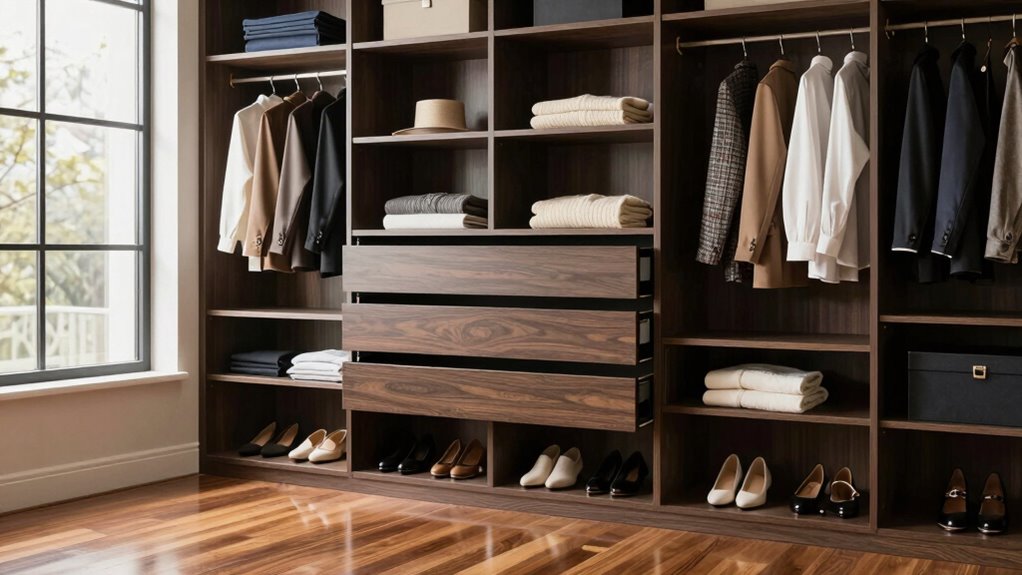
Before designing a closet system, it’s essential to understand your storage needs. Start by evaluating what items you store most often and their sizes. Use organizing principles to categorize your wardrobe into sections like shirts, pants, shoes, and accessories. This helps you determine the right balance of hanging space, shelves, and drawers. Focus on space optimization by considering how much room each category requires and how to maximize every inch. Take note of items you frequently reach for and those that can be stored out of sight. Measure your current storage and identify gaps or clutter. Additionally, consider the efficiency of your space in relation to your daily routines. This assessment ensures your closet design is efficient, tailored to your habits, and makes it easier to select features that suit your lifestyle.
Choosing the Best Closet Layout for Your Space
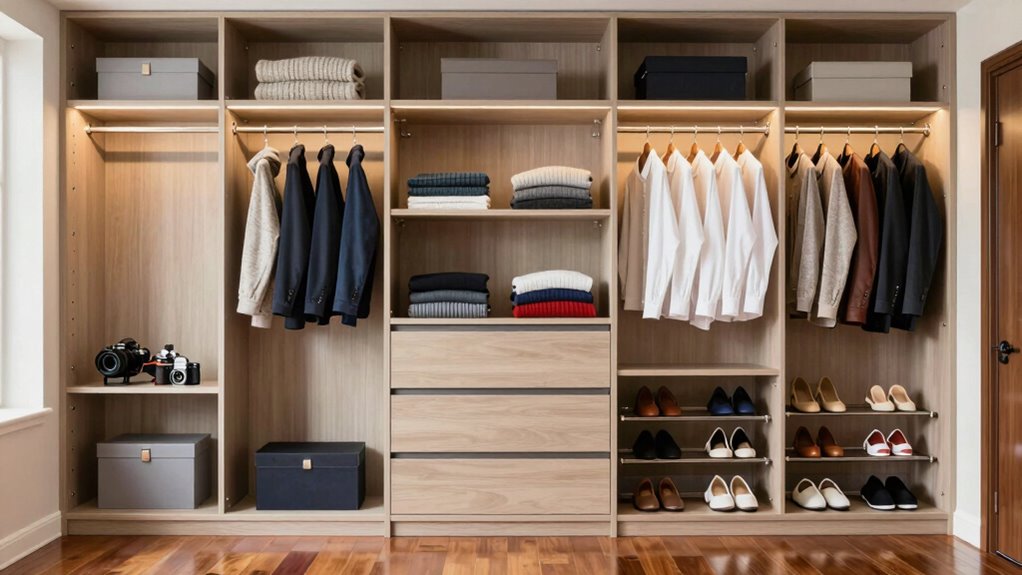
To choose the best closet layout, start by evaluating your space to understand its dimensions and limitations. Next, determine your storage needs to guarantee you have enough room for everything without clutter. Additionally, consider the lifecycle and performance metrics of your storage solutions to ensure long-term durability and effectiveness. Incorporating body jewelry measurements and materials can also help you select modular and adaptable storage options that accommodate changing needs. For example, considering dog beds for Golden Retrievers can inspire you to think about ergonomic and comfortable storage solutions tailored to your needs. Evaluating ventilation considerations can further improve airflow and prevent mustiness in your closet. Finally, focus on maximizing accessibility so you can easily reach your items and keep your closet organized. Incorporating innovative storage solutions can further optimize your space and enhance functionality.
Assess Your Space
Understanding the available space is essential when choosing the right closet layout. Measure the dimensions carefully—height, width, and depth—to see what fits comfortably. Take note of door swings, windows, and obstructions that could impact storage options. Assess your current clothing organization to identify how much hanging, shelving, or drawer space you need. Consider how you move within the closet and whether you prefer open or closed storage. Space optimization is key, so think about maximizing every inch without overcrowding. Incorporating sound design principles can help you create a more functional and appealing space. Paying attention to storage needs ensures your closet can accommodate your wardrobe and accessories effectively. A well-assessed space helps you select a layout that suits your needs, making it easier to access your clothing and keep everything organized. Proper planning can also prevent overcrowding, which hampers accessibility and overall functionality. Additionally, considering long-term flexibility can ensure your closet adapts to changing storage requirements over time. Evaluating future storage needs allows you to plan for potential wardrobe growth or decluttering, ensuring your closet remains organized in the long run. Remember, a thoughtful assessment ensures your closet design is both functional and efficient.
Determine Storage Needs
How do you determine the right amount and type of storage for your closet? Start by evaluating your clothing organization needs—consider how much space you need for hanging garments, folded items, shoes, and accessories. Think about your wardrobe size and how often you switch outfits to avoid overcrowding. Measure your available space carefully to identify areas for shelves, drawers, or hanging rods. Prioritize space optimization by choosing storage solutions that maximize every inch, reducing clutter and making retrieval easier. Keep in mind your lifestyle; if you have a large wardrobe, plan for dedicated zones. Additionally, selecting the right closet layout can enhance functionality and aesthetics. Incorporate lifestyle products that support your organization goals, ensuring your closet remains practical and inspiring. Understanding your specific storage needs helps you select the most suitable storage solutions, which will lead to a more organized and accessible wardrobe. When designing your closet, consider support breakfast options that can help motivate your morning routine and keep your space energized. By understanding your specific storage needs, you’ll ensure your closet layout is functional, efficient, and tailored to your clothing organization habits, supporting overall kidney health maintenance through a well-organized space.
Maximize Accessibility
Choosing the right closet layout is essential for guaranteeing easy access to your clothing and accessories. To maximize accessibility, consider how hanging options and shelving styles can enhance your space. Use a mix of hanging rods for shirts, pants, and dresses, and select adjustable shelving to accommodate different items. Proper placement assures frequently used items are within reach. Organize your closet with a logical flow, minimizing unnecessary steps. For example, place daily wear at eye level and seasonal items higher or lower. Here’s a suggested setup:
| Space Area | Hanging Options | Shelving Styles |
|---|---|---|
| Top Shelf | Long and short hangers | Open or enclosed |
| Middle | Double-hang rods | Adjustable shelves |
| Bottom | Shoe racks or drawers | Deep shelving |
| Door Area | Hooks for accessories | Slim shelving |
Additionally, incorporating ergonomic design principles can further enhance ease of access and comfort within your closet space. Utilizing ergonomic principles ensures that your closet setup reduces strain and improves efficiency during daily routines. Considering lighting and visibility can also make it easier to locate items quickly and improve overall organization. Implementing proper color schemes can make it easier to locate items quickly and create a more cohesive look, contributing to overall organization and efficiency in your closet.
Selecting Storage Components and Accessories
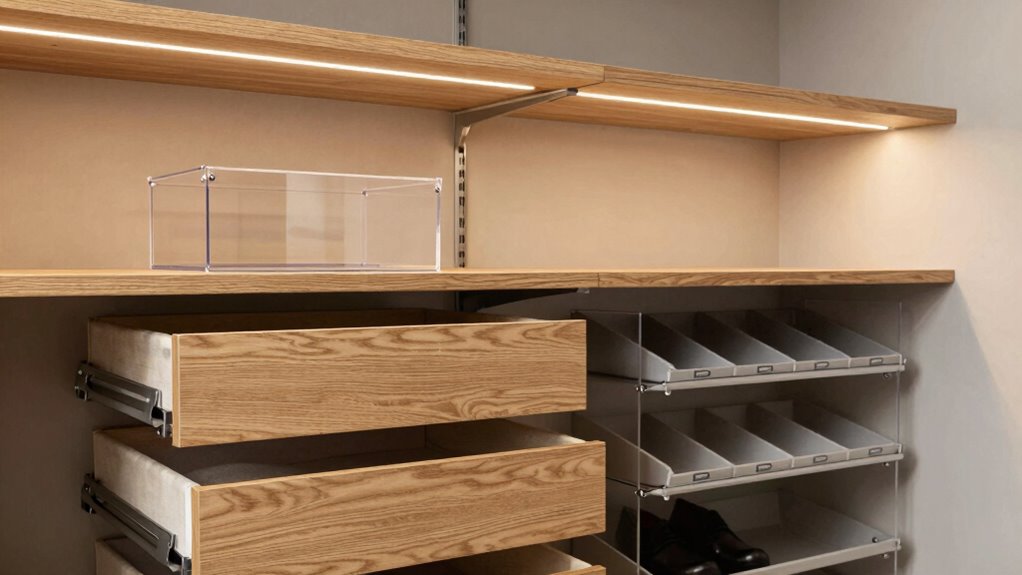
Selecting the right storage components and accessories is essential for creating a functional and organized closet. Custom shelving allows you to maximize space and tailor storage to your specific needs, making it easier to access items quickly. Incorporate decorative accents, such as stylish baskets or elegant drawer pulls, to add personality and visual appeal. Consider adjustable components to adapt as your storage needs change over time. Use a mix of open and closed storage options to keep your closet tidy and clutter-free. Don’t overlook smaller accessories like hooks, dividers, or jewelry trays, which can help keep everything in its place. Thoughtfully choosing these elements ensures your closet isn’t just practical but also matches your style. Additionally, integrating high-quality home decor elements can elevate the overall aesthetic and make your space feel more personalized and inviting. For added versatility, consider incorporating electric bike storage solutions if you own one, to keep your bikes safe and accessible. Properly planned storage organization can also improve your daily routine by making essentials easier to find and access. Incorporating flexible storage options can help your closet adapt to changing needs over time. Incorporating natural landscaping ideas can further enhance the ambiance and functionality of your storage space.
Planning Storage for Different Clothing and Items
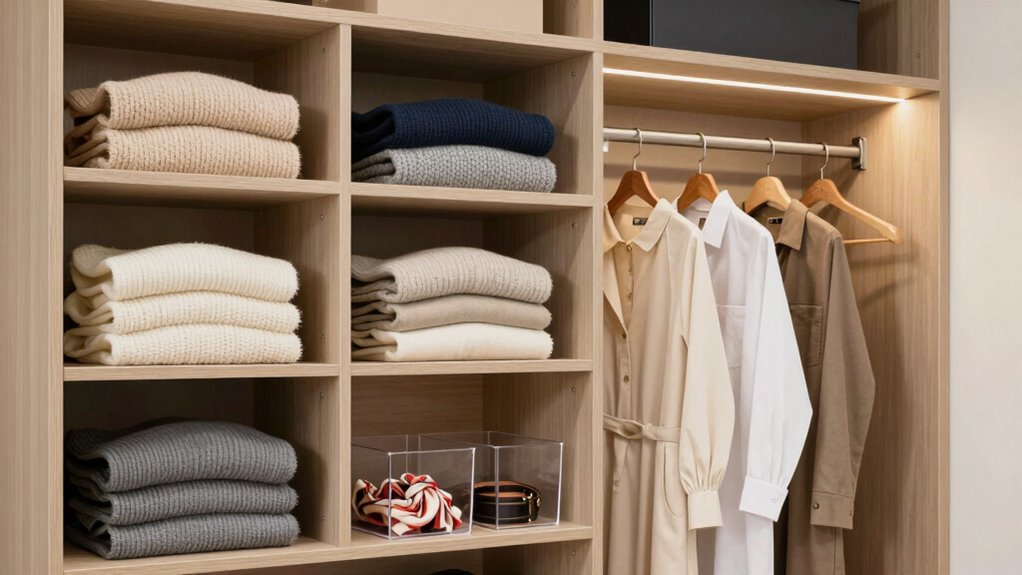
To effectively plan your closet storage, you need to take into account the different types of clothing and items you’ll be storing. Different categories, like folded sweaters, hanging dresses, shoes, and accessories, require specific organization techniques. A custom closet allows you to tailor storage solutions for each item, maximizing space and accessibility. Use adjustable shelves for bulky items, dedicated drawers for jewelry or smaller accessories, and hanging rods at varying heights for different clothing lengths. Incorporate compartments or bins for seasonal or rarely used items. Additionally, considering power tools and equipment can help you efficiently assemble and modify your storage solutions as needed. By considering these factors upfront, you can design a closet that keeps everything organized and easy to find, making daily routines smoother and avoiding clutter. Proper planning guarantees your storage system adapts to your needs, not the other way around.
Designing a Flexible Closet System That Fits Your Lifestyle
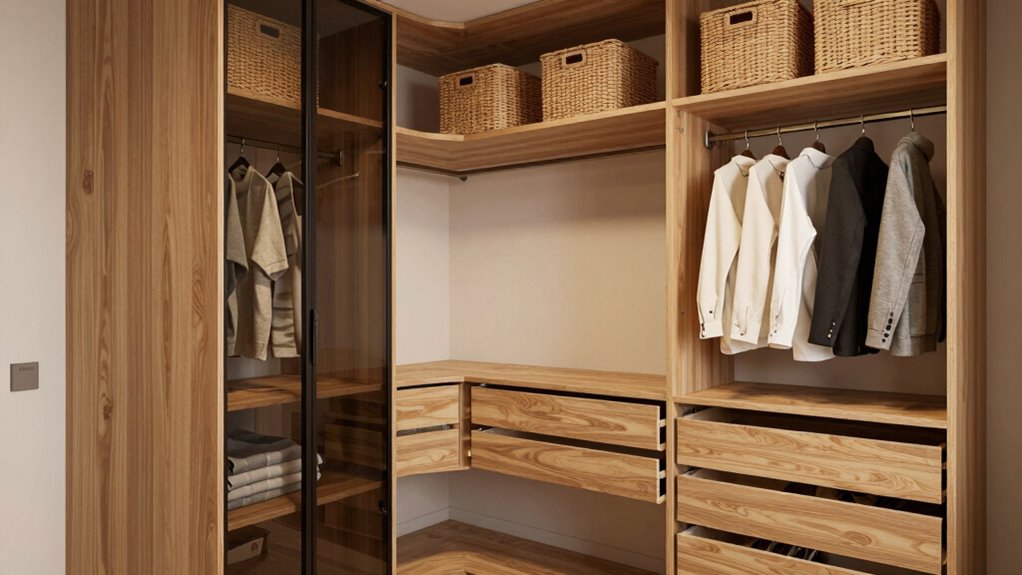
Designing a flexible closet system guarantees your storage adapts seamlessly to your changing lifestyle. Modular units let you customize your space, so you can add or remove sections as needed. For example, adjustable shelves and removable drawers accommodate different clothing types or accessories over time. Incorporate versatile hanging solutions, such as multiple rod heights or double-hang options, to maximize vertical space and suit your wardrobe. This flexibility ensures your closet evolves with your needs, whether you’re upgrading seasons, changing styles, or reorganizing. Focus on creating a system that’s easy to modify, so you don’t feel restricted by rigid designs. A well-planned, adaptable closet system keeps your belongings organized and accessible, making daily routines smoother and more efficient.
Set Your Budget Before Buying Closet Storage
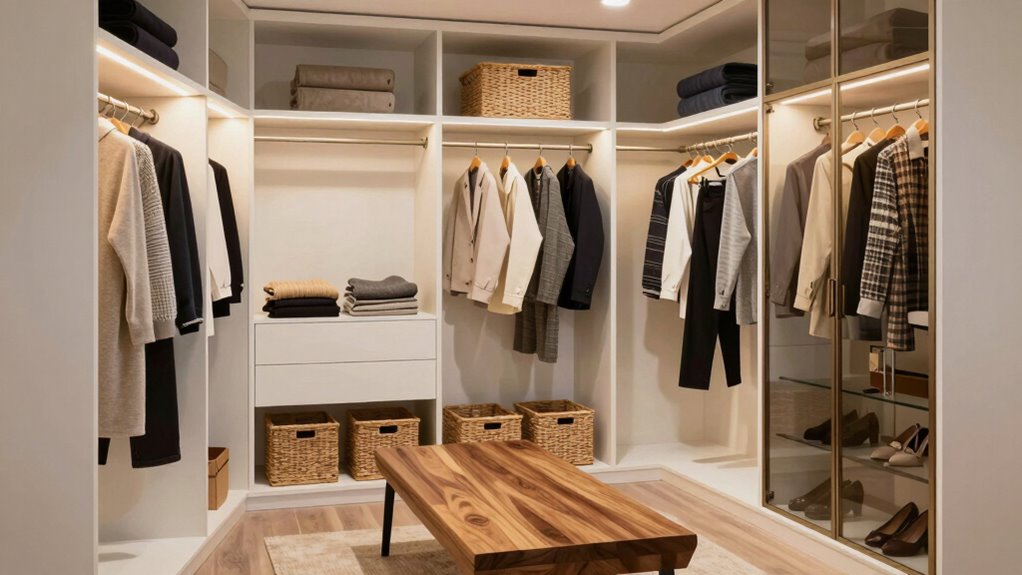
Establishing a clear budget before shopping for closet storage guarantees you make informed choices and avoid overspending. Knowing your budget considerations helps prioritize essential features and prevents impulse buys. To maximize savings, explore cost-saving tips like DIY options or choosing versatile pieces. Here’s a quick comparison:
| Budget Range | Suggested Storage Solutions |
|---|---|
| Under $200 | Basic wire racks, fabric organizers |
| $200-$500 | Modular systems, adjustable shelves |
| $500-$1,000 | Custom cabinets, high-quality materials |
| $1,000-$2,000 | Built-in solutions, premium finishes |
| Over $2,000 | Fully customized closet systems, luxury finishes |
Sticking to your budget ensures you get the best value and prevents financial stress while creating your perfect closet.
Next Steps: Implementing Your Closet System Plan
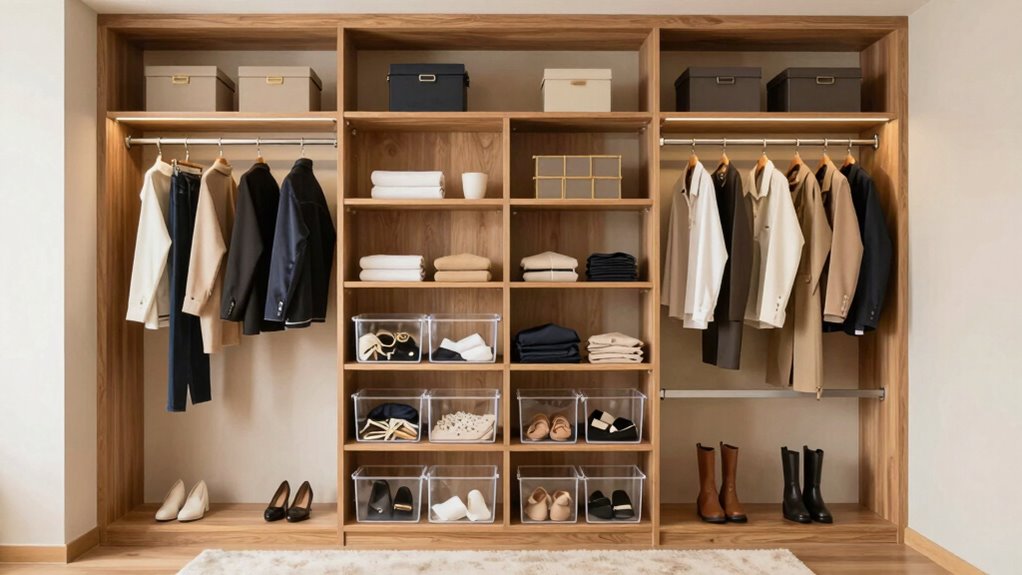
Once you’ve determined your budget and chosen your storage solutions, it’s time to start implementing your closet system plan. Begin by installing your custom shelving, ensuring they fit your space and storage needs. Proper placement makes a big difference in organization and accessibility. Next, consider lighting options to brighten your closet and make it easier to find items. Choose energy-efficient LED lights or motion-activated fixtures for convenience. Carefully follow your layout to avoid mistakes and ensure everything fits as planned. If you’re installing multiple components, double-check measurements before securing anything. Keep your plan flexible; minor adjustments can improve functionality. With your custom shelving installed and lighting in place, you’re well on your way to a functional, organized closet tailored to your needs.
Frequently Asked Questions
How Do I Measure My Closet Space Accurately?
To measure your closet space accurately, start by using a tape measure to record the width, depth, and height of the entire area. Be sure to note the locations of existing closet lighting and consider how shelving configurations will fit within these dimensions. Measure multiple points to account for any irregularities, and write everything down. This guarantees your custom closet system will maximize storage and fit seamlessly within your space.
What Materials Are Best for Durable Closet Systems?
Think of sturdy materials like hardwood or metal framing—these provide unmatched material durability, ensuring your closet system withstands daily wear. While particleboard is budget-friendly, it may lack closet longevity, risking warping over time. For lasting performance, opt for solid woods or steel, which offer strength and resilience. This way, your closet stays organized and durable, making the investment worthwhile and preventing future replacements or repairs.
How Can I Maximize Small Closet Spaces Effectively?
To maximize small closet spaces, you should utilize vertical storage to make use of every inch from floor to ceiling. Add adjustable shelving to customize your storage as your needs change, keeping things organized and accessible. Use hanging organizers or hooks for shoes, bags, and accessories. Keep clutter to a minimum, and consider installing a sliding door to save space. These strategies help you create a functional, efficient closet.
Are Custom or Modular Systems More Cost-Efficient?
Custom systems often cost more upfront, but they offer tailored storage options that maximize space efficiency, making them worthwhile if you need specific features. Modular systems are usually more cost-effective, providing flexible, easy-to-install options that suit various budgets. When comparing costs, consider your customization needs; if you want a perfect fit, investing in custom might save you money long-term, while modular systems work well for flexible, budget-conscious solutions.
How Do I Maintain and Update My Closet Organization Over Time?
Think of your closet like a garden—regular maintenance keeps it thriving. To stay organized, schedule seasonal updates and decluttering sessions. Use simple maintenance routines like wiping down surfaces and adjusting shelves as needed. Keep your system flexible to accommodate changing needs, and regularly reassess your storage solutions. Staying proactive guarantees your closet remains tidy and functional, making it easier to find what you need and enjoy your space.
Conclusion
Now that you’ve mapped out your closet’s blueprint, you’re the architect of a storage sanctuary. With a clear plan in hand, your closet will transform from a chaotic jumble into a well-orchestrated symphony of organization. Think of your space as a blank canvas waiting to be painted with smart storage solutions. When you design with purpose and flexibility, you’ll enjoy a closet that’s not just functional, but a reflection of your lifestyle’s rhythm.
Fall Picks
fall essentials
As an affiliate, we earn on qualifying purchases.