Exposing your hair to high heat from styling tools can cause damage by weakening the cuticle, increasing porosity, and leading to breakage. For fine hair, keep the temperature at or below 300°F (150°C), while thicker hair can tolerate up to 400°F if healthy. To prevent damage, always measure your tool’s temperature accurately, use the lowest effective heat setting, and limit exposure. Keep your hair healthy—learn more about safe heat thresholds to protect your hair long-term.
Key Takeaways
- Fine hair should be styled at temperatures ≤ 300°F (120°C – 150°C) to prevent damage.
- Thick, healthy hair can tolerate up to 400°F, but damaged hair should be styled at lower temperatures.
- Signs of heat damage include increased frizz, breakage, dullness, and loss of natural texture.
- Always use heat protectant and avoid exceeding 350°F to minimize long-term damage.
- Regularly check and adjust your styling tools’ temperature, especially for sensitive or color-treated hair.

CHI 44 Iron Guard Thermal Protection Spray for Hair, Heat Damage Shield with Ceramic Minerals, Lightweight Styling Spray, Frizz Control & Shine Enhancer, 8 Fl Oz
- Heat Protection: Protects hair up to 450°F
- Lightweight Formula: Non-greasy, absorbs instantly
- Frizz Control: Tames frizz and seals cuticle
As an affiliate, we earn on qualifying purchases.
As an affiliate, we earn on qualifying purchases.
Why Excessive Heat Damages Hair and How It Happens
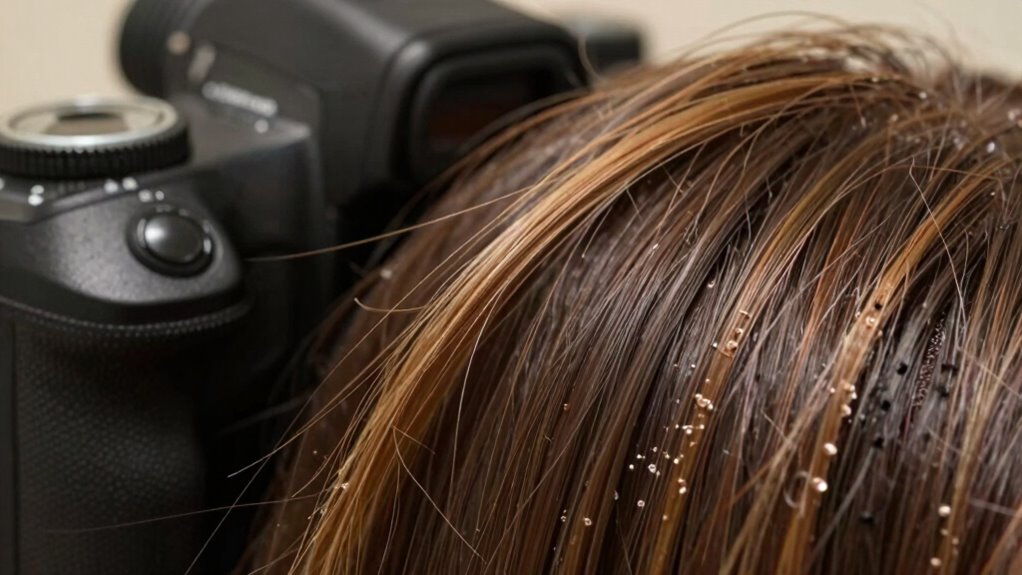
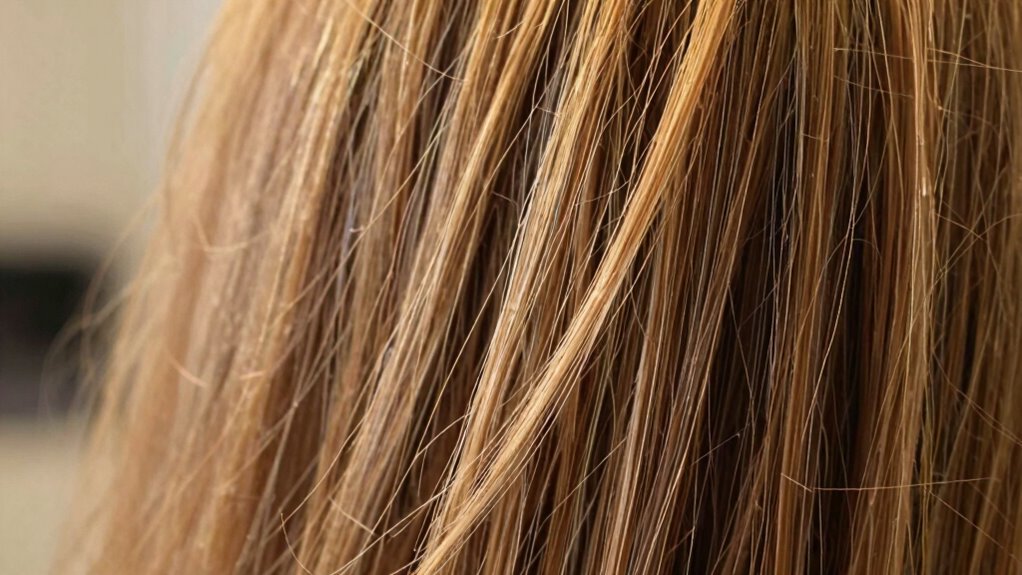
Exposing your hair to excessive heat from styling tools causes damage because it breaks down the hair’s natural structure. High temperatures can weaken the cuticle layer, leading to increased porosity, which makes your hair more vulnerable to moisture loss and environmental damage. If your hair has high porosity, it’s already prone to losing moisture, so heat can worsen this issue, resulting in brittle, frizzy hair. Additionally, heat can affect scalp health by drying out the scalp and disrupting natural oils, which are essential for healthy hair growth. Over time, this damage leads to split ends, hair breakage, and dullness. Understanding how heat impacts your hair’s porosity and scalp health helps you choose safer styling practices and protect your hair from long-term harm. Hair porosity plays a crucial role in how your hair responds to heat styling, influencing its vulnerability to damage. Moreover, the temperature thresholds at which heat begins to cause irreversible damage vary depending on your hair’s porosity and overall condition. Recognizing the danger zone can help you prevent unintended damage and maintain healthier hair. Being aware of heat damage signs can help you identify early damage and adjust your styling routine accordingly.
The Safe Temperature Range for Different Hair Types
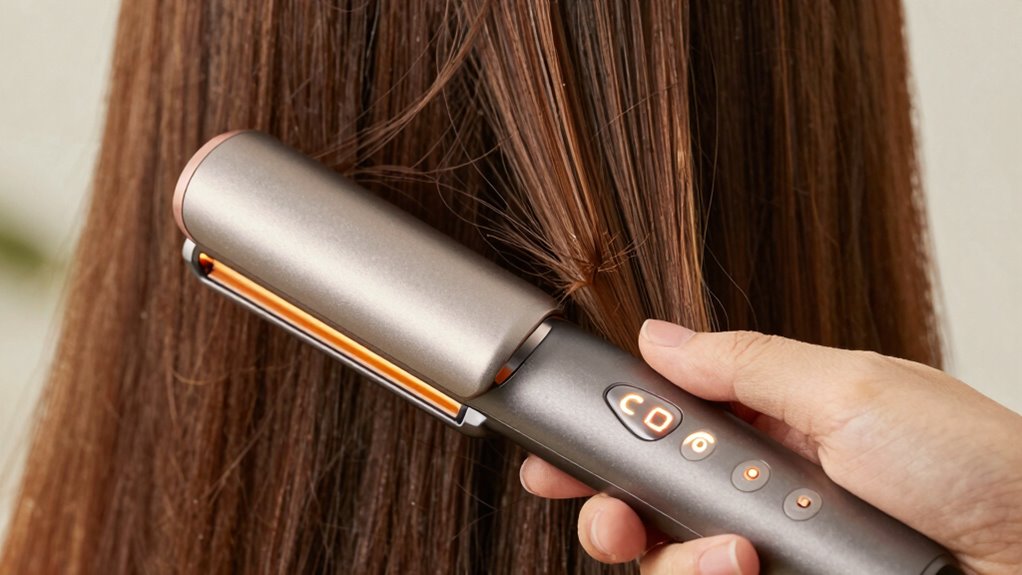
Your hair type determines the safest temperature to use with styling tools. Fine hair needs lower heat, around 300°F or less, to prevent damage, while thick hair can tolerate higher temperatures, often up to 400°F. Knowing these differences helps you style safely without compromising your hair’s health. Additionally, understanding Free Floating concepts can help you better adapt your styling techniques to minimize heat exposure. For example, temperature thresholds are crucial for maintaining hair integrity, especially when using high-heat tools regularly. Being aware of your hair porosity can further refine your heat settings to protect your hair from unnecessary stress and breakage. Properly managing piercing care and hygiene also plays a role in overall hair and scalp health, preventing infections that can affect hair growth.
Optimal Temperatures for Fine Hair
For fine hair, maintaining a safe temperature when using heat styling tools is essential to prevent damage. Because fine hair is more sensitive to heat, sticking to lower temperatures helps protect its delicate structure. Ideally, keep your styling tools between 250°F and 300°F (120°C to 150°C). This range minimizes the risk of overheating and breakage. Remember, high heat isn’t always necessary for styling fine hair effectively. Here are some tips:
- Use the lowest effective temperature setting
- Always apply a heat protectant spray
- Limit the duration of heat contact
- Test your tools before styling to find the most suitable temp
- Sizing and load‑planning tools can help you choose the right heat settings for your hair type
Understanding your fine hair’s heat sensitivity helps you achieve healthy, styled hair without sacrificing its integrity. Additionally, being aware of temperature thresholds can guide you in preventing unintended damage during styling. Knowing your hair’s safe temperature range allows for better control and more effective styling without harm. To better protect your hair, consider adjusting the heat level based on your hair’s specific needs.
Heat Tolerance for Thick Hair
Thick hair can handle higher heat settings compared to fine hair, but using excessive temperatures still risks damage. Your heat tolerance depends on the hair’s structure and condition, so it’s essential to stay within safe ranges. Generally, for thick hair, setting your styling tool between 350°F and 400°F is safe if the hair is healthy. However, if your thick hair is damaged or treated, lower temperatures around 300°F to 350°F are better. Going beyond 400°F increases the risk of moisture loss, breakage, and split ends. Always test your heat tool on a small section first to gauge your hair’s response. Remember, maintaining a lower temperature with proper technique and protective products preserves your thick hair’s strength and prevents long-term damage. Proper technique and understanding your hair’s unique needs are key to minimizing heat damage, ensuring healthier, stronger hair over time. Being aware of hair’s heat tolerance can guide you to make safer styling choices and protect your hair’s integrity. Additionally, paying attention to the condition of your hair can help you adjust heat settings appropriately and avoid unnecessary harm.
How to Measure and Keep Your Heat Tools at the Right Temperature
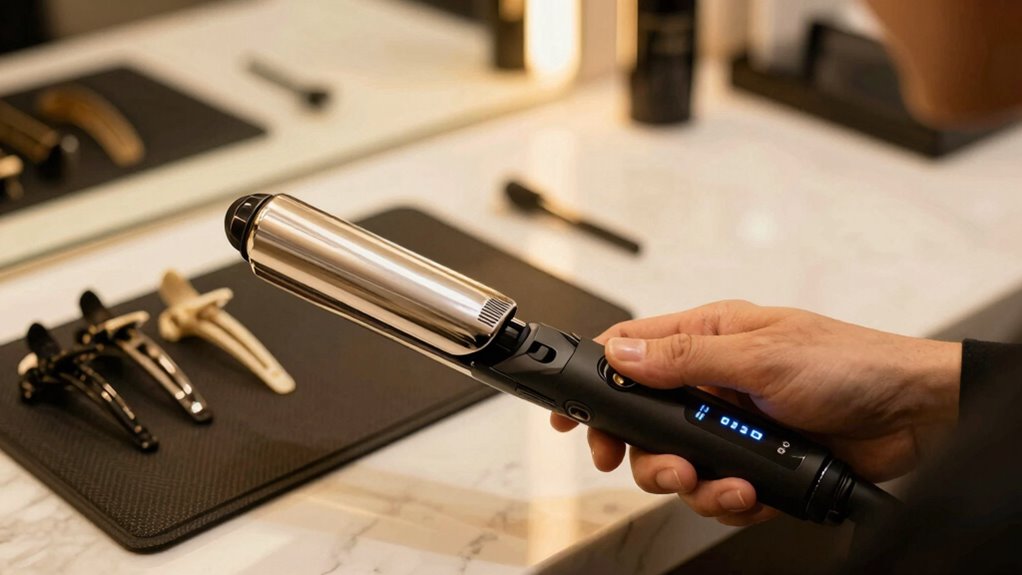
To prevent heat damage, it is essential to measure and maintain your heat tools at the right temperature. Proper temperature monitoring ensures you don’t accidentally set the heat too high or too low. Start by checking your device’s heat setting before use—most tools have adjustable dials or digital displays. Use an infrared thermometer for precise readings if needed. Remember to:
- Regularly verify your heat setting before styling
- Keep your tools clean for accurate temperature readings
- Avoid leaving tools on when not in use
- Adjust the temperature based on your hair type and needs
- Be aware of the temperature thresholds to avoid damaging your hair. Additionally, using the appropriate air purifier maintenance techniques can help create a healthier environment that supports hair health. Maintaining the right temperature helps protect your hair from damage and ensures effective styling. Staying mindful of these tips keeps your hair healthy while giving you the perfect style every time.
Signs Your Hair Is Being Damaged by Heat
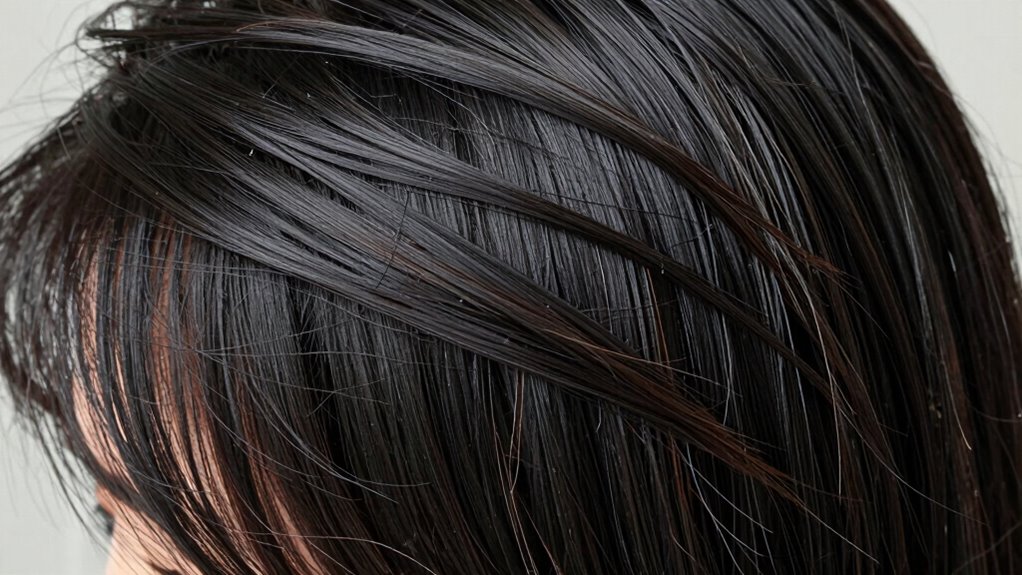
If your hair starts to look frizzy or feels rough and brittle, it’s a sign that heat damage may be occurring. You might also notice a dull, lackluster shine that isn’t restored with regular conditioning. These signs indicate that your hair is struggling to stay healthy under constant heat exposure. Regular use of heat styling tools at high temperatures can also cause damage to hair follicles, leading to weakened strands and increased breakage. Ensuring proper ventilation and cooling during styling can help minimize heat-related stress on your hair and scalp. Additionally, understanding the temperature thresholds for different hair types can help prevent unnecessary damage. In addition, using vetted heat protectant products can provide an extra layer of defense against high temperatures and maintain hair integrity. Proper temperature regulation is essential to protect hair from exceeding safe heat levels and avoiding long-term damage.
Frizz and Breakage
When your hair starts to show signs of damage from heat styling, frizz and breakage are often the first clues. You might notice your strands becoming more prone to flyaways or split ends. This damage usually indicates that your hair’s moisture barrier is compromised. To prevent further harm, always use heat protection products and follow proper styling tips. Additionally, understanding heat temperature thresholds can help you avoid unintentional damage from excessive heat exposure.
You may see:
- Increased frizz that won’t smooth out
- Fragile strands breaking easily
- Loss of natural texture
- Rough, dull feel to your hair
These signs mean your hair is struggling to handle high temperatures. Lowering the heat and adding heat protection can help prevent ongoing damage, keeping your hair healthier and more resilient over time.
Loss of Shine
A noticeable loss of shine is a common sign that your hair has suffered heat damage. When your hair looks dull and lacks luster, it indicates that the cuticles are damaged, often caused by excessive heat from styling tools. Using heat protection sprays can help preserve shine, but overuse or high temperatures can still harm your hair, especially with ceramic plates that distribute heat evenly but can still reach damaging levels. To prevent further damage, keep your styling temperature below 350°F and avoid prolonged exposure. Here’s a quick guide:
| Damage Indicator | Recommended Action |
|---|---|
| Dull, lackluster hair | Use heat protection sprays regularly |
| Frayed ends | Reduce heat setting on styling tools |
| Loss of natural shine | Limit heat exposure, opt for ceramic plates |
Tips to Protect Your Hair During Styling
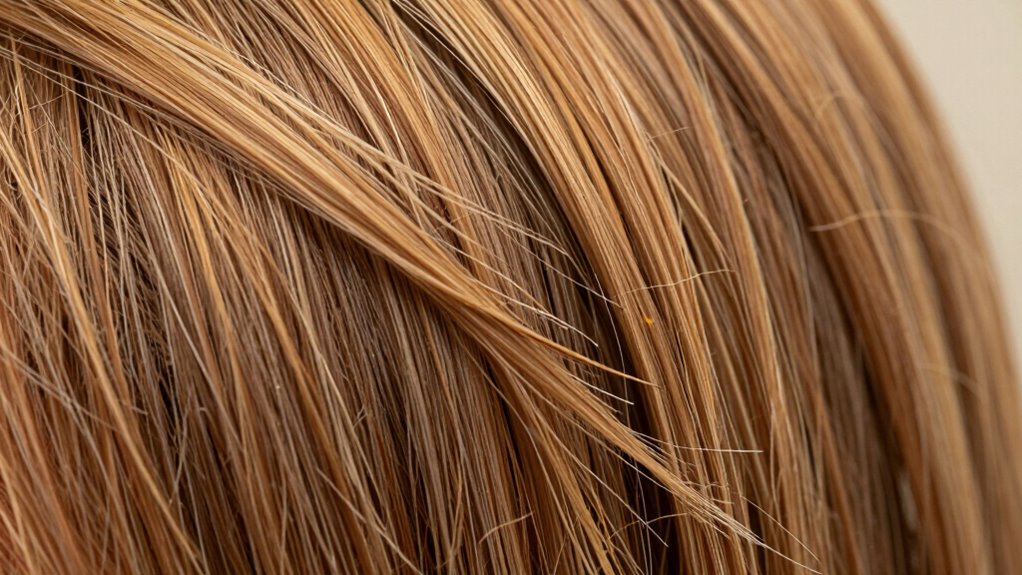
Protecting your hair during styling starts with smart technique and proper heat management. Using heat protection products is essential to shield your strands from damage. Incorporate effective styling techniques like avoiding high heat settings and limiting the duration of heat application. Keep your tools at the lowest effective temperature to reduce stress on your hair. Additionally, always work on dry hair and avoid passing the tool over the same section repeatedly.
Protect your hair with smart techniques and low heat settings for healthier styling.
Here are some tips to help you protect your hair:
- Apply a heat protectant spray before styling
- Use the lowest heat setting that still gives you the desired style
- Limit the number of passes with your heat tools
- Give your hair regular breaks from heat styling
Best Practices for Setting Your Heat Tools to Avoid Damage
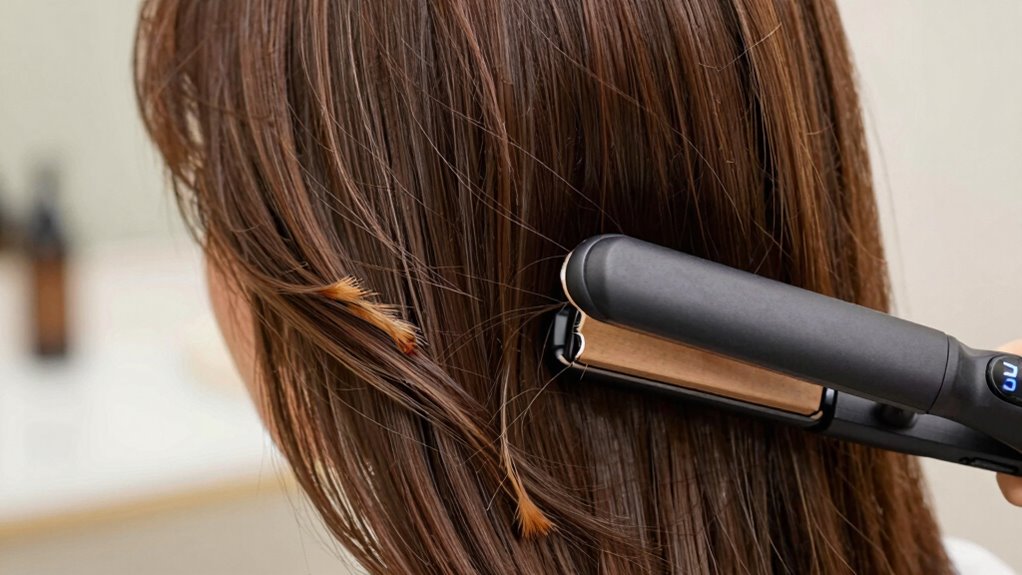
Setting your heat tools correctly is essential to prevent damage and maintain healthy hair. Always start by adjusting the temperature to suit your hair type, aiming for the lowest effective heat. If you have hair color, ensure your tools are set within ranges compatible with your dye, as excessive heat can fade color faster. For those with scalp sensitivity, avoid high temperatures that can cause irritation or burns. Use a heat protectant spray to create a barrier against direct heat, and never leave tools in one spot for too long. Regularly clean your tools to prevent buildup that can cause uneven heating. By following these practices, you can style confidently without compromising your hair’s health or color integrity.
Products to Repair and Strengthen Heat-Damaged Hair
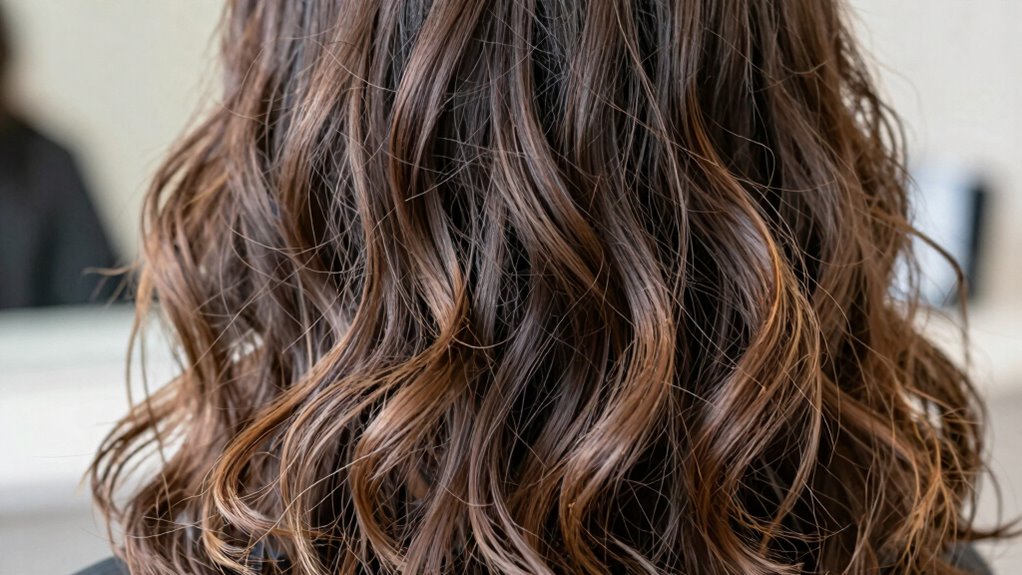
When your hair has suffered heat damage, choosing the right repair and strengthening products can make a significant difference. Look for deep conditioners, bond repair treatments, and reconstructive masks designed to restore moisture and strengthen weakened strands. These products help rebuild hair structure and improve elasticity over time. To maximize results, incorporate them into your hair care routines consistently. Also, check styling product compatibility to avoid further damage—using the wrong products can weaken your hair further. Consider serums with keratin or protein, leave-in treatments, and moisturizing oils that support repair and protection. By selecting targeted products and aligning them with your styling routine, you can help repair heat damage more effectively and restore your hair’s health.
Long-Term Strategies for Healthy, Heat-Styled Hair
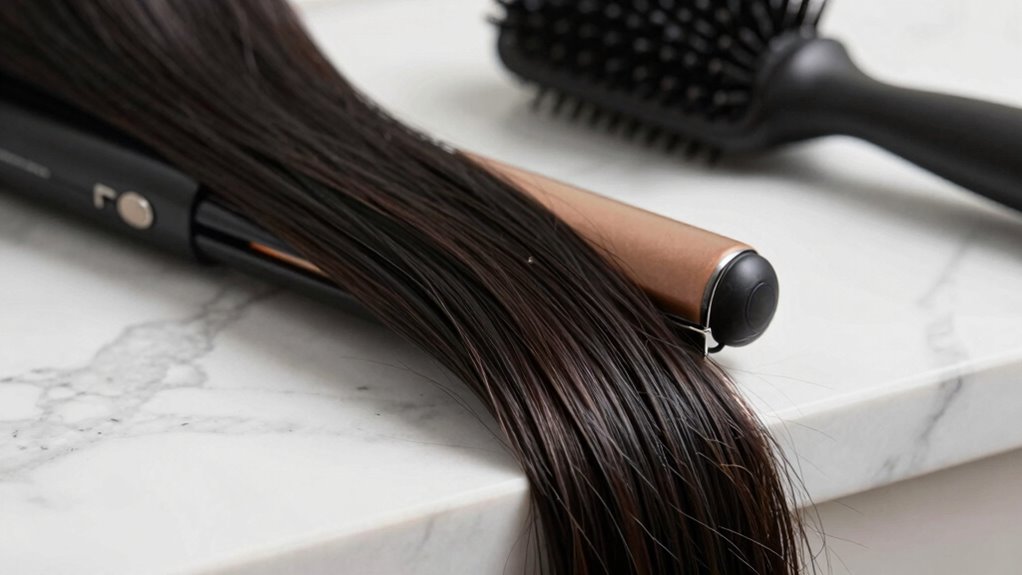
To maintain healthy, heat-styled hair over the long term, establishing consistent hair care habits is essential. First, debunk heat styling myths—believing higher temperatures always yield better results can lead to unnecessary damage. Instead, focus on heat damage prevention by using the lowest effective heat settings and always applying a heat protectant. Regularly deep condition your hair to restore moisture and strengthen strands against heat stress. Limit heat styling sessions and give your hair time to recover between treatments. Avoid the misconception that frequent heat styling is harmless; consistent care helps maintain hair integrity. By adopting these habits, you reduce the risk of long-term damage and support healthy, resilient hair that responds well to styling without sacrificing its health.
Frequently Asked Questions
Can Different Hair Textures Tolerate Higher Heat Without Damage?
Different hair textures do have varying heat tolerances, thanks to differences in hair elasticity. Thicker, coarser hair often tolerates higher heat without damage because it’s more elastic and resilient. Meanwhile, fine or delicate hair has lower heat tolerance and can easily get damaged at lower temperatures. You should always assess your hair’s elasticity and adjust heat settings accordingly, regardless of your hair type, to prevent heat damage and maintain healthy hair.
How Does Humidity Affect Heat Damage Risk During Styling?
Humidity increases your risk of heat damage during styling because moisture effects can make your hair more fragile. High humidity causes hair to absorb extra moisture, weakening the cuticle and making it more susceptible to heat damage. When you style in humid conditions, your hair can overheat more easily, leading to breakage and frizz. To protect your hair, adjust your heat settings and use heat protectant sprays that help guard against humidity risk.
Are There Specific Heat Settings for Colored or Chemically Treated Hair?
Did you know that using high heat can cause up to 50% more damage to colored or chemically treated hair? For color protection and chemical safety, keep your styling tools at lower settings—around 250°F (121°C) or less. This helps preserve your hair’s integrity, prevents fading, and minimizes damage. Always use a heat protectant and avoid prolonged heat exposure to keep your hair healthy and vibrant.
What Are the Long-Term Effects of Frequent Heat Styling on Hair Health?
Frequent heat styling can cause long-term damage to your hair, leading to split ends and moisture loss. Over time, high temperatures weaken your hair’s structure, making it more prone to breakage. You might notice dullness and increased fragility. To protect your hair, use lower heat settings, apply heat protectant sprays, and limit styling sessions. Regular trims and deep conditioning treatments also help maintain healthier, more resilient hair.
How Does Hair Porosity Influence Heat Damage Thresholds?
Your hair’s porosity impact is huge when it comes to heat damage thresholds. If your hair’s highly porous, it absorbs heat like a sponge, making it much more vulnerable to damage at lower temperatures. Conversely, low-porosity hair acts like a fortress, resisting heat but requiring higher temperatures for styling. Knowing your porosity helps you set safe heat levels, breaking down styling barriers and protecting your hair’s health.
Conclusion
Remember, your hair is like delicate silk—too much heat can turn it to brittle straw. Keep your styling tools in check, like a gentle breeze guiding a sailboat, and your hair will thank you with shine and strength. Think of heat protection as your hair’s armor, shielding it from damage. When you treat your hair kindly, you’ll enjoy vibrant, healthy locks that dance with every move—making your hair your favorite crown to wear.