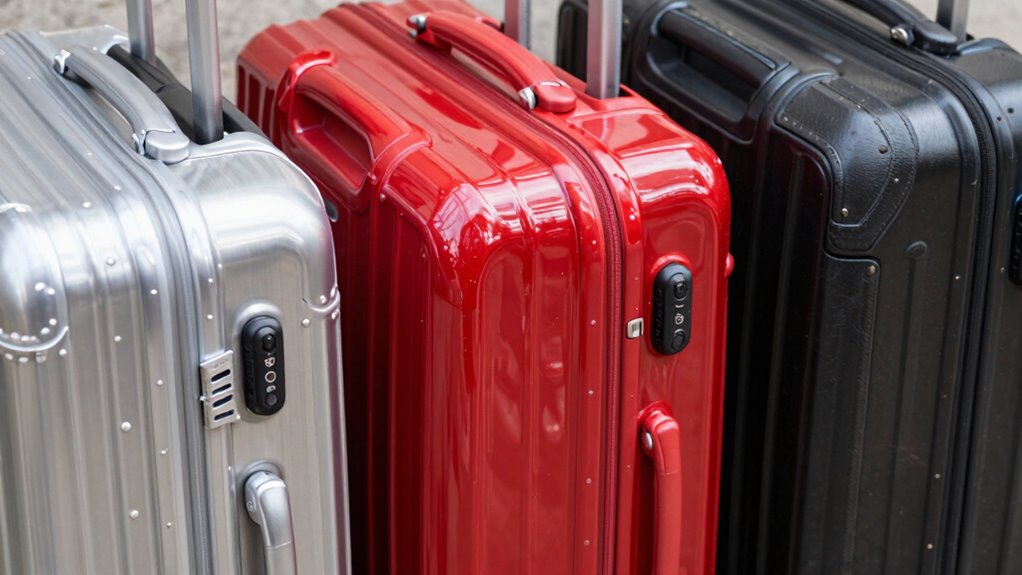

If you want luggage that can survive tough travel conditions, polycarbonate is your best bet, thanks to its impact absorption and flexibility. Aluminum offers excellent durability and resists impacts, but it’s heavier and needs maintenance to keep its look. ABS is lightweight and budget-friendly but less resistant to cracks and scratches. Want to know which option suits your travel style best? Keep exploring for the full picture.

Get your wardrobe favorites delivered free — and shop member deals
- Fast, free delivery on millions of items
- Access to Prime Big Deal Days deals on October 6–7
- Prime Video, Amazon Music and more included
Key Takeaways
- Polycarbonate luggage offers superior impact absorption and flexibility, making it highly resistant to cracks and shattering during travel.
- Aluminum cases are durable and impact-resistant but prone to dents and scratches, requiring maintenance to retain appearance.
- ABS luggage is lightweight and affordable but less durable, more susceptible to cracks and scuffs under rough handling.
- Reinforced aluminum corners enhance impact resistance, while textured polycarbonate surfaces hide scratches and withstand rough treatment.
- For frequent travel and maximum durability, aluminum and polycarbonate are better suited than ABS, which is ideal for short or casual trips.
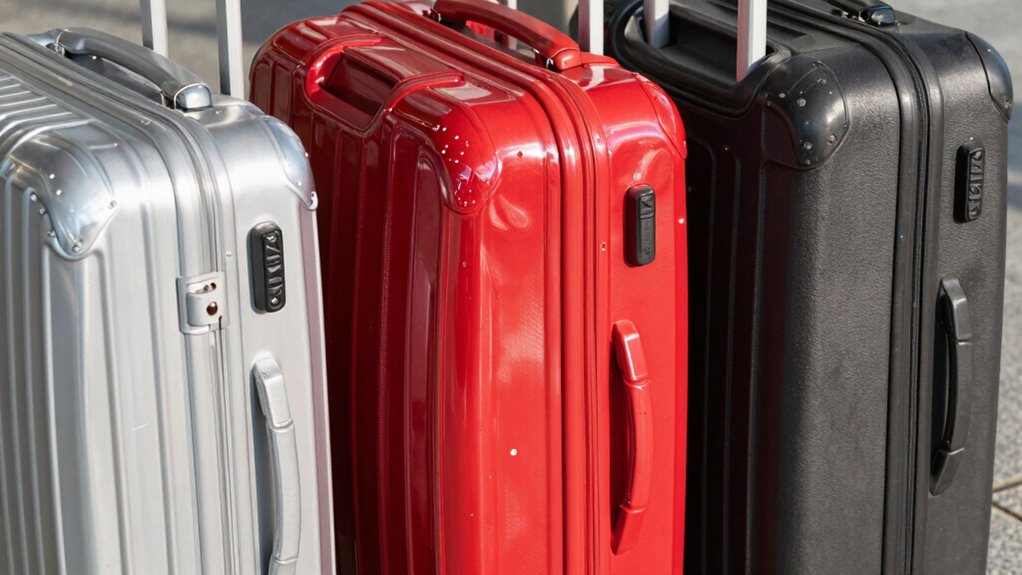
When choosing new luggage, understanding the differences between aluminum, polycarbonate, and ABS can help you make an informed decision. Each material offers unique benefits and challenges, especially when it comes to lightweight design and durability factors. If you travel frequently or carry valuable items, knowing which material withstands the rigors of travel can save you frustration and money. Aluminum luggage is renowned for its premium look and exceptional durability, making it a favorite among frequent travelers. Its sturdy construction withstands rough handling and resists impacts better than most materials. However, aluminum tends to be heavier, which can be a drawback if you’re trying to keep your luggage lightweight. Still, some aluminum suitcases feature reinforced corners and trims that enhance their durability without adding excessive weight. The robust nature of aluminum makes it a reliable choice for protecting fragile contents, but keep in mind that it’s more susceptible to dents and scratches. Additionally, aluminum often requires more maintenance to keep its appearance pristine.
Polycarbonate is a popular choice for travelers seeking a balance between lightweight design and durability. It’s a type of plastic that’s lightweight yet strong enough to absorb impacts without cracking. Polycarbonate luggage is designed to flex slightly upon impact, which helps it withstand rough baggage handling without breaking. This material is usually lighter than aluminum, making it easier to carry and maneuver through crowded airports or tight spaces. Its durability factors include resistance to cracking and shattering, although it can scratch more easily than aluminum. Many polycarbonate cases feature textured surfaces to hide scratches and maintain a sleek appearance over time. Because of its lightweight properties and resilience, polycarbonate is ideal if you want luggage that can survive the bumps and knocks of frequent travel without adding unnecessary weight. Moreover, its impact absorption qualities make it a durable option for those who prioritize longevity.
ABS, another plastic option, tends to be the most affordable and lightweight material. Its lightweight design makes it easy to lift and carry, which appeals to budget-conscious travelers. However, ABS generally offers less durability compared to polycarbonate, making it more vulnerable to cracks and breaks when subjected to strong impacts. It’s often chosen for short trips or infrequent travel, where the luggage isn’t exposed to heavy handling. ABS suitcases tend to scratch and scuff more easily, but their lower cost allows you to replace them more often without feeling guilty. If durability factors and longevity are top priorities, ABS might not be the best choice, but for casual trips and light use, it’s a convenient and inexpensive option.
polycarbonate hard shell luggage
As an affiliate, we earn on qualifying purchases.
As an affiliate, we earn on qualifying purchases.
Frequently Asked Questions
Which Luggage Type Is Most Environmentally Friendly?
You’ll find that polycarbonate luggage is often more eco-friendly because it uses fewer energy-intensive manufacturing processes compared to aluminum. It’s also more recyclable, fitting well into sustainability efforts. ABS is less environmentally friendly due to its lower recyclability and higher plastic content. Overall, choosing luggage made from eco-friendly materials and considering recyclability helps reduce your environmental impact during travel.
How Do Luggage Materials Affect Airline Baggage Fees?
Think of your luggage as a ticket to smoother travel. Heavier materials like aluminum can increase airline baggage fees because they’re heavier, affecting baggage handling and costs. Durable materials like polycarbonate and ABS keep weight down while offering strength, often reducing fees. So, choosing lighter, durable luggage can save you money at check-in, ensuring your baggage handling experience stays seamless and your wallet stays fuller.
Can Different Luggage Shells Be Repaired After Damage?
Yes, different luggage shells can often be repaired after damage, especially if you choose damage-resistant materials like polycarbonate or aluminum. Shell repair might involve patching cracks or replacing parts, which is usually doable for aluminum and polycarbonate shells. ABS shells, being more brittle, may be harder to fix. Regular maintenance and choosing durable, damage-resistant luggage can extend its lifespan and keep it looking and functioning well after travel.
Which Luggage Material Offers the Best Weight-To-Strength Ratio?
Polycarbonate offers the best weight-to-strength ratio among luggage materials. When comparing weight, polycarbonate is lightweight yet durable, making it ideal for frequent travelers. Durability factors like impact resistance and flexibility give it an edge over ABS, which is lighter but less sturdy, and aluminum, which is strong but considerably heavier. If you want light luggage that can withstand rough handling, polycarbonate provides an ideal balance.
Are There Specific Security Concerns With Each Material?
Security concerns vary with each material. Aluminum offers sturdy security features like built-in locks, but its material vulnerabilities include dents and scratches that could signal tampering. Polycarbonate luggage resists impacts well, yet its plastic nature might be more prone to cracking under stress, potentially exposing contents. ABS is lightweight with decent security features but is more susceptible to cracking, raising concerns about durability and tampering. Always choose luggage with reliable locks and reinforced corners for added security.
Conclusion
When your luggage takes a beating on the road, think of it as a reflection of your journey’s resilience. Whether aluminum’s gleam, polycarbonate’s flexibility, or ABS’s toughness, each material tells a story of survival amid chaos. As you navigate bustling terminals and rugged terrains, remember that your choice shapes not just your luggage’s fate but the adventure itself. Travel with confidence, knowing your bag’s strength mirrors your own spirit of exploration.
Evergreen bestsellers Picks
bestsellers
As an affiliate, we earn on qualifying purchases.