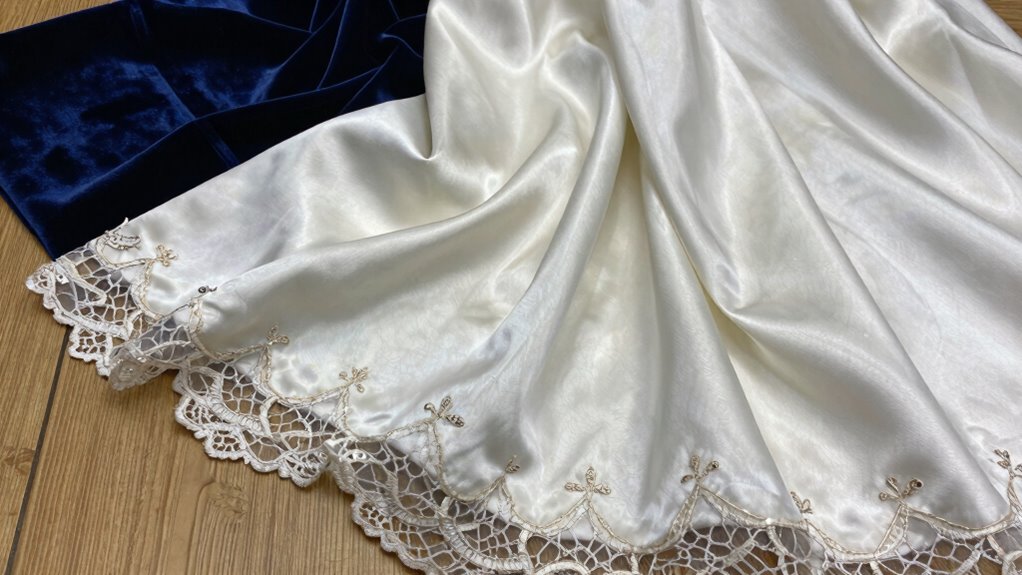

When choosing couture fabrics, you might notice that some are rare due to complex manufacturing, limited supply, and the need for exceptional craftsmanship. These fabrics often involve intricate processes like hand-harvesting silk or developing innovative fibers, making them more costly and exclusive. Sustainability and ethical sourcing also play a role, as many rare materials come from regions with environmental or social challenges. If you continue exploring, you’ll discover how craftsmanship and tradition make these fabrics truly exceptional.
Key Takeaways
- Rare couture fabrics often require intricate, labor-intensive manufacturing processes and specialized artisan skills.
- Limited supply of high-quality silks, cashmere, and innovative textiles results from sustainable, artisanal, and regional production challenges.
- Some fabrics are costly due to complex treatments, advanced weaving techniques, or cutting-edge technological innovations.
- Ethical sourcing and environmental considerations influence the rarity of materials, especially those from regions with sustainability issues.
- The story, craftsmanship, and tradition behind each fabric contribute to its exclusivity and desirability in couture.
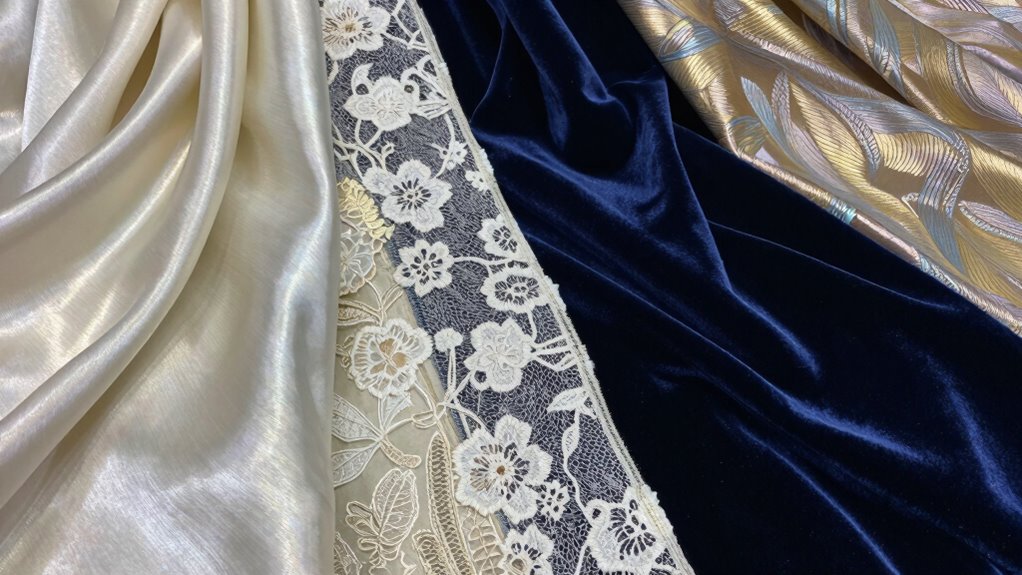
Choosing the right fabric is the foundation of any couture piece, as it determines drape, structure, and overall luxury. When selecting materials, you quickly realize that some fabrics are rare not just because of their appearance, but due to the complexities involved in their production. Luxury textile innovations have pushed boundaries, creating fabrics that are incredibly refined, lightweight, or possess unique textures. These innovations often involve advanced weaving techniques, blends, or treatments that elevate the fabric’s quality, making them highly sought after in couture. However, despite these technological advances, sourcing such premium textiles isn’t always straightforward. Ethical sourcing challenges frequently complicate the process, as you’re faced with balancing quality with responsibility. Many luxurious fabrics, like exotic silks or rare fibers, come from regions where sustainable practices might be hard to verify. You might find yourself questioning whether the beauty of a fabric justifies potential environmental or social costs. This tension highlights why some materials remain rare—they’re produced in limited quantities, often under strict ethical guidelines or through artisanal methods that demand more time and expertise.
The rarity of certain fabrics stems from their intricate manufacturing processes and the specialized knowledge required to produce them. For example, high-quality silk or cashmere involves meticulous harvesting and handling, which limits supply but guarantees unmatched softness and luster. Similarly, innovative textiles—like NASA-developed high-performance fibers—are expensive and complex to produce, making them exclusive to those who truly value cutting-edge luxury. You also have to consider the sustainability aspect, as some rare textiles are linked to environmental issues or exploitative labor practices. Ethical sourcing challenges force you to dig deeper into supply chains, seeking transparency and fair trade certifications. Understanding the production complexities behind these fabrics is essential to appreciating their uniqueness and the level of craftsmanship involved. This knowledge allows you to better evaluate the sustainability and ethics of your material choices, aligning them with your values. Recognizing the ethical considerations involved in sourcing rare textiles helps foster a more conscious appreciation for these luxurious materials. Additionally, advancements in textile technology have led to the development of new innovative fibers, expanding the possibilities for couture while also raising questions about their environmental footprint.
In the end, choosing couture fabrics isn’t just about aesthetics; it’s a conscious decision that involves understanding the story behind each material. Rare fabrics are often the result of a perfect storm of innovation, tradition, and ethical considerations. When you select these materials, you’re not only embracing their beauty and exclusivity but also committing to a level of craftsmanship that respects both the environment and the artisans behind the textiles. This careful selection process elevates your couture pieces from mere garments to statements of artistry, sustainability, and innovation.
As an affiliate, we earn on qualifying purchases.
Frequently Asked Questions
How Do Rare Fabrics Affect the Overall Cost of Couture Garments?
Rare fabrics markedly increase the overall cost of couture garments due to their high fabric rarity and limited availability. You’ll notice that the unique materials demand more expensive sourcing, specialized craftsmanship, and longer production times. These cost implications make couture pieces more luxurious and exclusive, reflecting the true value of using rare fabrics. As a result, the final price often skyrockets compared to garments made from more common materials.
Are Rare Fabrics More Environmentally Sustainable Than Common Materials?
Think of rare fabrics as rare blooms in a garden—they often require special care. While some rare materials are eco-friendly alternatives, they can also have a significant environmental impact if sourced irresponsibly. It’s not always that rare fabrics are more sustainable; their sustainability depends on how they’re produced. To truly minimize environmental impact, seek out fabrics that balance rarity with eco-conscious practices, turning your couture into a greener statement.
How Long Does It Typically Take to Source Rare Couture Fabrics?
You can expect it to take anywhere from a few weeks to several months to source rare couture fabrics. The process hinges on fabric authenticity and supplier reliability, which guarantee you get genuine, high-quality materials. Sometimes, you might need to wait longer if the fabric is highly exclusive or difficult to procure. Staying patient and working closely with trusted suppliers helps you secure the right materials without compromising quality.
Can Rare Fabrics Be Ethically Sourced and Certified?
Yes, rare fabrics can be ethically sourced and certified. While it might seem contradictory, many suppliers prioritize ethical sourcing, adhering to certification standards like GOTS or Fair Trade. This guarantees the materials are produced responsibly, protecting workers and the environment. You can find these rare textiles with transparent supply chains, allowing you to enjoy exclusive fabrics without compromising your values. Quality and ethics can go hand in hand.
What Are the Most Durable Rare Fabrics for Long-Lasting Couture Pieces?
You should consider fabrics like vicuña, silk, or certain high-quality wools for durable couture pieces. These textiles, though rare, offer exceptional fabric preservation and resilience, making your garments long-lasting. Their textile rarity ensures uniqueness, but maintaining their condition demands careful handling. Choosing these rare yet durable fabrics guarantees your couture pieces stay beautiful and resilient over time, blending exclusivity with practicality.
Conclusion
When choosing couture fabrics, remember that rarity often stems from the time, skill, and resources needed to produce them. For example, imagine designing a gown with a rare silk that takes months to harvest and process—your creation becomes truly one-of-a-kind. By understanding these unique materials, you not only elevate your craftsmanship but also create pieces that stand out and tell a story. Embrace these rare fabrics, and your designs will speak volumes about your artistry.