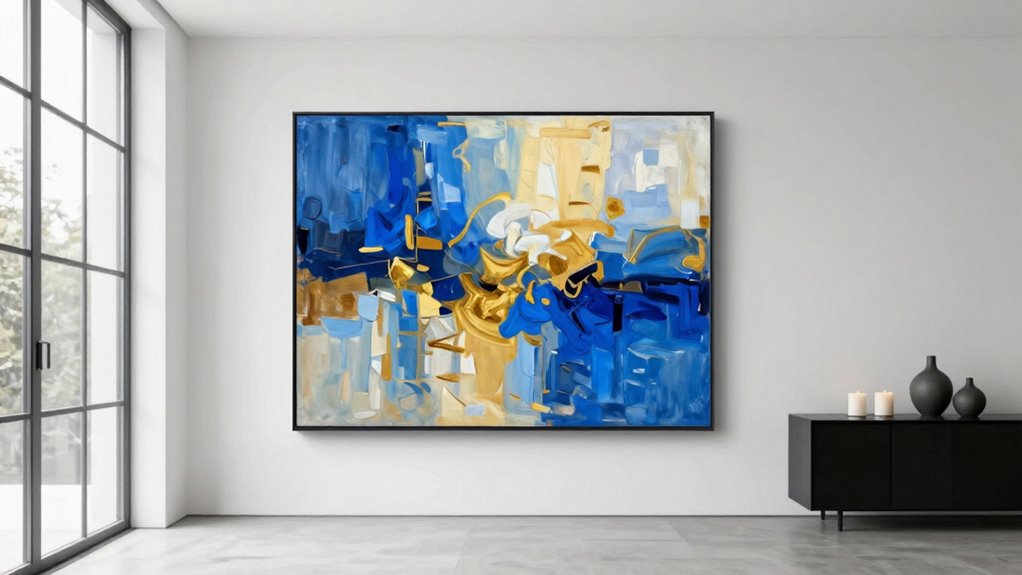

To choose a wall art scale that looks intentional, consider the size of your wall and the surrounding furniture. Aim for artwork that is proportionate to the space—larger pieces work well on open walls, while smaller pieces suit narrower areas. Maintain balance by matching the art’s scale to nearby decor elements. Focus on creating visual harmony so your display feels deliberate. If you’re curious about fine-tuning your choices, you’ll find useful tips ahead.

Get your wardrobe favorites delivered free with Prime
- Fast, free delivery on millions of items
- Prime Video, Amazon Music and more included
- Member-only deals all year
Key Takeaways
- Match artwork size to wall space, ensuring it fills the area without overwhelming or appearing too small.
- Consider the room’s furniture scale to select art that complements existing proportions.
- Use larger pieces as focal points, and group smaller artworks for cohesive visual balance.
- Maintain an appropriate margin around the art to create a deliberate, uncluttered look.
- Ensure the artwork’s scale aligns with the overall room decor and style for a harmonious aesthetic.
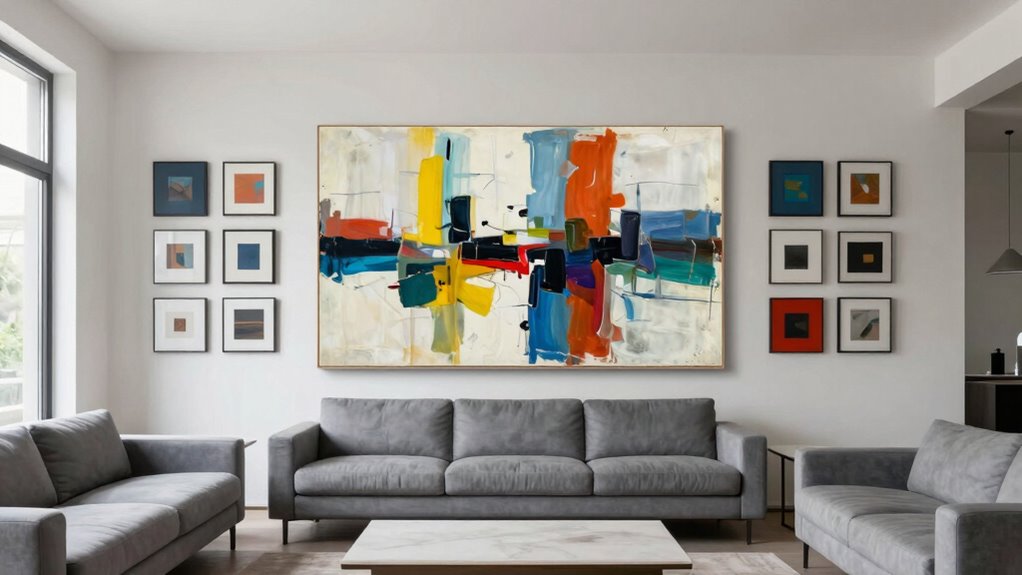
Frame styles also influence how your artwork fits into the room’s overall aesthetic. The right frame can elevate a piece, making it look polished and complete. Modern frames with clean lines suit contemporary spaces, while ornate or vintage frames work better in traditional settings. You might opt for sleek metal frames for a minimalist look or rustic wood for a cozy, farmhouse feel. The frame’s style should harmonize with your room’s decor and reinforce your chosen theme. Additionally, the frame’s size and thickness matter—thinner frames can make art appear lighter and more delicate, whereas thicker frames add presence and weight. The goal is to select frames that enhance the art itself and align with your room’s style, ensuring your wall art feels like a deliberate, well-thought-out element.
In the end, choosing the right wall art scale involves balancing size, color, and frame style to create a cohesive, intentional look. When you take the time to consider these details, your wall art will look purposeful and stylish, elevating your entire space.
As an affiliate, we earn on qualifying purchases.
Frequently Asked Questions
How Do I Balance Multiple Pieces of Wall Art?
To balance multiple pieces of wall art, start with an art grouping that feels cohesive, using similar frames or themes. Arrange the pieces at varying heights but maintain visual balance by distributing larger and smaller artworks evenly across the space. Step back frequently to check the overall visual balance, ensuring no single area feels too heavy. This approach creates a harmonious, intentional look that enhances your wall’s aesthetic.
What Are the Best Wall Art Sizes for Small Rooms?
Think of small rooms as cozy nooks that need carefully chosen accents. Opt for smaller wall art, like 16×20 inches or 20×24 inches, to keep the space balanced. Coordinate colors with your room’s palette and select frame styles that complement your decor—sleek and simple for modern spaces or ornate for traditional vibes. This guarantees your art feels intentional, enhancing your room without overwhelming it.
How Can I Create a Cohesive Gallery Wall?
To create a cohesive gallery wall, start by selecting pieces that share a common color palette or theme. Mix frame styles thoughtfully, balancing sleek modern frames with vintage ones for visual interest. Arrange your art before hanging to guarantee balance, and consider spacing consistently. Incorporate color coordination to unify diverse pieces, and vary frame styles strategically to add character while maintaining harmony across your gallery wall.
Should Wall Art Be Proportional to Furniture?
Yes, wall art should be proportional to furniture. When selecting art, consider your furniture’s size and style; larger pieces work well above large sofas or beds, while smaller art suits accent areas. Guarantee the art style complements your space’s overall theme, and coordinate colors for a cohesive look. Proper scaling creates visual balance, making your room feel intentional and well-designed without overwhelming or underwhelming the furniture.
How Do I Choose Wall Art for High Ceilings?
Think of your high ceilings as a grand stage for your art. To make it pop, choose large-scale pieces that fill the space without overwhelming it. Use color coordination to tie the artwork with your room’s palette, creating harmony. Opt for frame styles that complement your decor—bold frames for modern spaces or ornate ones for classic. This balance ensures your wall art feels intentional and engaging, filling the room with visual drama.
Conclusion
Remember, selecting the right wall art scale is like crafting a symphony—each element must harmonize perfectly. When you choose pieces that complement your space, you create a visual melody that feels both intentional and inspiring. Don’t forget, as Picasso said, “Every act of creation is first an act of destruction.” So, trust your instincts, let go of doubts, and design your walls with confidence—your space will tell a story worth hearing.
Fall Picks
fall essentials
As an affiliate, we earn on qualifying purchases.