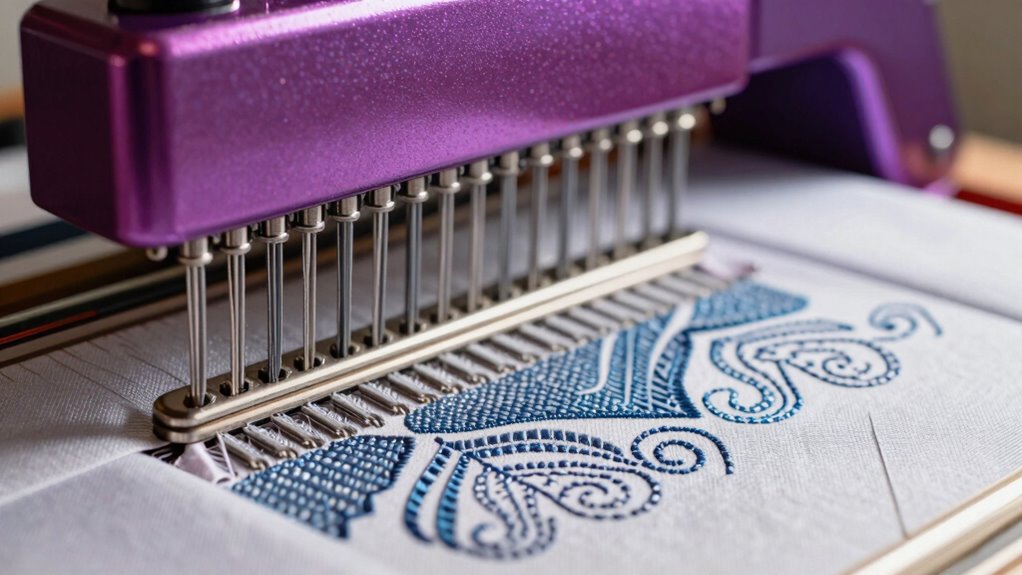

When working with embroidery machines, choosing the right hoop size guarantees your design fits well and stays stable during stitching. Larger hoops suit bigger designs or multiple motifs, while smaller ones work for detailed work. Stitch density affects the quality of stitches; too dense can cause puckering, while too sparse may look weak. Understanding how hoop size and stitch density interact helps you achieve polished results. Keep exploring to discover expert tips that can elevate your embroidery projects.
Key Takeaways
- Choose hoop sizes based on the design dimensions and fabric area for better stability and professional results.
- Larger hoops accommodate bigger or multiple motifs, while smaller hoops suit detailed, intricate designs.
- Proper stitch density ensures even coverage without puckering or thread breakage; adjust based on fabric and design.
- Match stitch length and density to fabric type for optimal appearance and durability.
- Consistent hooping and tension prevent puckering and maintain stitch quality throughout the embroidery.
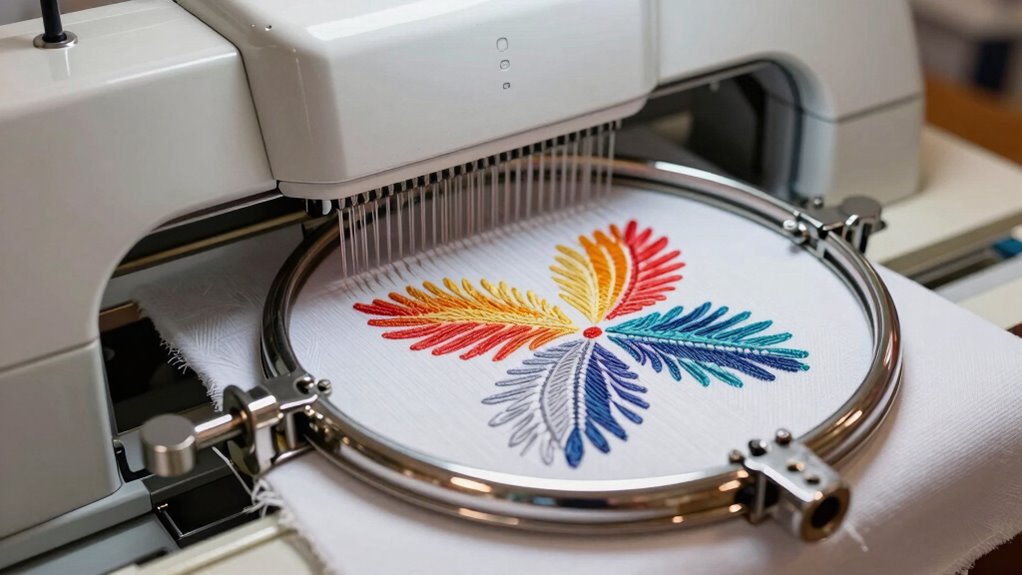
Embroidery machines have revolutionized the way both hobbyists and professionals create intricate designs on fabric. When you’re working with these machines, understanding the basics of hoop sizes and stitch density is vital to achieving quality results. One of the fundamental steps is choosing the right thread types, which directly influence the appearance and durability of your embroidery. You have a variety of options, including polyester, cotton, rayon, and specialty threads like metallic or variegated threads. Each type offers different textures, finishes, and strengths. Polyester is known for its strength and colorfastness, making it a popular choice for most projects, while cotton threads give a softer, matte finish ideal for a vintage or subtle look. Rayon threads provide a shiny, luxurious appearance, perfect for decorative designs, and metallic threads add a touch of shimmer for special accents.
Before starting your embroidery, fabric preparation is vital. Properly preparing your fabric ensures smooth stitching and prevents issues like puckering or skipped stitches. You should start by selecting a fabric that’s suitable for your project and wash or press it to remove any sizing or wrinkles. If needed, you might stabilize your fabric using a tear-away, cut-away, or wash-away stabilizer, depending on the project and the fabric type. Tightening and securing the fabric in the hoop is equally important; make sure it’s taut but not stretched, as this helps maintain consistent stitch quality and prevents distortion during stitching. Additionally, understanding hoop sizes helps optimize your workspace and design placement, ensuring that your embroidery fits perfectly within the fabric area. Choosing the right thread tension is also crucial to prevent puckering and achieve even stitches throughout your design. Proper thread selection can also reduce the need for frequent adjustments during stitching, saving you time and effort. Familiarity with these embroidery fundamentals can significantly improve your overall results and satisfaction with each project. To further enhance your embroidery, consider practicing with different fabric types to see how they respond to various stitches and stabilizers, which can help you develop your skills and achieve more professional results.
When it comes to hoop sizes, bigger isn’t always better—it’s about choosing the right size for your design. Smaller hoops are perfect for detailed, intricate motifs, while larger hoops accommodate bigger designs or multiple motifs in one session. The key is to match the hoop size to the design dimensions and fabric area you’re working on. The right hoop also minimizes fabric slack and helps keep everything stable during stitching. Ensuring your fabric is properly prepared and secured, along with selecting the appropriate thread types, will make a noticeable difference in your final product. It allows your embroidery to look professional, with clean, sharp stitches and vibrant colors. So, take your time with fabric prep and thread selection, and choose your hoop size thoughtfully, to guarantee each project turns out beautifully.
embroidery hoop sizes for machine embroidery
As an affiliate, we earn on qualifying purchases.
As an affiliate, we earn on qualifying purchases.
Frequently Asked Questions
How Do I Choose the Right Hoop Size for My Project?
To choose the right hoop size, consider your project’s dimensions and fabric type. You want a hoop that securely holds your fabric without over-tightening, which can affect thread tension. Use fabric stabilization techniques to prevent puckering or shifting. Larger hoops give more space for intricate designs, but smaller hoops offer better control for detailed work. Always test on scrap fabric first to verify proper tension and stabilization for a smooth embroidery process.
What Factors Influence Stitch Density Beyond Machine Settings?
Stitch density depends on factors like thread tension and fabric stability. When your thread tension is too tight, stitches can bunch or break, affecting density. If your fabric isn’t stable or properly hooped, stitches may misalign or become uneven, influencing density. Adjusting these factors guarantees your stitches are consistent and balanced. Properly balancing thread tension and maintaining fabric stability helps achieve the desired stitch density for professional-looking embroidery.
Can I Use Different Hoop Sizes on the Same Machine?
You can definitely use different hoop sizes on the same machine. Notably, about 80% of embroidery enthusiasts switch hoops for specific projects. When changing hoop sizes, consider the hoop material to guarantee it’s compatible with your fabric, and adjust your embroidery speed accordingly. Larger hoops may require slower speeds for precision, while smaller hoops can handle faster stitching. Always secure the fabric tightly for best results, regardless of hoop size.
How Does Hoop Size Affect Embroidery Design Quality?
Hoop size directly impacts embroidery design quality by influencing hoop tension and fabric stabilization. A correctly sized hoop guarantees even tension, preventing puckering or shifting, which leads to cleaner, more precise stitches. Using an appropriate hoop size helps stabilize the fabric, especially for larger or intricate designs, resulting in smoother embroidery. Proper hoop tension and stabilization are key to achieving professional-looking results, regardless of the hoop size you choose.
Are There Limitations to Stitch Density With Small Hoops?
Yes, small hoops do have stitch limitations because of hoop constraints. You can’t pack stitches too densely in tiny hoops without risking fabric puckering or stitch distortion. The limited space restricts how close your stitches can be, affecting design quality. So, when using small hoops, you need to be mindful of stitch density to avoid compromising the overall embroidery appearance. Always check your machine’s recommended stitch constraints for ideal results.
Conclusion
Understanding hoop sizes and stitch density helps you create stunning embroidery projects. For instance, if you’re designing a detailed logo, choosing the right hoop guarantees your design stays crisp, while adjusting stitch density prevents puckering. Imagine finishing a custom gift with perfect stitches—your attention to these basics makes all the difference. Keep experimenting and refining your skills, and you’ll turn each project into a masterpiece with professional-quality results.