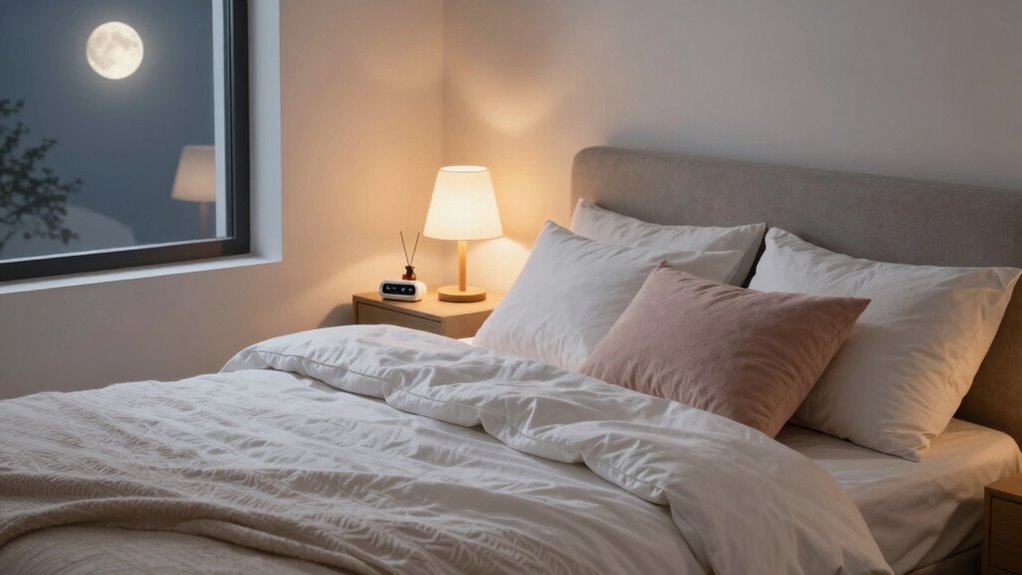
To optimize your sleep environment, make certain to block out light with blackout curtains or a sleep mask, signaling your brain it’s time to rest. Keep the room cool between 60-67°F to prevent disruptions and guarantee quick sleep onset. Use layered, breathable bedding to stay comfortable throughout the night. Maintain fresh air for better breathing, which supports restful sleep and vivid dreams. Keep these tips in mind—there’s more to discover for truly restorative sleep.
Play games included with Prime
Start a Prime free trial and play with Amazon Luna on your devices.
As an affiliate, we earn on qualifying purchases.
Key Takeaways
- Use blackout curtains or sleep masks to create complete darkness and support circadian rhythm.
- Maintain a bedroom temperature between 60-67°F (15.5-19.5°C) for optimal sleep quality.
- Layer bedding with breathable textiles to adjust comfort and promote restful sleep.
- Ensure good air quality with purifiers to support breathing and reduce pollutants.
- Establish calming routines and avoid screens before bed to enhance overall sleep hygiene.
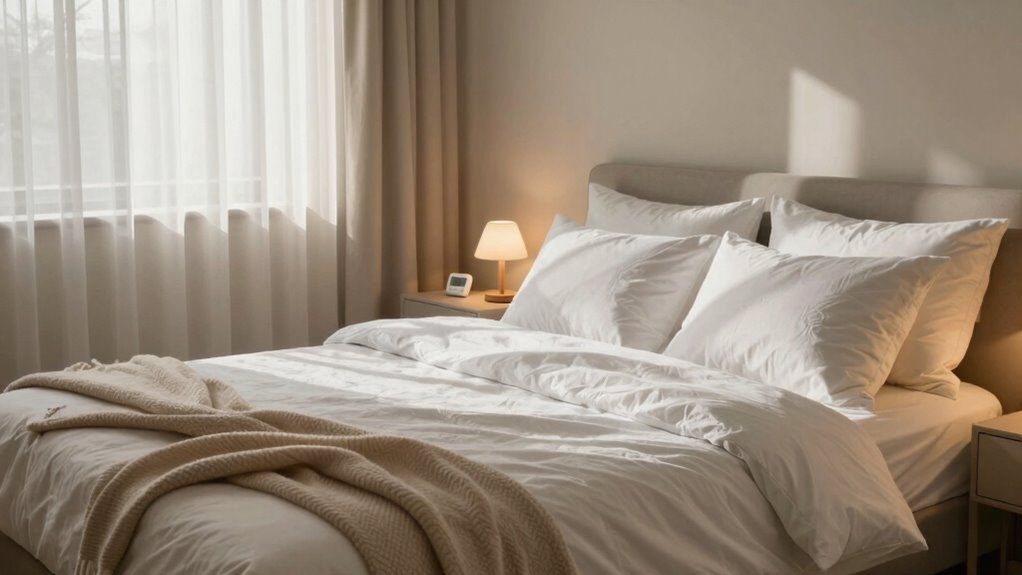
Getting your sleep environment just right can make all the difference in how well you rest. When you optimize your sleep setup, you’re not just aiming for comfort—you’re actively enhancing your sleep quality and dream experiences. Dream enhancement begins with creating a sleep environment that promotes deep, uninterrupted rest. The right combination of light, temperature, and textiles can help you fall asleep faster, stay asleep longer, and wake up feeling refreshed.
Optimizing your sleep environment enhances rest, dream quality, and overall well-being through better light, temperature, and textiles.
First, consider the lighting in your room. Darkness is key for quality sleep. Even small amounts of light from streetlights or electronic devices can disrupt your circadian rhythm. Invest in blackout curtains or a sleep mask to block out external light sources. You want your room to be as dark as possible, signaling to your brain that it’s time to wind down. This darkness not only improves sleep quality but also deepens your REM sleep stages, which are essential for dream enhancement. When your sleep environment is properly dark, you’re more likely to experience vivid, memorable dreams.
Temperature plays a vital role in your sleep setup. The ideal sleep temperature for most people is around 60 to 67 degrees Fahrenheit (15.5 to 19.5 degrees Celsius). If your room is too hot or too cold, it can cause frequent awakenings and prevent you from reaching the most restorative sleep stages. Use a thermostat or a fan to maintain a consistent, comfortable temperature. Layer your bedding so you can adjust easily—think lightweight blankets for warmer nights and heavier ones for colder evenings. When your body is cool but not cold, you’ll fall asleep faster and enjoy more restful sleep cycles, which further enhances your dreams. Maintaining the correct sleep environment can significantly influence your overall sleep quality and dream vividness. Additionally, using air quality solutions such as air purifiers or sensors can help ensure the air remains clean and free of pollutants that might disrupt your rest. Proper air quality not only supports lung health but also helps sustain consistent breathing patterns during sleep, further promoting dream clarity. Improving overall sleep hygiene by avoiding screens before bed and establishing a calming bedtime routine can also support these conditions. Creating a comfortable sleep setting tailored to your preferences can further enhance your ability to relax and enter deep sleep stages, leading to more vivid dreams.
As an affiliate, we earn on qualifying purchases.
Frequently Asked Questions
How Does Light Exposure Affect Melatonin Production During Sleep?
Light exposure directly impacts your melatonin production, which is essential for your circadian rhythm and hormonal regulation. When you’re exposed to bright light, especially blue light from screens, your body suppresses melatonin, making it harder to fall asleep. To support healthy sleep, limit light exposure before bed, use dim lighting, and avoid screens. This helps your body naturally produce melatonin, promoting better sleep and maintaining your circadian rhythm.
What Are the Best Fabrics for Sensitive Skin?
If you have sensitive skin, opt for natural fiber types like cotton, silk, or bamboo, which are gentle and breathable. Look for fabrics with smooth, tight weaves like sateen or percale to reduce irritation. Avoid rough or synthetic fibers, which can cause discomfort. Choosing soft, breathable fabrics helps prevent skin irritation and guarantees a comfortable sleep environment. Always check labels for high-quality, allergy-friendly materials.
Can Room Temperature Influence Sleep Quality Differently for Individuals?
Imagine your bedroom as a cozy cocoon—room temperature plays a essential role in your sleep quality. Yes, it can influence you differently, depending on your body’s unique needs. Temperature regulation is key to personal comfort; too hot or cold, and your sleep becomes a restless journey. Finding that perfect balance helps you drift into restorative sleep, making your nights peaceful and your mornings bright.
How Do Blackout Curtains Improve Sleep Environment?
Blackout curtains improve your sleep environment by enhancing darkness, which signals your body to produce melatonin and promotes better sleep. They also provide window insulation, keeping your room cooler in summer and warmer in winter. This darkness enhancement reduces light disturbances, helping you fall asleep faster and enjoy deeper rest. The insulation benefits contribute to a consistent temperature throughout the night, ensuring a more comfortable, uninterrupted sleep experience.
Are There Specific Textiles Recommended for Allergy Sufferers?
If you’re worried about comfort, don’t fret — hypoallergenic fabrics and breathable textiles are perfect for allergy sufferers. These materials resist dust mites, mold, and allergens, reducing irritation and congestion during sleep. Opt for natural fibers like cotton or silk, or specially treated fabrics designed to minimize allergens. Using these textiles creates a healthier sleep environment, helping you breathe easier and wake up refreshed, even if allergies are a concern.
Conclusion
By fine-tuning your sleep setup with the right light, temperature, and textiles, you’re crafting a cozy haven that whispers sweet dreams. Think of your bedroom as a symphony—each element playing in harmony to lull you into restful slumber. When you prioritize these details, sleep becomes your loyal ally, turning restless nights into a gentle tide of serenity. So, tune your space, and let peaceful sleep wash over you like a calming wave.
Fall yard work Picks
leaf blowers
As an affiliate, we earn on qualifying purchases.