
Using DIY lemon masks without understanding the risks can lead to skin burns, irritation, and long-term damage. Lemon’s acidity is potent and can cause redness, peeling, or even blisters if misused or left on too long. Repeated use may weaken your skin’s barrier, increasing sensitivity and infection risk. To stay safe, consider gentler alternatives like honey or yogurt, and learn more about protecting your skin from hidden dangers and safer options.
Key Takeaways
- Applying lemon directly can cause chemical burns, skin irritation, and long-term damage due to its high citric acid content.
- DIY lemon masks may weaken the skin’s barrier, increasing vulnerability to infections and environmental damage.
- Repeated or prolonged lemon exposure can lead to sensitivity, redness, peeling, and potential blistering.
- Safer alternatives include using diluted lemon, soothing ingredients, or products with formulated acids like AHAs.
- Always perform patch tests and opt for gentle, proven skincare methods to protect skin health and avoid adverse reactions.

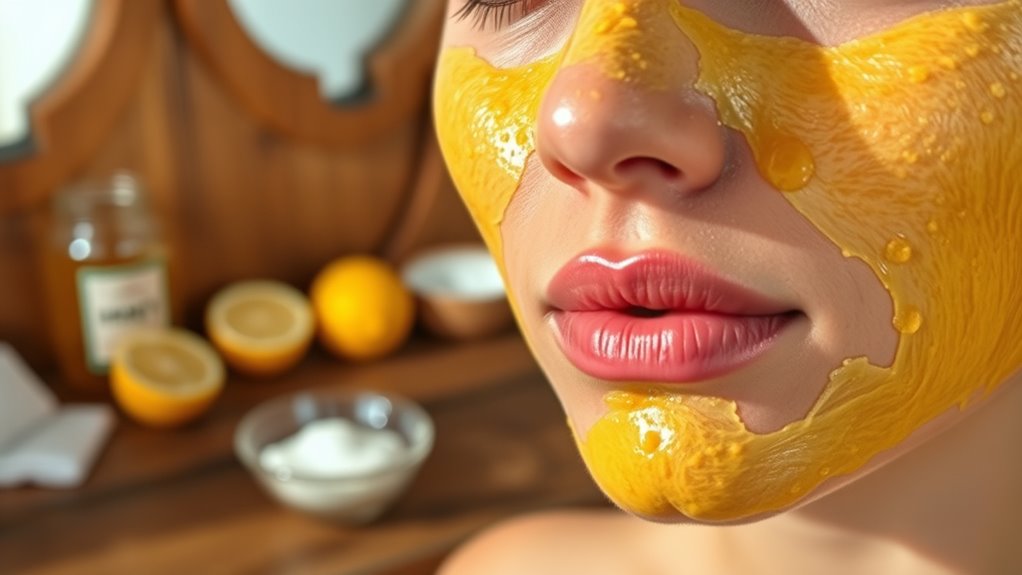
Have you ever wondered how a simple lemon can transform your skincare routine? It’s tempting to think that because lemons are natural, they’re automatically safe and gentle. But that’s not always the case. Applying lemon directly to your skin can lead to serious issues like chemical burns, especially if you leave it on too long or have sensitive skin. The citric acid in lemons is powerful, and while it can brighten your complexion temporarily, it can also cause irritation or burns if misused. People with skin sensitivity are particularly vulnerable, as their skin may react badly even to small amounts of lemon juice. The redness, burning sensation, or peeling that follows isn’t worth the quick fix of a homemade mask.
Lemon’s citric acid can cause burns and irritation—use caution when applying directly to skin.
When you use lemon in DIY masks, you often overlook the fact that your skin may not tolerate its acidity. Chemical burns can occur if the lemon’s acidity damages your skin’s outer layer, leading to painful blisters or prolonged redness. Over time, repeated exposure can weaken your skin’s barrier, making it more susceptible to irritation and infections. If you have existing skin conditions like eczema or rosacea, lemon can exacerbate the problem, causing flare-ups or worsening sensitivity. Even if your skin appears resilient, overuse or leaving lemon on your face for too long can trigger a reaction. It’s essential to recognize that natural doesn’t always mean safe—especially when it comes to potent acids like those in lemons.
Additionally, the pH imbalance caused by lemon’s acidity can disrupt your skin’s natural protective layer, increasing vulnerability to environmental damage and bacteria. Instead of risking these adverse effects, consider safer alternatives for brightening and exfoliating your skin. Products formulated with gentle acids, like alpha hydroxy acids (AHAs), are designed to be effective yet safe when used as directed. Incorporating ingredients like honey, yogurt, or oatmeal can also soothe your skin while providing benefits without the risks associated with raw citrus. If you’re determined to include lemon in your routine, dilute it considerably and limit the exposure time. Always do a patch test first—apply a small amount to a discreet area and wait 24 hours to see if any irritation occurs. This simple step can save you from painful chemical burns and unnecessary skin sensitivity.
Ultimately, understanding the risks associated with DIY lemon masks helps you make smarter choices. Your skin’s health matters more than a quick fix, so prioritize gentle, proven skincare methods. Natural ingredients can be beneficial, but only when used with care and awareness of their potential downsides. By choosing safer alternatives and respecting your skin’s limits, you can enjoy a radiant complexion without jeopardizing your skin’s health.
Frequently Asked Questions
Can Lemon Masks Cause Allergic Reactions or Skin Irritation?
Lemon masks can indeed cause allergic reactions or skin irritation, especially if you have sensitive skin or allergies. The citric acid and natural oils in lemons may trigger redness, itching, or swelling. It’s important to do a patch test before applying lemon masks all over your face. If you notice any allergic reactions or skin irritation, stop use immediately and consult a dermatologist to avoid further skin issues.
How Often Should I Use Lemon Masks Safely?
You might wonder how often you should use lemon masks without risking skin sensitivity or frequency concerns. The truth is, overdoing it can lead to irritation or damage. To stay safe, limit usage to once or twice a week, especially if your skin is sensitive. Keep an eye on how your skin reacts, and if you notice redness or discomfort, reduce frequency immediately. Your skin’s health depends on gentle, cautious care.
Are There Any Lemon Mask Ingredients to Avoid?
You should avoid lemon masks with ingredients that increase lemon acidity or trigger skin sensitivities. Steer clear of added acids, essential oils, and harsh chemicals that can irritate sensitive skin or cause excessive dryness. Always patch-test new ingredients and pay attention to how your skin reacts. If you notice redness, burning, or irritation, discontinue use immediately. Protect your skin by choosing gentle, nourishing alternatives instead of risky ingredients.
What Are Effective Natural Alternatives to Lemon Masks?
This question is as essential as finding a needle in a haystack! To replace lemon masks, try herbal remedies like chamomile or green tea, which soothe skin and boost glow naturally. If you have chemical sensitivities, these alternatives are gentle yet effective. They protect your skin without the harshness of DIY lemon masks, giving you a radiant look without risking irritation or damage.
Can Lemon Masks Lighten or Darken Skin Tone Permanently?
Lemon masks can temporarily brighten your skin, but they don’t offer permanent skin lightening. Instead, they might cause pigmentation changes if used excessively or improperly. You could see darkening or uneven skin tone over time due to irritation or sun sensitivity. For lasting results, focus on safe skin lightening methods and consult a dermatologist. Avoid relying solely on lemon masks for permanent skin tone changes, as they can do more harm than good.
Conclusion
While DIY lemon masks might seem like a sunshine-filled solution, they can hide shadows beneath the surface. Think of the lemon’s bright exterior as a symbol of hope, but remember, not every glow is safe. Protect your skin like you guard a precious treasure, choosing safer, nourishing alternatives that nurture your natural glow. True beauty blossoms from gentle care, not fleeting sparks. Let your confidence grow from within, shining brighter than any risky mask ever could.