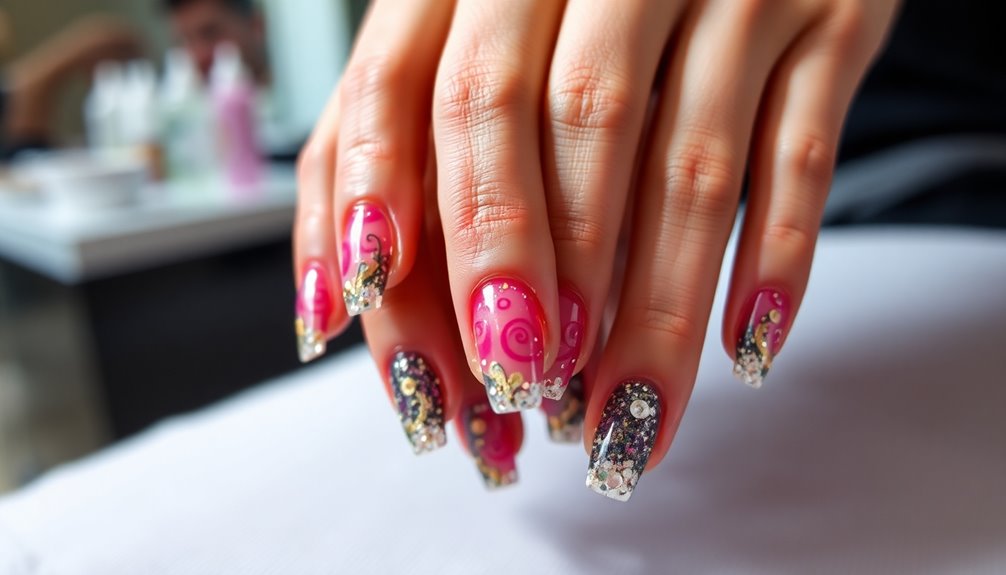

Gel nails themselves don't cause cancer, but the UV light used during their curing process can pose a skin damage risk over time. While the risk from gel manicures is lower than direct sunlight, frequent exposure can accumulate and increase your chances of skin issues. It's important to take precautions, like applying sunscreen or using protective gloves. If you're curious about maintaining nail health and understanding potential risks, there's more to explore on this topic.
Key Takeaways
- Gel nails themselves do not cause cancer; concerns arise primarily from UV light exposure during the curing process.
- Repeated exposure to UVA radiation from nail lamps can increase skin cancer risk over time.
- The risk from gel manicures is lower than direct sunlight exposure, but cumulative UV exposure matters.
- Protective measures, such as using sunscreen or fingerless gloves, can help reduce UV radiation effects.
- Regular monitoring of nail health and consulting a dermatologist can aid in identifying potential skin issues.
What Are Gel Nails?

Gel nails are a popular choice for those seeking long-lasting and durable manicures. They're made from a liquid monomer and powder polymer, creating a strong adhesive that attaches fake nails to your natural ones.
The application process closely resembles traditional nail polish, involving a base coat, color coat, and top coat. What sets gel nails apart is their curing process, where you expose them to UV or LED lamps, hardening the polish for a resilient finish.
Unlike regular manicures, gel options typically last longer and resist chips, making them a quick-drying favorite. However, be mindful of the UV radiation from curing lamps, which can pose health risks, including potential skin damage and an increased risk of skin cancer. Regular self-exams are encouraged to monitor any unusual changes in your skin or nails.
UV Light and Cancer Risk

When you get gel nails, you're exposed to UVA radiation from the curing lamps, which can increase your risk of skin cancer over time. While studies show that the risk from gel manicures is lower than direct sunlight, repeated exposure can still damage your skin's DNA. To protect yourself, consider using sunscreen or wearing gloves during your appointments. Additionally, it's important to understand the potential for long-term strategy in minimizing your overall health risks through proactive measures.
UVA Radiation Exposure
How much do you know about the potential risks of UVA radiation from gel nail treatments?
While gel manicures can enhance your nails, they also expose you to UVA radiation, a contributor to skin cancer risk. A 2014 study showed that the risk from biweekly treatments is low, but cumulative exposure matters.
Nail lamps emit radiation similar to that of the sun and tanning beds, so frequent visits could increase your risk of skin damage. Though nail lamps are considerably less risky than direct sunlight, caution is still key. Coffee's health benefits suggest that antioxidants can help combat some skin damage, but protecting your skin during manicures is still essential.
To protect yourself, use broad-spectrum sunscreen with SPF 30 or higher and consider wearing fingerless gloves during your manicures. Taking these protective measures can help minimize the potential risks associated with UVA exposure.
Cancer Risk Factors
While enjoying the aesthetic benefits of gel nails, it's important to recognize the potential cancer risk factors associated with UV light exposure. Frequent gel manicures can increase your risk of skin cancer due to the UVA radiation emitted by curing lamps. Dermatologists suggest being cautious, as repeated exposure can lead to DNA damage, a known risk factor for skin cancer. Although nail lamps emit lower UV levels compared to direct sunlight, cumulative exposure still poses a concern. Additionally, considering the importance of preventative measures can help mitigate risks associated with UV exposure.
| Risk Factor | Description |
|---|---|
| UV Light | Emitted by curing lamps, similar to sunlight. |
| Frequency of Manicures | Biweekly visits increase cumulative exposure. |
| Cumulative Exposure Effects | Long-term effects still require further research. |
Protective Measures Available
Although gel nails can enhance your look, it's crucial to take protective measures against UV light exposure during manicures. The UV rays from curing lamps can pose a risk, so follow dermatologists' tips to protect your hands.
Before your gel manicure, apply a broad-spectrum sunscreen with an SPF of at least 30 to shield your skin from harmful UVA radiation. Consider wearing gloves with the fingertips cut off during the process; they block direct UV exposure while allowing your nails to be polished.
If possible, opt for LED lamps instead of traditional UV lamps, as they emit lower levels of UV radiation. Additionally, regular monitoring of air quality indicators can help you identify any harmful environmental factors that may affect your skin health. By taking these precautions, you can enjoy beautiful gel nails without compromising your skin's health.
Protective Measures for Gel Manicures

When you're getting a gel manicure, protecting your skin is key.
Applying broad-spectrum sunscreen on your hands before the treatment can greatly reduce UV exposure from curing lamps.
You might also want to think about wearing fingerless gloves to keep your skin shielded while still allowing access to your nails. Additionally, consider using an air purifier to improve indoor air quality, which can contribute to overall well-being during your manicure sessions.
Sunscreen Application Importance
Applying sunscreen before your gel manicure is essential for protecting your skin from harmful UV rays emitted by curing lamps. Use a broad-spectrum sunscreen with SPF 30 or higher to shield your skin effectively. Apply it at least 30 minutes prior to your appointment for maximum protection against UV exposure, which can increase skin cancer risk. Regular sunscreen application can also combat aging effects like wrinkles and brown spots. Additionally, a protein-rich breakfast can help support your overall skin health during this process.
Here's a quick reference table for your sunscreen application:
| Step | Action | Timing |
|---|---|---|
| Choose Sunscreen | Broad-spectrum SPF 30+ | Before salon visit |
| Apply Sunscreen | Generously cover hands | 30 minutes prior |
| Reapply if needed | After washing hands or sweating | As necessary |
Taking these steps helps maintain your skin health during gel manicures.
Use of Protective Gloves
Many gel manicure enthusiasts overlook an easy way to enhance their safety: wearing protective gloves.
Using protective gloves during gel manicures can greatly reduce your exposure to harmful UVA radiation from curing lamps, which may contribute to skin cancer.
Dermatologists recommend this simple yet effective measure, especially for frequent salon visitors.
Here are some tips for maximizing protection:
- Opt for fingerless gloves to keep your fingertips free for application.
- Choose gloves designed specifically for UV protection.
- Always apply broad-spectrum sunscreen on your hands.
- Consider modified gloves with fingertips cut off for convenience.
Additionally, using gloves can provide protection from UV radiation, which is essential for maintaining skin health during treatments.
Acetone Exposure and Nail Health
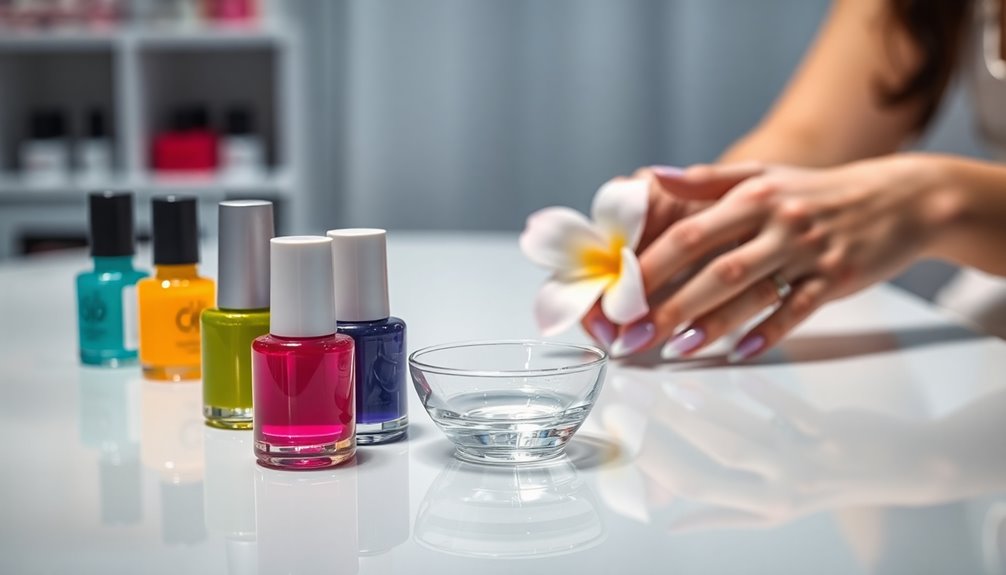
Although acetone is effective for removing gel polish, prolonged exposure can lead to dryness and damage to both your nails and surrounding skin.
To minimize acetone exposure, soak cotton pads in acetone instead of dipping your fingers directly. This method helps reduce skin contact and protects your nail health.
The ideal soak time for effective gel polish removal is 10 to 15 minutes, which helps limit exposure duration.
After using acetone, frequent moisturizing of your nails and cuticles is essential. This practice counteracts the drying effects of acetone, promoting healthier nail growth. Additionally, hydrocolloid technology can be beneficial for treating any nail-related irritations that may arise from the removal process.
Frequency of Gel Manicures
Regularly getting gel manicures can be tempting, but it's important to contemplate how often you indulge in them. Frequent applications, typically every two weeks, can considerably increase your UV exposure, a known risk factor for skin cancer.
To prioritize both nail health and safety, consider the following:
- Limit gel manicures to special occasions.
- Take breaks of one to two weeks between applications.
- Monitor salon practices to guarantee proper curing times.
- Stay informed about the cumulative effects of UV exposure.
While some studies suggest the risk of skin cancer from gel manicures is lower than direct sunlight exposure, being cautious about frequency is wise. Additionally, understanding the importance of UV exposure can help you make more informed choices about your nail care routine.
Your nails and skin deserve the best care, so make informed choices!
Signs of Potential Skin Issues
When you enjoy gel manicures, it's crucial to stay vigilant for any signs of potential skin issues that might arise.
Watch for brown or black streaks in your nails; these could indicate subungual cancer if they grow larger. A bruise on your nail that doesn't move as it grows can suggest a serious condition, so consult a dermatologist.
Nail separation from the nail bed or darkening skin around the nail are warning signs that deserve professional attention.
Additionally, if you notice thinning, cracking, or distortion of your nail plate, it may point to damage from repetitive gel polish applications.
Regularly examine your nails for unusual changes, such as discoloration or texture, to catch potential skin issues early.
Scientific Studies on Gel Nails and Cancer

As you stay alert for any signs of skin issues related to gel nails, it's important to contemplate the scientific findings regarding their potential cancer risks.
Research indicates that while gel polish isn't directly linked to cancer, concerns mainly revolve around the UV light emitted by curing lamps.
Key points from scientific studies include:
- The risk of skin cancer from gel manicures every two weeks is considered low.
- Cumulative UV exposure could be a contributing factor.
- Nail lamps pose a risk that's 11 to 46 times lower than direct sunlight.
- Ongoing research is essential to fully understand long-term effects.
To protect your skin, consider using sunscreen on your hands or limiting your exposure during gel applications.
Recommendations for Nail Health

To maintain healthy nails, taking breaks from gel manicures is essential. Aim for one to two weeks off several times a year to allow your nails to recover. During these breaks, regularly apply a moisturizer or petroleum jelly to enhance hydration and improve nail health.
Here's a quick reference table to help you:
| Tip | Action | Benefit |
|---|---|---|
| Breaks from Gel Manicures | 1-2 weeks off | Promotes recovery |
| Moisturizer Application | Daily use | Prevents brittleness |
| Limit Acetone Exposure | Soak cotton pads | Reduces dryness and damage |
Following these dermatologist tips can help you maintain strong nails while minimizing concerns about skin cancer and other issues.
Consulting a Dermatologist

Taking care of your nails goes beyond just breaks and moisturizers; consulting a dermatologist can greatly enhance your nail health.
They can offer insights on the risks associated with UV light exposure from gel manicures and help you maintain healthy nails. Regular visits can be essential for monitoring skin changes that may indicate skin cancer.
Here are some benefits of consulting a dermatologist:
- Understand individual risks related to UV exposure
- Identify early signs of skin damage
- Receive guidance on protective measures, like sunscreen
- Learn best practices for nail care
Frequently Asked Questions
Can Getting Gel Nails Cause Cancer?
When you get gel nails, the main concern isn't the nails themselves but the UVA radiation from the curing lamps.
Studies show that while the risk of developing skin cancer from regular gel manicures is low, repeated exposure to UV light can lead to DNA damage.
To protect yourself, consider applying broad-spectrum sunscreen on your hands and wearing fingerless gloves during the process.
Taking breaks between manicures can also help reduce potential risks.
Are Gel Nails Harmful to Your Health?
When considering whether gel nails are harmful to your health, it's important to weigh the potential risks.
While gel nails themselves aren't directly harmful, the UV light used during the curing process raises some concerns. Frequent exposure could increase your risk of skin damage.
To protect yourself, apply broad-spectrum sunscreen on your hands, use fingerless gloves, and take breaks between gel manicures. Staying informed and cautious can help you enjoy beautiful nails without compromising your health.
What Is the Healthiest Nail Option?
Did you know that around 30% of people experience nail damage from frequent gel polish use?
To maintain nail health, consider using regular nail polish instead of gels, as it avoids the UV exposure linked to curing lamps.
Taking breaks for one to two weeks several times a year is essential for recovery.
Moisturizing your nails and cuticles during these breaks can enhance their condition, making water-based polishes a smart choice for healthier nails.
How Often Is It Safe to Get a Gel Manicure?
It's best to limit gel manicures to special occasions to protect your nails and skin.
Experts suggest taking breaks of one to two weeks between applications to allow your natural nails to recover. If you regularly get gel manicures every two weeks, you risk damaging both your nails and skin.
Consider using traditional nail polish or alternative treatments during breaks to maintain nail health.
Always consult a dermatologist for personalized advice on nail care.
Conclusion
So, while you might think that those shiny, perfect gel nails are just a harmless beauty choice, they could come with hidden risks. After all, who wouldn't want to trade a little UV exposure and acetone for a flawless manicure? It's ironic that in our quest for beauty, we might be flirting with health issues. Just remember, your nails may look stunning, but it's vital to prioritize your skin's health—after all, it's the only one you've got!