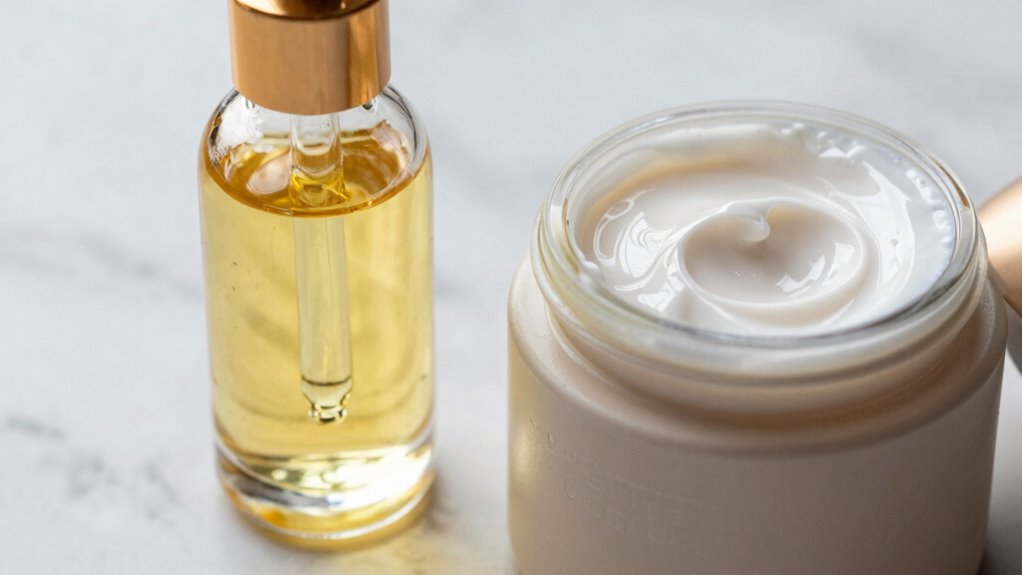

You should apply moisturizer first to hydrate your skin with water-based ingredients, then follow with face oil to seal in that moisture and provide nourishment. Face oils are designed to lock in the hydration from moisturizers, making your skin feel softer and more protected. Applying oil before moisturizer can reduce its effectiveness in sealing in moisture. Want to discover how perfect layering can boost your skincare routine? Keep exploring to learn more.

Get your wardrobe favorites delivered free with Prime
- Fast, free delivery on millions of items
- Prime Video, Amazon Music and more included
- Member-only deals all year
Key Takeaways
- Apply moisturizers first to hydrate skin with water-based ingredients, then seal in moisture with face oils.
- Face oils are generally used after moisturizers to lock in hydration and provide nourishment.
- Applying oils before moisturizers may reduce their ability to effectively seal in moisture.
- Layering in the correct order maximizes hydration and skin benefits.
- Skin type and product formulation influence the ideal application sequence.
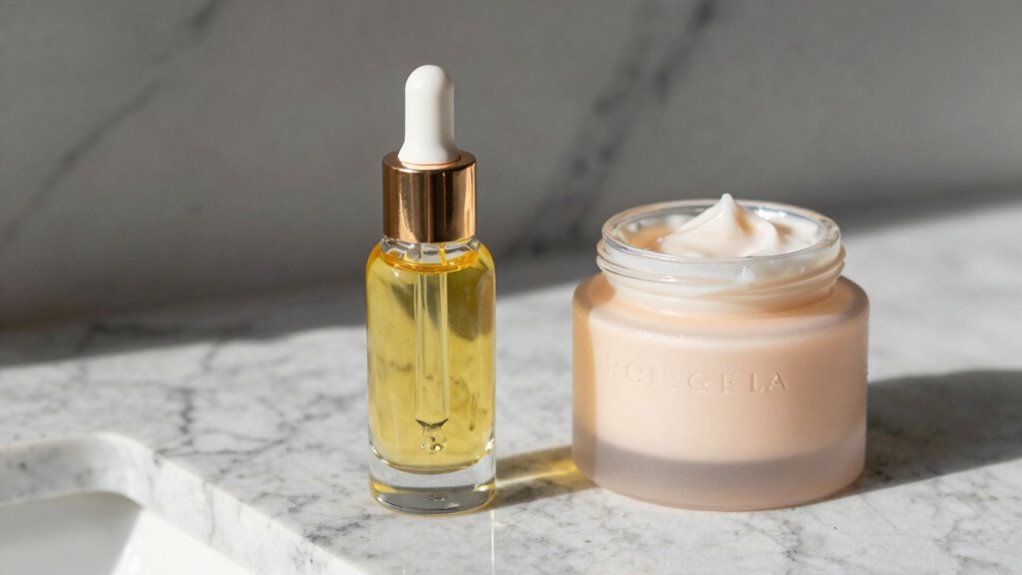
Are face oils and moisturizers truly different, or just different names for the same thing? It’s a common question, especially if you’re new to skincare. The truth is, they serve distinct roles, but understanding how to use them together can make a real difference in your routine. Face oils are concentrated extracts of natural oils, designed to nourish and lock in moisture, while moisturizers usually contain water-based ingredients, humectants, and occlusives to hydrate and create a protective barrier. Knowing which to apply first depends on your skin type and goals, but generally, oils go on after moisturizers to seal in hydration.
Face oils nourish and lock in moisture, while moisturizers hydrate and protect your skin.
Your scent preferences play an essential role in choosing products. Some oils and creams come with fragrant botanicals that can elevate your experience, while others are unscented for sensitive skin. If you prefer subtle or no scent, look for fragrance-free options that won’t irritate or overwhelm your senses. On the other hand, if you love a hint of lavender or citrus, there are plenty of options designed to appeal to those preferences without sacrificing effectiveness. This choice can influence how enthusiastically you stick to your routine, making it more enjoyable rather than a chore.
Packaging sustainability is another important aspect to consider. Many brands now prioritize eco-friendly packaging, using recyclable materials or minimalistic designs to reduce waste. When you pick products with sustainable packaging, you’re contributing to environmental conservation—something that many skincare enthusiasts care deeply about. Whether it’s glass bottles for oils or biodegradable containers for moisturizers, choosing sustainable options not only benefits the planet but also often reflects a brand’s commitment to quality and transparency. Additionally, understanding the difference between face oils and moisturizers can help you optimize your skincare routine for better results. Being aware of product ingredients can also guide you in selecting formulations that suit your skin’s specific needs, especially as ingredient transparency becomes increasingly important in skincare.
Understanding the difference between face oils and moisturizers will help you determine the proper order of application. Typically, you should apply your moisturizer first to hydrate your skin and then lock in that moisture with an oil. This sequence ensures your skin absorbs the water-based ingredients before sealing them in with oil, maximizing hydration. Additionally, considering skin type can influence your layering choices, as different skin types may respond better to specific application methods. Experimenting with different layering techniques can help you discover what works best for your skin type and concerns.
Furthermore, paying attention to ingredient transparency can help you select products that align with your skin’s needs and avoid potential irritants. In the end, your choice depends on your skin’s needs, scent preferences, and how you feel about packaging sustainability. The key is to listen to your skin, experiment with different combinations, and find what makes you feel best. Properly layering face oils and moisturizers can truly enhance your skin’s health and appearance, turning your routine into a moment of self-care you look forward to every day.
As an affiliate, we earn on qualifying purchases.
Frequently Asked Questions
Can Face Oils Replace Moisturizers Entirely?
Face oils can’t fully replace moisturizers because they serve different purposes. Oils offer benefits like locking in hydration and providing nutrients, but moisturizers are designed to hydrate and protect your skin’s barrier. Moisturizer differences include their water content and formulation. If your skin is very dry, you might need both. However, for oily or acne-prone skin, a lightweight oil could sometimes suffice, but generally, a moisturizer is essential for balanced hydration.
Are Face Oils Suitable for Oily or Acne-Prone Skin?
You might find that face oils can suit oily or acne-prone skin if they’re lightweight and balanced in pH, promoting oil absorption without clogging pores. Coincidentally, maintaining the right pH balance helps prevent excess oil and breakouts. Just look for non-comedogenic oils, and apply sparingly, especially if your skin is sensitive. When used correctly, face oils can enhance your skincare without aggravating oiliness or acne.
How Do I Identify My Skin Type for Using Oils or Moisturizers?
To identify your skin type for product suitability, observe how your skin reacts throughout the day. If it feels oily and shiny, you likely have oily skin; if it feels tight or flaky, you’re probably dry. Normal skin is balanced, while sensitive skin may react with redness or irritation. Use this insight to choose oils or moisturizers suited for your skin type, ensuring comfort and effective skincare.
Can I Use Both Face Oils and Moisturizers Together?
You can absolutely use both face oils and moisturizers together—it’s like giving your skin a superpower boost! To do this effectively, focus on proper layering techniques, applying moisturizer first to lock in hydration, then sealing it with a nourishing face oil. Confirm product compatibility so they work harmoniously without clogging pores. This combo enhances hydration, leaving your skin feeling plump, radiant, and unstoppable!
Do Face Oils Provide Sun Protection Benefits?
Face oils generally don’t provide sun protection, so you shouldn’t rely on them for that purpose. They mainly focus on nourishing your skin and improving oil absorption. If you want sun protection, apply a broad-spectrum sunscreen after your face oil or moisturizer. Relying solely on face oils for sun protection can leave your skin vulnerable to UV damage, so always use a dedicated sunscreen for effective sun protection.
Conclusion
Choosing between face oils and moisturizers is like picking the right song for your mood—they both set the tone for your skin’s health. Remember, applying your moisturizer first creates a soft base, allowing your face oil to lock in hydration and nourishment. Think of it as sealing a precious gift in a box—you want to protect and preserve what’s inside. When used correctly, your skincare routine becomes a soothing dance that leaves your skin feeling radiant and loved.
Halloween Picks
halloween
As an affiliate, we earn on qualifying purchases.