
To minimize damage during heat styling, always apply a high-quality heat protectant spray or serum before using hot tools. Choose ceramic or tourmaline styling tools for even heat distribution, and set them to the lowest effective temperature for your hair type. Work in small sections, keep tools moving, and avoid styling damp hair. Limit heat sessions and incorporate nourishing treatments to keep your hair healthy. If you keep these tips in mind, you’ll discover more ways to protect your hair effectively.
Key Takeaways
- Always apply a high-quality heat protectant spray before styling to create a barrier against heat damage.
- Use the lowest effective temperature setting on your styling tools based on your hair type.
- Choose ceramic or tourmaline tools for even heat distribution and reduced hot spots.
- Work in small sections and keep tools moving to prevent localized overheating and damage.
- Limit heat styling to a few times weekly and incorporate nourishing treatments to maintain hair health.
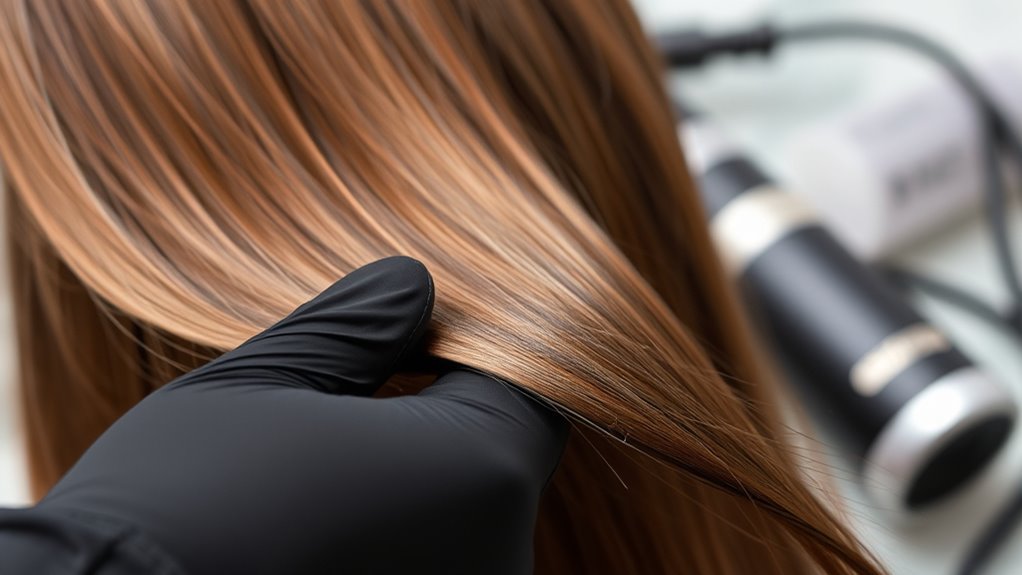
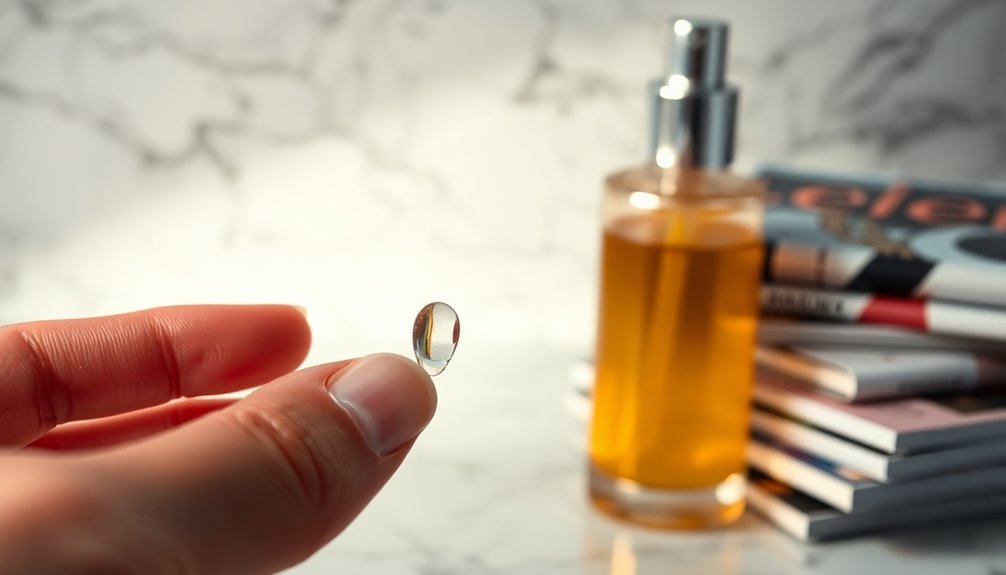
Have you ever wondered how to achieve sleek, salon-quality styles at home? The secret lies not just in the styling tools you choose but also in how you use them. Heat styling can transform your look, but it comes with the risk of damaging your hair if you’re not careful. That’s why prioritizing heat protection is essential to keep your hair healthy and shiny. Before you reach for your flat iron or curling wand, make sure to apply a high-quality heat protectant spray or serum. These products create a barrier that minimizes direct heat contact, reducing moisture loss and preventing split ends. Remember, not all styling tools are created equal; opting for ceramic or tourmaline tools can distribute heat more evenly and reduce hot spots that can cause damage. Investing in good-quality tools is vital, as cheaper options often generate uneven heat, which can lead to unnecessary stress on your hair strands.
When using styling tools, always set them to the lowest effective temperature for your hair type. Fine or damaged hair requires less heat, while thicker or coarser textures might tolerate higher settings. Avoid the temptation to crank up the heat to speed up styling; this often results in unnecessary damage. Instead, take your time, working in small sections for more controlled and even styling. Keep the tools moving continuously rather than holding them in one spot for too long, which can cause localized damage. Make sure your hair is completely dry before applying heat, as using hot tools on damp hair greatly increases the risk of breakage and split ends. If you’re in a hurry, use a fast-drying blow dryer and always finish with a cool shot to help seal the cuticle and lock in your style.
Another effective tip is to incorporate heat protectant sprays throughout your styling routine, not just before applying heat. Reapplying a light mist during styling can provide ongoing protection. Also, try to limit heat styling sessions to a few times a week. Giving your hair a break from high temperatures allows it to recover and reduces cumulative damage. After styling, use nourishing treatments like deep conditioners or hair masks to replenish moisture and repair minor damage. Proper maintenance and mindful use of heat protection combined with quality styling tools can help you achieve the polished look you want without sacrificing your hair’s health. With these practices, you’ll enjoy beautiful, sleek styles that turn heads—while keeping your hair strong and resilient.
Frequently Asked Questions
How Often Should I Give My Hair a Heat Styling Break?
You should give your hair a heat styling break at least once a week to prevent damage. Reducing heat styling frequency helps maintain healthy hair and minimizes breakage. To enhance damage prevention tips, use heat protectant sprays every time you style, opt for lower heat settings, and avoid using heat tools on damp hair. Incorporating these habits will keep your hair healthier and reduce the risk of long-term damage.
Are There Specific Hair Types More Prone to Heat Damage?
Like a delicate butterfly, your hair’s susceptibility to heat damage depends on its porosity and curl pattern. High-porosity hair absorbs heat more quickly, making it more prone to damage, while tight curls often require gentler styling to prevent breakage. If you have fine or porous hair, you should be extra cautious with heat tools. Understanding your hair’s unique texture helps you protect it better and maintain its health.
Can Heat Protectants Fully Prevent Damage During Styling?
Heat protectants can’t fully prevent damage during styling, but they considerably reduce it. Their product effectiveness depends on proper application and choosing formulations with safe, high-quality ingredients. You should always read labels to guarantee ingredient safety and apply protectants evenly before using heat tools. Remember, while they help, overusing heat or neglecting other protective measures can still cause damage, so moderation and good technique are key.
What Are Natural Alternatives to Heat Styling Tools?
You can opt for natural alternatives to heat styling tools by trying DIY hair masks and natural oils. Applying coconut or argan oil before styling helps protect your hair and adds shine. Instead of using heat, embrace air-drying or braid your hair for waves. These methods reduce heat exposure, minimize damage, and keep your hair healthy, all while achieving beautiful styles naturally.
How Can I Tell if My Hair Is Damaged From Heat?
You can tell if your hair is damaged from heat by checking its texture and looking for damage indicators. If your hair feels brittle, dry, or frizzy, it’s a sign of damage. Notice if it’s more prone to breakage or split ends. Also, observe if your hair loses its natural shine or feels rough. These signs suggest your hair may need extra care to repair heat damage and restore health.
Conclusion
Remember, when it comes to heat styling, a gentle touch goes a long way. Use heat protectants, keep your tools at moderate temperatures, and never style on wet hair. It’s better to avoid playing with fire than getting burned later with damaged strands. Taking these simple steps helps you keep your hair healthy and shiny. After all, a little caution now saves you from a world of trouble down the road.