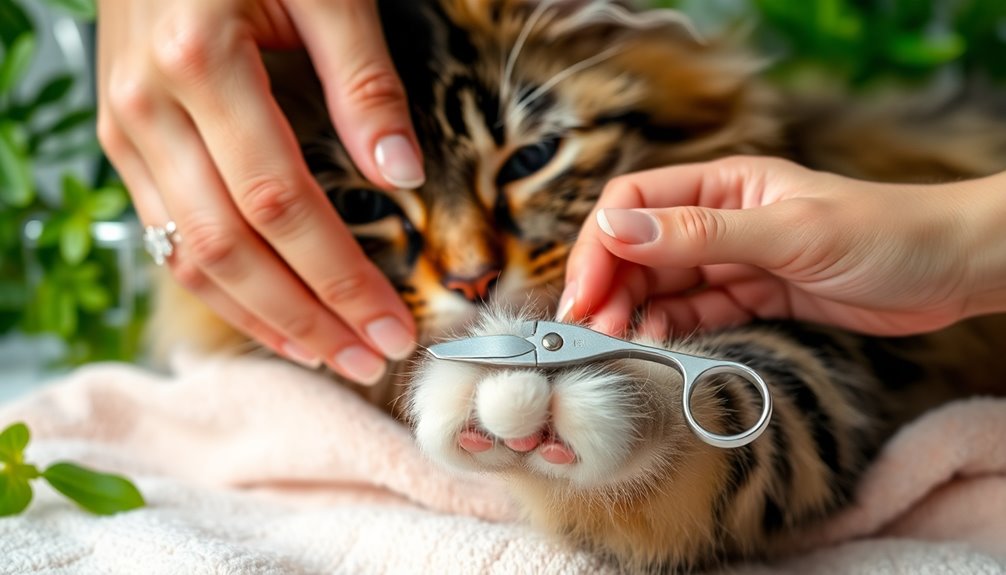

To clip your cat's nails, gather your supplies like cat-specific clippers and treats. Find a quiet, comfortable spot and hold your cat securely. Isolate each nail by pressing the pad, and cut at a 45-degree angle to avoid splits. Reward your cat after each nail with treats or playtime for a positive experience. Monitor your cat's reactions throughout. Consistent trimming keeps those nails healthy, and there's more helpful advice waiting for you to discover.

Get your wardrobe favorites delivered free — and shop member deals
- Fast, free delivery on millions of items
- Access to Prime Big Deal Days deals on October 6–7
- Prime Video, Amazon Music and more included
Key Takeaways
- Gather the necessary tools, including cat nail clippers, treats, and styptic powder, before starting the trimming process.
- Choose a calm and comfortable environment for the cat to help reduce stress during the clipping.
- Extend each paw gently, cutting nails at a 45-degree angle and focusing on the tips to avoid hitting the quick.
- Use positive reinforcement by rewarding the cat with treats and affection after each nail is clipped.
- Monitor the cat's behavior throughout the process and provide breaks if the cat seems agitated or uncomfortable.
How Often Should You Cut Your Cat's Nails?
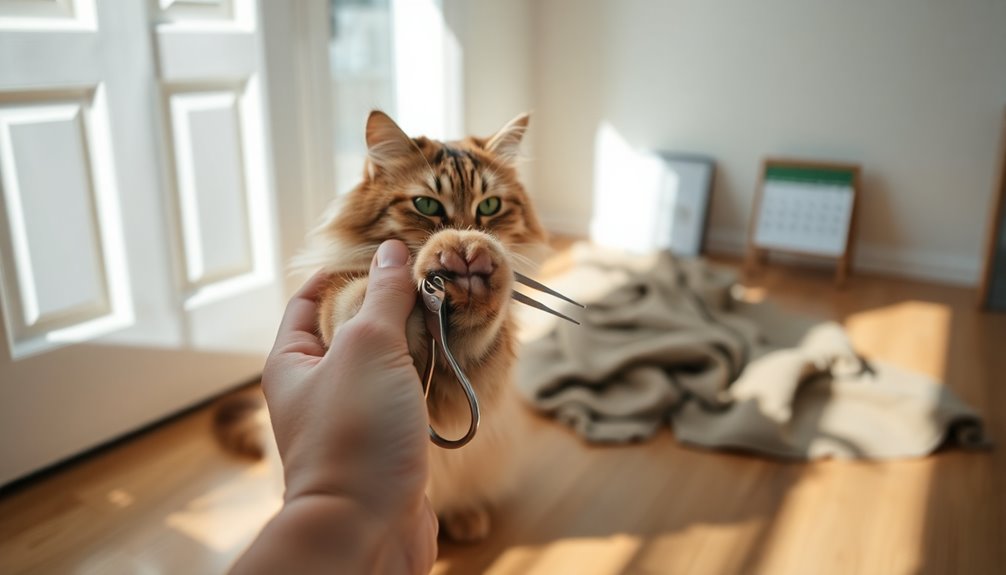
Wondering how often you should trim your cat's nails? For indoor cats, a nail trim every couple of weeks is essential to prevent overgrown nails and keep them comfortable.
Kittens, with their rapid nail growth and playful antics, may need weekly trims to manage those sharp claws. As your cat ages, their nail growth slows down, so older cats might only need a trim about once a month.
If you have outdoor cats, they typically require trims only a few times a year since they rely on sharper nails for climbing and defense.
Always be on the lookout for signs of overgrown nails, like difficulty retracting them or excessive curvature, which means it's time to trim a cat's nails.
What Happens If My Cat's Nails Get Too Long?
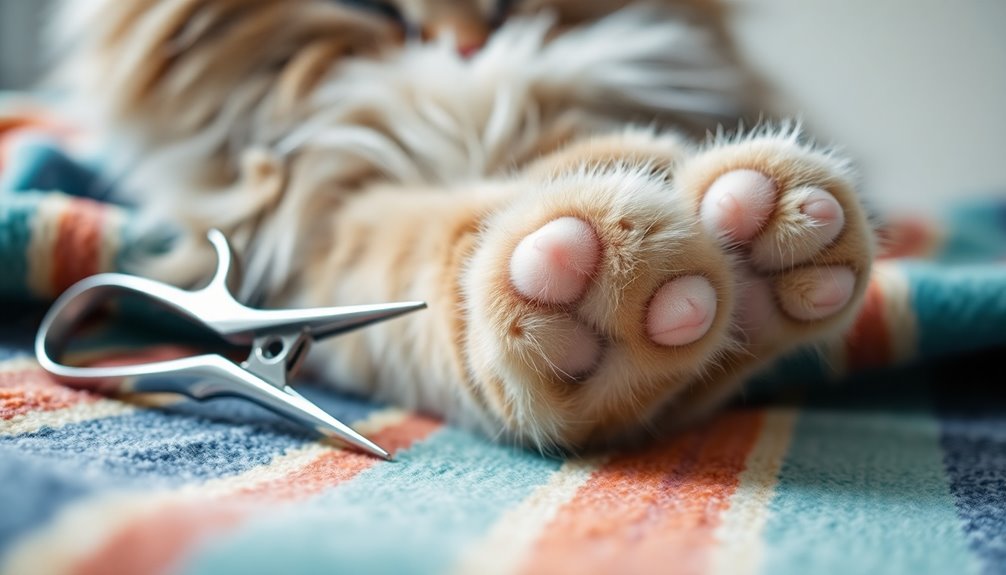
When a cat's nails get too long, it can lead to a range of uncomfortable and potentially harmful issues. Overgrown nails may prevent your cat from retracting them fully, causing discomfort and possible injury.
They can curve excessively, increasing the risk of snagging on surfaces, which may result in painful tears or breaks. Long nails can also change your cat's walking pattern, potentially leading to joint issues or postural changes over time.
Additionally, the stress and pain from overgrown nails can alter your cat's behavior, leading to reduced activity or even aggression. To avoid these problems, it's essential to regularly trim your cat's nails before the quick, which contains blood vessels, grows too long, causing serious damage during future trims. Furthermore, just like dogs, cats may also benefit from a balanced diet that supports their overall health and can impact their nail growth.
Gather Your Supplies

Before you start trimming your cat's nails, it's essential to gather all the necessary supplies to make the process as smooth as possible.
First, choose nail clippers or a grinder specifically designed for cats to guarantee safe and effective trimming. You'll also want to have some cat treats on hand; they can be great for positive reinforcement during and after the trim.
Don't forget to prepare styptic powder, flour, or cornstarch to stop any potential bleeding if you accidentally cut the quick. Additionally, a soft towel can help wrap your cat, managing any squirmy behavior and providing a sense of security.
Finally, consider enlisting a helper to hold your cat or distract them with treats while you trim. Safe sleep guidelines can also be beneficial to know in case your cat gets overly stressed during the process.
Find a Quiet Spot and a Comfortable Position
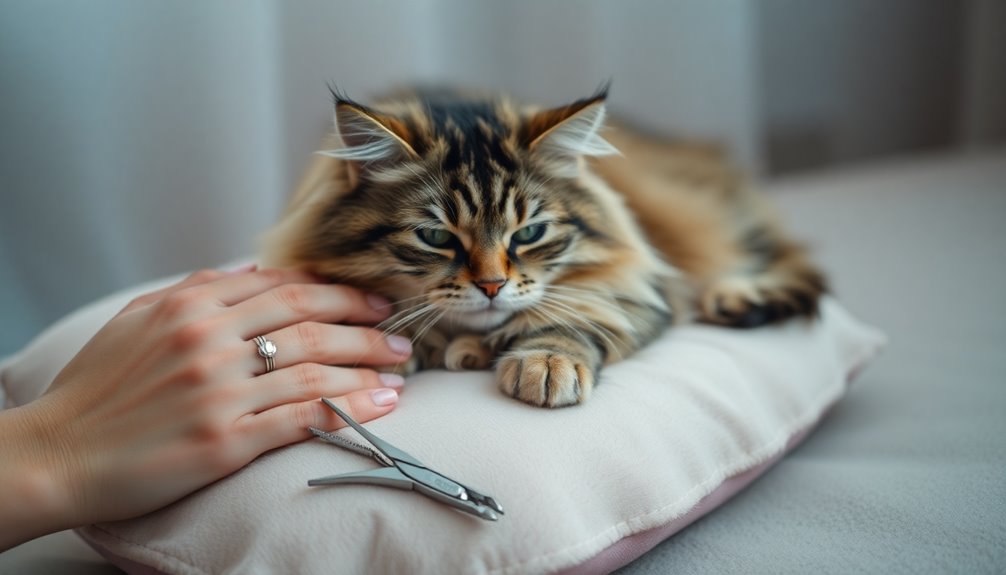
To guarantee a peaceful nail trimming session, find a quiet, distraction-free spot where both you and your cat can feel at ease. A calm environment helps reduce stress for both of you.
Choose a soft surface, like a towel or your lap, to make sure your cat is comfortable while you hold it securely. Position your cat in your arm or on a sturdy table, allowing easy access to its paws.
If your cat is anxious, gently wrap it in a towel, resembling a burrito, to restrict movement and keep it calm.
Observe your cat's body language to determine the most comfortable position for both of you, making for a smoother nail trimming experience. Additionally, consider using essential oils like lavender oil to create a soothing atmosphere that may help relax your cat during the process.
Isolate the Nail to Cut
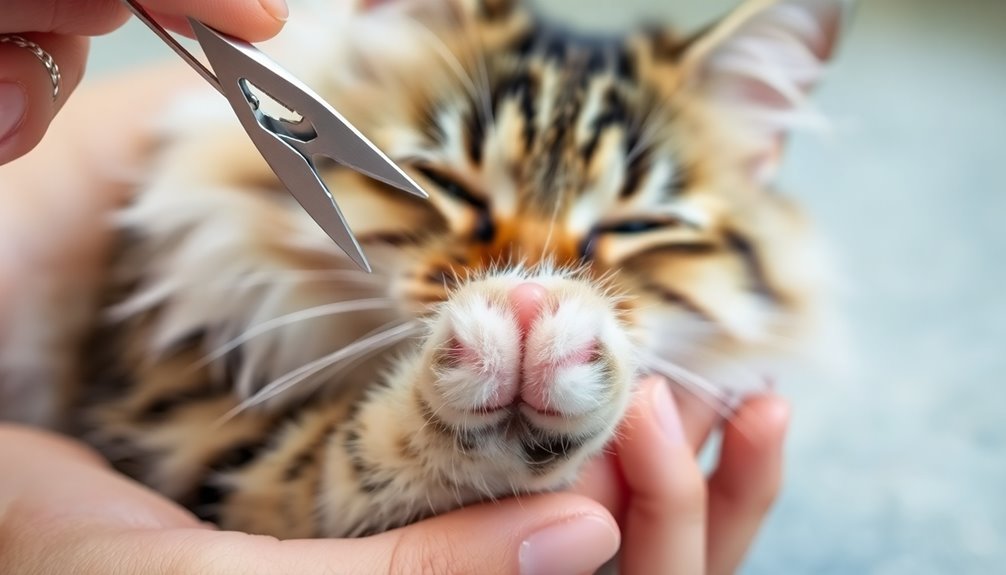
As you prepare to trim your cat's nails, it's essential to isolate each nail for a clean cut.
Start by gently holding your cat's paw to extend the nail, allowing for better visibility. Apply light pressure on the joint behind the claw to help it protrude.
Make sure your cat is relaxed in a calm environment, making it easier to isolate the nail without resistance.
- Keep the other toes out of the way
- Focus on the front paws first
- Look for the pink part to avoid
- Trim only the sharp tip
- Be ready to stop the bleeding if needed.
In addition, ensure you have proper tools for trimming to make the process safe and effective.
Cut at a 45-Degree Angle
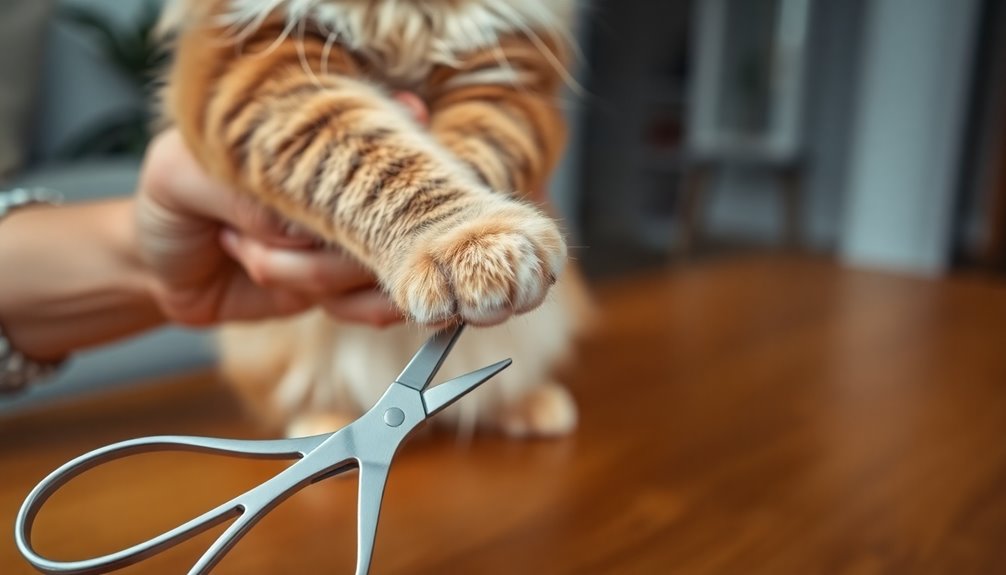
When you trim your cat's nails, cutting at a 45-degree angle is key for a clean and comfortable trim. This angle not only helps prevent splitting but also keeps you clear of the sensitive quick, reducing the chance of pain. Regular nail trimming is important for preventing injury and maintaining your cat's overall health.
Proper Nail Angle
Cutting your cat's nails at a 45-degree angle is essential for a successful trim. This proper nail angle helps guarantee a clean cut while minimizing discomfort for your cat.
By cutting at a 45-degree angle, you reduce the risk of hitting the quick, which can cause pain and bleeding.
- Promotes healthier nail growth
- Prevents sharp edges that can injure
- Minimizes stress during the process
- Guarantees a natural nail shape
- Makes trimming quicker and easier
Using a sharp nail trimmer at this angle will make the experience smoother for both you and your cat. Additionally, ensuring regular veterinary visits can help address any underlying health issues that may affect nail growth and trimming.
Prevent Splitting Nails
Maintaining the right angle while trimming your cat's nails not only promotes a clean cut but also helps prevent splitting. Always cut at a 45-degree angle; this position allows the nail to rest naturally after trimming, reducing the risk of splits.
Make sure you're using sharp nail clippers, as dull blades can crush the nail and lead to painful splitting. When cutting, trim only a small amount at a time to minimize stress for your cat and lower the chance of splits occurring. Regular maintenance is key, so aim to trim your cat's nails every couple of weeks. This keeps the nails at a manageable length and greatly reduces the likelihood of sharp, painful splits. Additionally, keeping the air quality clean with allergen reduction can help maintain your cat's overall health and well-being while you perform this task.
Ensure Comfortable Trim
To guarantee a comfortable trim for your cat, always cut their nails at a 45-degree angle. This technique guarantees a smooth cut, allowing the nail to rest properly afterward. It helps prevent splitting and reduces discomfort during the trimming process.
- Make sure to position the nail for better visibility of the quick.
- Cut your cat's nails in small increments.
- Focus on the white part of the nail to avoid the quick.
- Use firm, decisive pressure for a clean cut.
- Keep your cat calm throughout the process. Additionally, consider using child-friendly features to ensure a stress-free experience for both you and your pet.
Reward Your Cat

While you clip your cat's nails, it's important to reward them to create a positive association with the process. Use treats as positive reinforcement immediately after each nail is clipped. This helps encourage calm behavior. Start with one or two nails per session, rewarding your cat each time. You can also offer praise and gentle petting to enhance the experience. After trimming, consider engaging in playtime with their favorite toy as an additional reward. Always monitor your cat's body language to guarantee they feel comfortable. Additionally, using positive reinforcement techniques can greatly improve your cat's experience during nail clipping.
| Nail Clipped | Treat Given | Additional Reward |
|---|---|---|
| 1 | Yes | Gentle Petting |
| 2 | Yes | Favorite Toy |
| 3 | Yes | Playtime |
| 4 | Yes | Extra Cuddles |
Frequently Asked Questions
How Do I Cut My Cat's Nails by Myself?
To cut your cat's nails by yourself, start by gathering your supplies.
Choose a calm spot and hold your cat securely. Gently extend each paw to isolate the nails. Trim the tip at a 45-degree angle, focusing on the white part while avoiding the pink quick.
After each nail, reward your cat with treats to create a positive experience. If your cat gets stressed, take breaks to keep the process smooth and comfortable.
How Do You Trim an Unwilling Cat's Claws?
When you're facing a cat that's more resistant than a stubborn old mule, it's time to get creative.
Start by wrapping your cat in a towel, leaving one paw exposed. Use treats or gentle strokes to distract them while you work. If they get agitated, pause and try again later—patience is essential.
Gradually familiarize them with the clippers outside of nail trimming sessions to make them feel more comfortable during the process.
Is It Necessary to Cut My Cat's Nails?
Yes, it's necessary to cut your cat's nails. Regular trimming helps prevent discomfort from overgrown nails, which can lead to injuries or infections.
It also protects your furniture from scratches, preserving your home. For kittens, frequent trimming is vital since their claws grow quickly and can become sharp.
Even older cats need occasional nail care to avoid health issues affecting their mobility. Keeping your cat's nails in check is essential for their overall well-being.
What to Do if Your Cat Won't Let You Cut Their Nails?
If your cat won't let you cut their nails, don't worry; it happens!
Start by desensitizing them to paw handling. Use treats to create positive associations.
Try trimming when they're calm or sleepy. If they squirm, wrap them in a towel for security.
Consider using a nail grinder, which might be less intimidating.
Ask a friend to help by distracting them with treats while you focus on the nails.
Take it slow!
Conclusion
By keeping your cat's nails trimmed, you're not just preventing potential injuries; you're also ensuring a happier, healthier feline companion. Imagine the relief your cat feels when those sharp claws are managed! With regular nail care, you can avoid the hassle of overgrown nails and create a more comfortable environment for both of you. So, gather your supplies, find that cozy spot, and make nail trimming a routine – your cat will thank you in their own special way!
Fall Picks
fall essentials
As an affiliate, we earn on qualifying purchases.