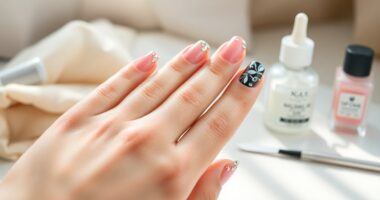
To get acrylic nails off fast, gather nail clippers, a coarse grit nail file, 100% pure acetone, cotton balls, aluminum foil, and a cuticle pusher. First, trim and file the tops of your acrylics. Soak cotton balls in acetone, place them on your nails, and wrap them in foil for 20–30 minutes. After soaking, gently scrape the softened acrylic off. There's more helpful information to guarantee a safe and effective removal process ahead.
Key Takeaways
- Trim acrylic nails to reduce soaking time and make removal easier.
- File the shiny top layer of acrylic to expedite acetone absorption.
- Soak cotton balls in 100% acetone, place on nails, and wrap with aluminum foil.
- Use dental floss for gentle lifting and sliding off softened acrylic.
- Apply cuticle oil post-removal to nourish and protect your natural nails.
Essential Tools for Quick Acrylic Nail Removal

When you're ready to remove your acrylic nails quickly, having the right tools can make all the difference.
Start with nail clippers to trim the excess length, which reduces soaking time considerably. Next, grab a coarse grit nail file, ideally a 100-grit, to effectively file down the acrylic layers before soaking.
You'll need 100% pure acetone, as it dissolves acrylic efficiently. Prepare some cotton balls and aluminum foil to keep the acetone in contact with your nails during the soaking process. Additionally, using essential oils for toothache relief can help soothe any discomfort you may experience during the removal process.
After soaking, use a cuticle pusher to gently scrape off the softened acrylic without damaging your natural nails. If your acrylics are already loose, dental floss can offer a quicker removal alternative without soaking.
Step-by-Step Guide to Removing Acrylic Nails

Removing acrylic nails can be done in five straightforward steps that guarantee a quick and effective process. Follow these steps for a smooth removal:
- Trim your acrylic nails to about two centimeters above the nail bed.
- Use a coarse grit nail file to file away the shiny top layer of the acrylic.
- Soak cotton balls in 100% acetone, place them on each nail, and wrap with aluminum foil.
- Let them soak for 20-30 minutes to soften the acrylic.
- Gently scrape off the softened acrylic with a cuticle pusher.
If any acrylic remains, repeat the soaking process.
Finish by using a nail buffer to smooth out any rough areas on your natural nails. Enjoy your refreshed nails! Additionally, it's important to keep your nails healthy by ensuring a balanced diet rich in antioxidants which can help maintain overall nail strength.
Soaking Techniques for Effective Removal

To effectively remove acrylic nails, soaking is an important step that can make the process quicker and easier. You should soak your nails in 100% acetone for at least 20-30 minutes. For targeted removal, place acetone-soaked cotton balls on each nail and wrap them in aluminum foil. This helps retain heat and moisture. Alternatively, you can submerge your fingertips in a bowl of acetone, making certain only the tips are dipped. It's vital to monitor your nails every 20 minutes to check the acrylic's softness. To enhance the soak, consider placing a warm towel over your wrapped nails, as heat speeds up the acrylic nail removal process. Additionally, using a high contrast ratio in your lighting can improve visibility during the removal process.
| Method | Time Required | Tips |
|---|---|---|
| Cotton balls & foil | 20-30 minutes | Make certain tight wrapping |
| Fingertip submersion | 20-30 minutes | Protect skin, dip only tips |
| Warm towel enhancement | 20-30 minutes | Increase heat retention |
| Regular checking | Every 20 min | Gauge softness for scraping |
Alternative Methods to Remove Acrylic Nails Fast

If you're looking for quick ways to remove your acrylic nails, consider some alternative methods that don't rely on harsh chemicals.
You can try the dental floss technique to gently lift and slide off the nails, or soak your fingers in warm, soapy water to loosen them up.
Non-acetone removers are also a gentler option that can help you avoid irritation while still getting the job done. Additionally, it's important to ensure proper airflow around your workspace to enhance the effectiveness of the removal process.
Dental Floss Technique
While there are various methods for getting acrylic nails off quickly, the dental floss technique stands out for its gentleness and effectiveness, especially when the nails are already a bit loose.
Here's how to do it:
- Gather your supplies: dental floss and a cuticle stick.
- Gently lift the edges of the acrylic nail with the cuticle stick.
- Slide a piece of dental floss underneath to start the acrylic removal.
- An assistant can help by moving the dental floss back and forth in a sawing motion.
- After removing the nails, buff your natural nails and apply cuticle oil to promote healing. This method helps remove your acrylic nails without damaging your natural nails, ensuring a smoother shift back to your natural look. Additionally, maintaining hair health is crucial after any nail removal process to prevent damage to your overall appearance.
Warm Water Soak
A warm water soak offers another effective and gentle method for removing acrylic nails quickly, particularly if they're starting to loosen.
Start by soaking your nails in warm water mixed with a few drops of soap for about 20 minutes. While submerged, gently move your fingers around to enhance the loosening process.
If the acrylic nails are still stuck, extend the soak by another 10 minutes for better results. After soaking, use an orange stick to carefully peel off any loosened acrylics, making sure not to damage your natural nails underneath.
This method is especially suitable for those with sensitive skin, as it's gentler compared to acetone soaking. Additionally, being mindful of your overall dietary awareness can help maintain healthy nails as well. Enjoy the soothing process while effectively removing your acrylics!
Non-Acetone Remover Options
Removing acrylic nails quickly doesn't always have to involve harsh chemicals. You can effectively remove acrylic nails without acetone by using non-acetone removers, which often contain ethyl acetate or isopropyl alcohol.
Here's how to do it:
- Trim excess length of acrylic nails.
- Soak cotton balls in non-acetone remover.
- Wrap the soaked cotton around each nail, securing with aluminum foil.
- Allow the nails to soak for 30 to 40 minutes.
- Gently push away softened acrylic using an orange stick.
Patience is key; rushing the process can lead to nail damage. Additionally, using high-quality, durable wood in children's toys can prevent harmful chemicals that may transfer to nails during play.
Wait until the acrylic loosens completely before attempting to peel or scrape it off for the best results.
Using Dental Floss for Quick Acrylic Nail Removal

If you're looking for a quick way to remove your acrylic nails, using dental floss can be an effective method.
First, you'll want to guarantee your nails are slightly loose, then follow a simple step-by-step process for removal.
After you've got them off, don't forget to care for your natural nails to keep them healthy and strong. Regularly declutter your nail care routine to ensure you maintain healthy nail growth and prevent damage.
Preparing for Floss Removal
Before diving into the floss removal method, it's important to verify your acrylic nails are slightly loose for a smoother experience. This will make it easier to remove your acrylic nails without damaging your natural nails.
To prepare, gather the following tools:
- Dental floss
- Cuticle stick
- Optional: a second person to assist
- Nail buffer
- Cuticle oil
Once you have your tools, carefully lift the edges of the acrylic nails using the cuticle stick to create a gap. This will allow you to slide the dental floss underneath.
After removal, don't forget to buff your natural nails and apply cuticle oil to promote healing and moisture retention. This prep work sets the stage for an efficient and gentle removal process. Additionally, ensuring proper nail care practices can help maintain the health of your natural nails post-removal.
Step-by-Step Process
Although you might feel a bit anxious about removing your acrylic nails, following a straightforward step-by-step process can make it quick and easy.
Start by ensuring your acrylic nails are slightly loose. Use a cuticle stick to gently lift the edges of the acrylic nail, creating space.
Next, take a length of dental floss and slide it underneath the lifted edge, using a sawing motion to work the floss back and forth. It can be helpful to have someone assist you in holding the nail while you maneuver the floss.
Once the acrylic nail pops off, care for your natural nails by buffing them and applying cuticle oil and lotion to promote healing. Incorporating herbal remedies can also enhance the overall health and vitality of your nails.
Post-Removal Nail Care
Once you've successfully removed your acrylic nails, caring for your natural nails is essential to maintain their health and integrity.
Here are some important post-removal aftercare tips:
- Gently buff your nails to smooth out any bumps or ridges.
- Apply cuticle oil to nourish and strengthen the nail bed.
- Use a nourishing hand lotion to hydrate your hands and nails.
- Avoid harsh chemicals or nail products for at least a week.
- Give your nails a break before applying new acrylics or polish.
These steps will help your natural nails recover from acrylic nail removal and keep them looking fabulous.
Important Precautions to Take During Removal

When removing acrylic nails, taking important precautions can make the process smoother and safer for your natural nails.
Start by filing down the top layer of the acrylic to expedite the removal process and reduce the amount of product that needs dissolving. Use 100% pure acetone for the most effective results; lower concentrations can greatly lengthen the removal time.
To protect your skin, apply petroleum jelly around your nails to minimize dryness and irritation from acetone during soaking. Verify your removal area is well-ventilated to avoid respiratory irritation from acetone fumes.
Finally, resist the urge to peel off acrylic nails forcefully, as this can cause substantial damage to both your natural nails and the surrounding skin.
How to Care for Your Natural Nails After Removal

After you remove your acrylic nails, it's essential to focus on caring for your natural nails.
Regularly moisturizing your cuticles will keep them hydrated and promote healthier growth, while using strengthening treatments can help repair any damage.
Moisturizing Cuticles Regularly
To guarantee your natural nails recover well after acrylic removal, regularly moisturizing your cuticles is essential. Using cuticle oil helps nourish and hydrate, promoting healthier nail growth.
Here are some tips to enhance your moisturizing routine:
- Apply cuticle oil daily for ideal hydration.
- Look for products with Vitamin E or jojoba oil for added nourishment.
- Massage the oil into your nail beds to improve circulation.
- Wrap your hands in a warm washcloth after applying the oil to boost absorption.
- Consistency in your moisturizing routine can prevent breakage and lead to shinier, resilient nails.
Strengthening Nail Treatments
Maintaining the health of your natural nails becomes even more important once you've removed your acrylics. Start by using a strengthening nail treatment daily to promote healthier nail growth and prevent breakage.
Incorporate cuticle oil into your routine, applying it generously to nourish and hydrate both your nails and surrounding skin. For an extra boost, wrap your hands in a warm washcloth after applying cuticle cream; this enhances absorption and effectiveness.
Don't forget to use a strengthening top coat consistently for at least two weeks post-removal. This will aid in repairing and fortifying any weakened natural nails, ensuring they regain their strength and energy.
Finally, keep your hands moisturized with hand cream to support overall nail health.
Tips for Preventing Damage to Natural Nails

While acrylic nails can enhance your look, they can also put your natural nails at risk if not removed properly. To guarantee you're removing acrylic nails without damaging your natural nails, follow these tips:
- Always avoid forcefully peeling off acrylics to prevent nail bed trauma.
- File down the acrylic as much as possible before soaking.
- Apply a barrier of petroleum jelly around your cuticles before soaking in acetone.
- Take regular breaks between acrylic applications—ideally a week every month—to let your natural nails recover.
- Use strengthening nail treatments daily during those breaks to enhance nail resilience and prevent breakage.
Common Mistakes to Avoid When Removing Acrylics

When removing acrylic nails, it's crucial to avoid common mistakes that can lead to damage.
First, don't skip the filing process before soaking; it helps thin the acrylic and allows the acetone nail polish remover to penetrate more effectively.
Avoid forcefully peeling off acrylic nails, as this can harm your natural nails underneath.
When soaking nails, be careful not to exceed the recommended time, which can excessively dry and damage both skin and nails.
Also, refrain from using metal tools too aggressively when scraping off softened acrylic; this can tear or injure your natural nail.
Finally, always use high-quality acetone to guarantee you remove your acrylics efficiently without causing further nail damage.
When to Seek Professional Help for Acrylic Nail Removal

How can you tell if it's time to seek professional help for acrylic nail removal? If you experience any of the following symptoms, it's best to consult a professional:
- Significant pain or swelling around the nails
- Lifting or breaking acrylics that could damage your natural nails
- Inability to remove the acrylics after multiple soaking attempts
- Sensitive skin or allergies to acetone or nail products
- Signs of a fungal infection or unusual discoloration of your natural nails
Addressing these issues with a professional can prevent further injury and guarantee safe removal.
Don't risk damaging your nails or worsening any potential infections—getting expert help is the best way to protect your nail health.
Frequently Asked Questions
How Do You Get Acrylic Nails off at Home Fast?
To remove acrylic nails at home quickly, start by trimming them down to about two centimeters above your nail bed.
Use a coarse nail file to thin the acrylic surface for better acetone absorption.
Soak cotton balls in 100% acetone, wrap them around your nails with aluminum foil, and let them sit for 20-30 minutes.
After soaking, gently scrape off the softened acrylic with a cuticle pusher, checking periodically to protect your natural nails.
How Do You Take off Acrylic Nails Without Acetone?
So, you think removing acrylic nails without acetone is a breeze? Well, it's not a walk in the park, but you can definitely do it!
Start by trimming the excess length, then gently pry the edges with a cuticle stick.
Soak cotton balls in acetone-free remover, wrap them around your nails with foil, and let them soak for 30 to 40 minutes.
Finally, use an orange wood stick to push off any remaining acrylic.
Can Acrylics Come off With Hot Water?
Yes, acrylics can come off with hot water. Soaking your nails in warm water can help soften the acrylic, making it easier to remove.
Add a few drops of soap to enhance the effect. While soaking, move your nails around to encourage loosening.
If they're still stuck after 20 minutes, try soaking for another 10. Once they're loosened, use an orange stick to gently peel them off without damaging your natural nails.
Does Dawn Dish Soap and Oil Remove Acrylic Nails?
Imagine your fingers gently soaking in warm water, the soothing bubbles of Dawn dish soap swirling around, mixed with a glimmer of oil.
Yes, Dawn dish soap and oil can help loosen acrylic nails. This combination softens the adhesive bond, making it easier to lift the acrylics with a cuticle stick.
While it takes time and patience, this method's gentleness on your nails is worth it. Don't forget to pamper your nails afterward!
Conclusion
So, you thought removing acrylic nails would be a breeze, didn't you? With the right tools and techniques, it can be quick and stress-free—assuming you don't mind playing a little tug-of-war with your fingertips. Remember to care for your natural nails afterward, because they definitely appreciate the pampering after all that drama. And if things get too tricky, don't hesitate to call in the pros. After all, sometimes a little irony is just what you need to nail it!