When using at-home IPL devices, it’s vital to assess your skin tone for safety, as lighter skin responds better and is less prone to burns. Protect your skin from sun exposure before and after treatments by avoiding tanning and applying broad-spectrum sunscreen daily. Follow the device instructions carefully, guarantee skin is clean and dry, and watch for signs of irritation. To learn how to optimize safety and results based on your skin and sun habits, keep exploring these essential tips.
Key Takeaways
- Ensure your skin tone matches the device’s recommended range to minimize risks and maximize effectiveness.
- Avoid sun exposure and tanning 48+ hours before and after treatment to prevent burns and pigmentation issues.
- Always perform thorough skin prep—cleanse, shave, and dry skin—to enhance safety and results.
- Monitor skin’s response during IPL sessions; stop immediately if redness, discomfort, or unusual pigmentation occurs.
- Use broad-spectrum sunscreen daily, especially for darker skin tones, to protect skin and support treatment safety.
Is Your Skin Tone Suitable for At-Home IPL?
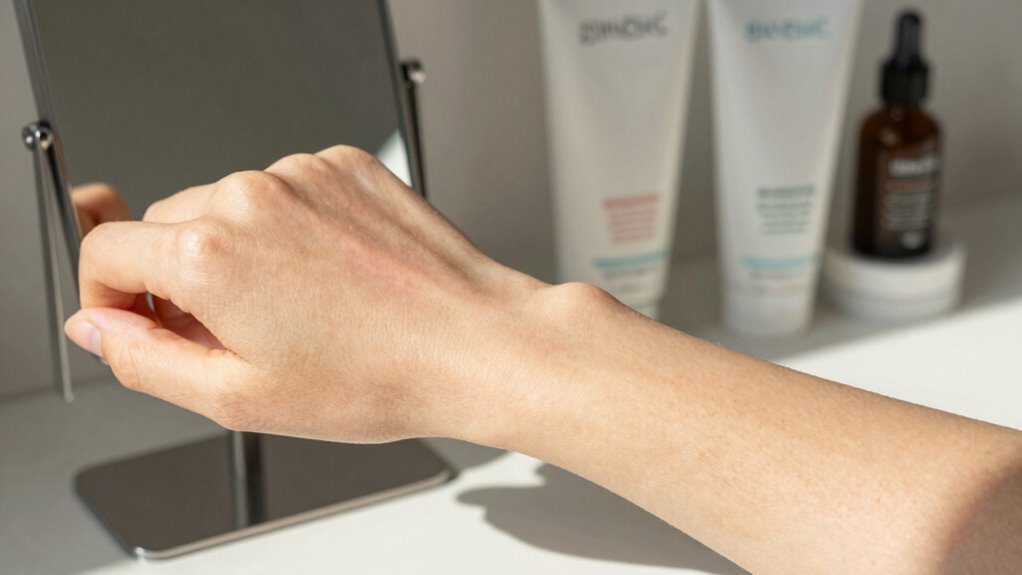
Before using at-home IPL devices, it’s important to determine if your skin tone is suitable. Skin tone considerations are vital because IPL works best on certain skin hues. Generally, lighter skin tones with less melanin are more compatible with home IPL devices, reducing the risk of side effects. Darker skin tones may not be ideal, as increased melanin can absorb more light, leading to potential burns or ineffective results. Check your device’s compatibility chart to see if your skin tone aligns with the recommended range. Home IPL compatibility varies among brands and models, so always read the instructions carefully. Understanding melanin levels can help you better assess your suitability for IPL treatments. Additionally, knowing the skin tone spectrum can further assist in evaluating your compatibility with IPL therapy, ensuring safer and more effective results. Recognizing individual skin characteristics can further enhance your safety and effectiveness when using IPL devices. Matching skin tone and device specifications is crucial for minimizing risks and achieving optimal hair removal outcomes. Being aware of your skin’s response to light can also help prevent adverse reactions and improve treatment success. Ensuring your skin tone fits the device’s specifications helps you achieve safe, effective hair removal while minimizing risks.
How Skin Tone Affects IPL Effectiveness and Safety
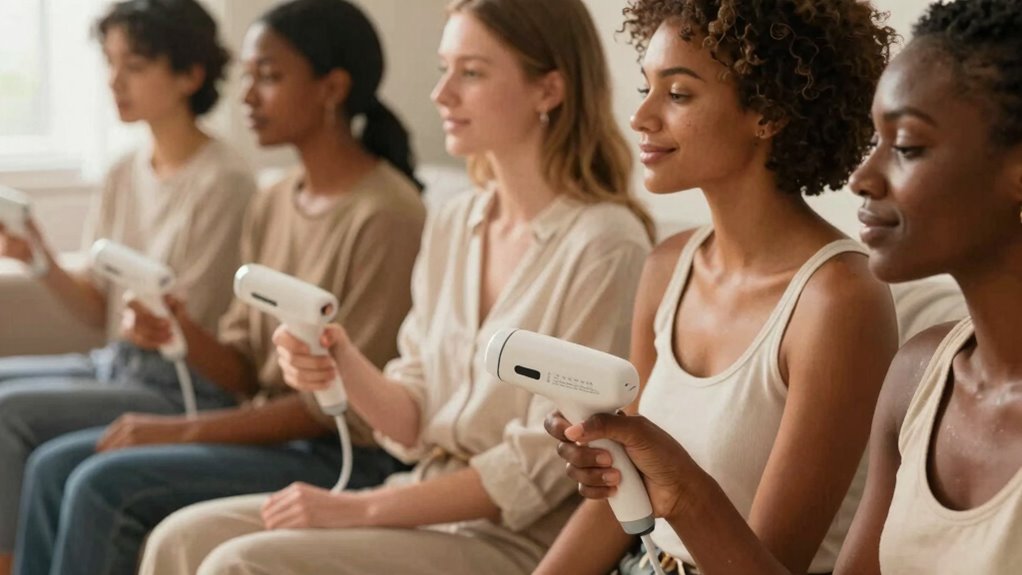
Your skin tone plays a significant role in how effectively and safely IPL works. The melanin concentration in your skin influences treatment outcomes; higher melanin levels absorb more light, making IPL more effective but also increasing the risk of skin irritation. Additionally, skin sensitivity varies across tones, affecting how your skin reacts to IPL pulses. Here are key points to contemplate:
- Darker skin tones have higher melanin, requiring careful settings to prevent burns.
- Lighter skin tones usually respond better with less risk.
- Increased melanin can lead to uneven results if not properly managed.
- Sensitive skin may experience more redness or discomfort during treatment.
Understanding your skin tone helps optimize safety and results during IPL at home.
How Sun Exposure Impacts IPL Results and Safety

Sun exposure can diminish IPL treatment effectiveness and increase your risk of side effects. If your skin is tanned or sunburned, the energy from IPL may not work as well or could cause irritation. Protect your skin by avoiding sun exposure before and after treatment to guarantee safe and ideal results. Additionally, understanding how sun safety practices influence skin health can help optimize treatment outcomes and minimize risks. Incorporating protective measures like wearing protective clothing and applying broad-spectrum sunscreen can further reduce the potential for adverse reactions and support healthier skin during the IPL process. Being aware of skin response to sun can also guide you in timing treatments for the best results and safety. Maintaining proper hydration and avoiding tanning beds are also essential skin care practices that enhance treatment safety and effectiveness. Recognizing how UV exposure impacts skin healing can help you plan your treatments more effectively and avoid setbacks.
Sun Exposure and Efficacy
Exposure to sunlight can markedly affect the results and safety of IPL treatments. When you’re exposed to UV rays, it can reduce IPL’s effectiveness and increase risks. To optimize results and safety, consider these tips:
- Limit sun exposure before and after treatments to prevent skin irritation.
- Always use proper UV protection, like broad-spectrum sunscreen, when outdoors.
- Avoid tanning risks by steering clear of tanning beds and self-tanning products.
- Remember that tanned skin absorbs more IPL energy, which can cause burns or hyperpigmentation.
- Recognizing the importance of skin tone in IPL safety and outcomes can help you better prepare for treatments.
- Additionally, understanding the contrast ratio of your skin can influence how well IPL procedures work and how safe they are.
- Regular cleaning and maintenance of your diffuser can ensure optimal dispersion of essential oils and maximize benefits.
- Being aware of your skin type and its sensitivity can further enhance safety during IPL sessions.
- Considering your skin pigmentation and its impact on IPL efficacy can help tailor treatments for safer and more effective results.
Protecting Skin During IPL
Have you ever wondered how sunlight can influence the safety and effectiveness of IPL treatments? Sun exposure increases the risks associated with IPL, especially if your skin isn’t compatible with the procedure. Excessive sun exposure can lead to uneven results, burns, or hyperpigmentation. To protect your skin during IPL, avoid direct sunlight before and after treatments, and always wear broad-spectrum sunscreen if you need to go outside. Knowing your skin tone compatibility is essential; darker skin tones are more prone to sun exposure risks and may not be suitable for IPL at home. Additionally, sound healing science suggests that certain frequencies can affect skin health and healing, making sun exposure an important consideration. By minimizing sun exposure and following safety guidelines, you guarantee safer treatments and better results while reducing the chance of complications. Furthermore, understanding the importance of skin tone compatibility can help you determine whether IPL is a suitable option for your skin type. It is also helpful to be aware that Glycolic Acid can influence skin sensitivity, so avoiding exfoliants before IPL sessions can reduce adverse reactions. Proper skin preparation can also contribute to more effective and safer IPL treatments. Being aware of photo-sensitivity can help you avoid unexpected reactions during or after your IPL sessions.
Essential Safety Tips for Using IPL at Home

Before using IPL at home, make sure your skin is clean and dry to prevent irritation. Always follow your device’s instructions carefully to guarantee safe and effective treatment. Keep an eye on your skin’s response and stop if you notice any redness or discomfort. Additionally, understanding your skin’s skin tone can help you choose the safest and most effective IPL settings. Being aware of safe usage practices can further reduce the risk of adverse effects and enhance your overall experience. Incorporating proper skin preparation techniques can also improve treatment results and minimize potential side effects. Selecting professional-grade devices can ensure more reliable and safer treatments for at-home use. Recognizing your skin’s sensitivity levels is crucial for customizing treatments and avoiding complications.
Prepare Skin Properly
To guarantee safe and effective IPL treatment at home, preparing your skin properly is essential. Proper prep enhances skin rejuvenation and ensures ideal hair removal results. Here’s what you should do:
- Cleanse your skin thoroughly to remove dirt, oil, and makeup, ensuring the IPL device can target hair follicles effectively.
- Shave the treatment area to expose hair follicles directly, reducing the risk of burns and improving results.
- Avoid tanning or sun exposure for at least 48 hours before treatment, as darker skin increases the risk of adverse reactions. Sun exposure can also impact skin sensitivity and recovery.
- Dry your skin completely to prevent any moisture from interfering with the IPL device’s function.
- Maintain good indoor air quality to support skin health and overall comfort during your IPL routine. Indoor air quality can impact skin condition and recovery.
Follow Device Instructions
Following the device instructions carefully is essential to guarantee safe and effective IPL treatments at home. Make sure your device is compatible with your skin tone and hair color, as using it outside recommended parameters can cause adverse effects. Pay close attention to each step, from setting the right intensity to positioning the device correctly. If your skin is sensitive, start with the lowest setting and gradually increase if tolerated. Ignoring instructions can lead to burns, irritation, or ineffective results. Always read the manual thoroughly before beginning, and never modify the device or use it in ways not prescribed. Proper adherence ensures safety, optimizes results, and protects your skin from unnecessary harm.
Monitor Skin Response
Keeping a close eye on your skin’s response during IPL treatments helps prevent adverse reactions and guarantees safe, effective results. Monitoring skin pigmentation changes is essential for maintaining laser safety and avoiding burns or hyperpigmentation. To do this effectively:
- Watch for unusual redness or swelling—these may indicate irritation.
- Check for any blistering or peeling, signaling overexposure.
- Note if your skin darkens or lightens unexpectedly, which could signal pigmentation issues.
- Stop treatment immediately if you experience persistent discomfort or skin discoloration, and consult a professional.
Consistent monitoring helps you catch early signs of adverse reactions, ensuring your IPL at-home routine remains safe and effective. Always prioritize your skin’s health and adjust treatments as needed.
Protecting Your Skin From Sun Damage During IPL Treatment
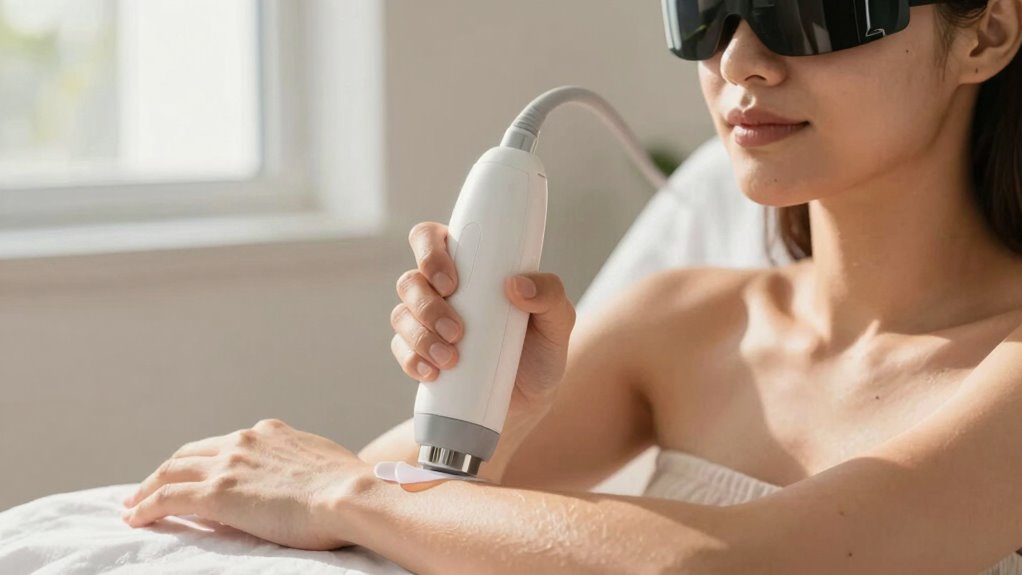
Protecting your skin from sun damage during IPL treatment is essential to get the best results and minimize risks. Sun exposure can increase melanin levels, making your skin more sensitive and prone to burns or pigmentation issues. To safeguard your skin, avoid direct sunlight before and after treatment, especially during peak hours. Use broad-spectrum sunscreen with high SPF, even indoors, to shield against UV rays. Keep in mind that individuals with higher skin sensitivity should be extra cautious. Here’s a quick guide:
| Skin Sensitivity Level | Recommended Sun Exposure | Protective Measures |
|---|---|---|
| Low | Minimal, short durations | SPF 30+, protective clothing |
| Moderate | Limited, avoid peak hours | Wide-brim hat, shade |
| High | No sun exposure | Stay indoors, full coverage |
Tips to Maximize IPL Results Based on Your Skin and Sun Habits

To maximize your IPL results, it’s essential to tailor your skin and sun habits to support the treatment’s effectiveness. Your skin type and pigmentation issues play a key role in achieving ideal outcomes.
- Assess your skin type and choose IPL settings accordingly to prevent irritation or ineffective results.
- Avoid sun exposure before and after treatments to reduce pigmentation issues and enhance results.
- Use broad-spectrum sunscreen daily, especially if you have darker skin tones prone to pigmentation.
- Maintain consistent treatment intervals and follow your dermatologist’s advice for your specific skin concerns.
Common Mistakes to Avoid When Using IPL at Home

While using IPL at home can be convenient, many people make common mistakes that hinder their results or cause skin issues. One key mistake is neglecting laser safety protocols, which can lead to skin burns or irritation. Always follow the device instructions carefully, wear protective eyewear if recommended, and avoid using IPL on broken or irritated skin. Another mistake is disregarding skin pigmentation; IPL works best on even skin tones, so attempting treatments on darker or uneven skin can cause pigmentation issues or hyperpigmentation. Overusing the device or treating the same area too frequently can also damage your skin. Remember, patience and proper technique are essential. Avoid rushing the process to minimize risks and ensure safe, effective results.
When Should You Consult a Professional Before Starting IPL?

Before starting IPL treatments at home, it’s wise to consult a professional if you have certain skin conditions or concerns. A professional consultation guarantees a proper skin assessment, reducing risks and increasing safety. Consider consulting a specialist if:
- You have active skin infections or open wounds.
- You have a history of skin cancer or unusual moles.
- You’re pregnant or breastfeeding.
- You have skin conditions like eczema, psoriasis, or rosacea.
A thorough skin assessment by a professional helps determine if IPL is suitable for you and guides personalized safety rules. Don’t skip this step—early professional advice can prevent complications and ensure effective, safe results from your home IPL treatments.
FAQs About Skin Tone, Sun Exposure, and Safe IPL Use

Understanding your skin tone and sun exposure is essential for safe IPL use at home. Skin pigmentation varies, affecting how IPL targets hair and skin. Light skin tones generally respond better and have lower risks, while darker skin tones contain more melanin, increasing the chance of skin irritation or pigmentation changes. To guarantee safe hair removal, avoid sun exposure before and after treatments, as tanned or sunburned skin can increase risks. Always perform a patch test to check your skin’s reaction, especially if you have darker skin or uneven pigmentation. Remember, IPL isn’t suitable for all skin tones, and overexposure to the sun can compromise safety. Knowing your skin’s characteristics and maintaining proper sun protection helps you achieve effective, safe hair removal at home.
Frequently Asked Questions
Can IPL Be Safely Used on Sensitive or Damaged Skin?
You shouldn’t use IPL on sensitive or damaged skin, as it can worsen skin sensitivity and delay skin repair. IPL targets hair and pigmentation, but if your skin is irritated, broken, or healing, it increases the risk of burns, scars, or uneven results. Always wait until your skin fully recovers before applying IPL, and consult a professional if you’re unsure. Prioritizing skin safety helps prevent long-term damage.
How Does Medication Affect IPL Treatment Safety and Results?
Sure, medication interactions can turn your IPL session into a skin sensitivity circus. If you’re on certain meds like antibiotics or acne treatments, your skin might react more fiercely, increasing risks. Always check with your doctor first, or risk turning your beauty routine into a fiery ordeal. Remember, combining medication and IPL without caution can compromise both safety and results, turning a simple glow into a potential nightmare.
Are There Specific Skin Conditions That Contraindicate IPL Use?
You should avoid IPL if you have skin allergies or infections, as these conditions can worsen or cause complications. Skin allergies can lead to increased sensitivity, making IPL treatments uncomfortable or harmful. Skin infections, like cold sores or bacterial infections, can spread or flare up with IPL. Always consult a healthcare professional before proceeding to guarantee your skin condition won’t interfere with safe IPL use and to prevent adverse effects.
How Often Should I Perform At-Home IPL Sessions for Optimal Results?
You should perform at-home IPL sessions every 2 to 4 weeks, allowing your skin to respond properly and recover between treatments. Pay close attention to your skin’s response; if you notice redness or irritation, extend the time between sessions. Consistency is key for ideal results, but avoid overdoing it to prevent adverse effects. Adjust your session frequency based on how your skin reacts and always follow safety guidelines.
What Are the Signs of Adverse Reactions During IPL Treatment?
You might notice signs of adverse reactions like unexpected skin irritation, redness, or swelling during IPL treatment. Sometimes, these reactions appear coincidentally with discomfort or burning sensations. If you see blistering, persistent pain, or darkening of the skin, stop immediately. These signs indicate your skin isn’t tolerating the procedure well. Always monitor your skin closely and consult a professional if adverse reactions persist or worsen to guarantee safe treatment.
Conclusion
So, you’ve got the perfect at-home IPL setup—just remember, your skin’s tone and sun habits still call the shots. Ironically, the very sun that gave you your glow might now sabotage your smooth results. Follow safety rules, avoid shortcuts, and don’t ignore professional advice. After all, the real magic isn’t just in the device, but in your commitment to safe, smart skincare—because nobody wants a “bright” surprise from a burnt-out skin tone.