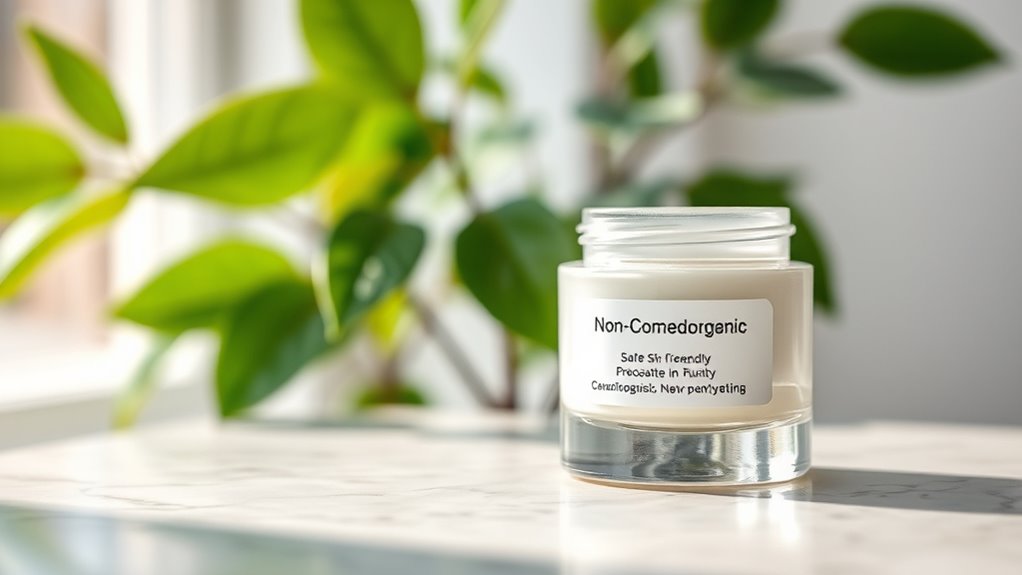

“Non-comedogenic” means a product is designed to reduce the chance of clogging your pores and causing breakouts. It indicates that the ingredients are less likely to block pores, making it a good choice for oily, acne-prone, or sensitive skin. However, it doesn’t guarantee zero breakouts since individual reactions vary and other factors play a role. Understanding what this label truly means can help you make safer skincare choices—discover more about its importance.
Key Takeaways
- “Non-comedogenic” indicates products formulated to minimize pore clogging and reduce acne risk.
- It does not guarantee complete absence of pore-clogging ingredients or prevent all breakouts.
- The label is based on ingredient safety profiles, not individual skin reactions.
- Choosing non-comedogenic products can help maintain clearer skin, especially for oily or acne-prone skin types.
- External factors like hormones and diet also influence skin health, regardless of product claims.

Have you ever noticed skincare products labeled as “non-comedogenic” and wondered what it really means? The term is often used as a selling point, but understanding its significance can help you make better choices for your skin. Fundamentally, “non-comedogenic” indicates that the product is formulated to minimize the risk of skin pore clogging, which can lead to breakouts and acne. Unlike general skincare claims, this label suggests that the ingredients used are less likely to block your pores, making it a valuable consideration if you have oily, acne-prone, or sensitive skin.
It’s important to recognize that “non-comedogenic” doesn’t mean a product is completely free of ingredients that could cause breakouts for everyone. Instead, it signifies that the ingredients have been selected based on their safety profile regarding skin pore clogging. Many ingredients known for clogging pores, such as certain oils or heavy emollients, are avoided or used in safe, controlled amounts. This focus on ingredient safety is key because not all oils or compounds are problematic for all skin types. For example, some oils considered comedogenic for one person might be perfectly fine for another. The label helps guide you toward products that are generally safer for sensitive or acne-prone skin, but it’s still wise to pay attention to your own reactions.
When choosing non-comedogenic products, you’re fundamentally prioritizing ingredient safety—opting for formulations designed to reduce the likelihood of skin pore clogging. This is vital because clogged pores can trap dirt, oil, and bacteria, leading to inflammation and breakouts. By selecting products with ingredients that are less likely to clog your pores, you give your skin a better chance to stay clear and healthy. Additionally, understanding the role of contrast ratio can help you select products that provide the visual clarity and image quality you desire, especially for use in home cinema settings. However, it’s good to remember that no product can guarantee zero breakouts, especially if other factors like hormones, diet, or environmental exposure come into play.
Frequently Asked Questions
Are All Non-Comedogenic Products Suitable for Sensitive Skin?
Not all non-comedogenic products are suitable for sensitive skin. While they’re designed to prevent pore clogging, some ingredients can still cause skin irritation, especially if your skin is prone to sensitivity. Always check ingredient lists and do a patch test before fully switching products. Even non-comedogenic labels don’t guarantee compatibility—what works for one person might not work for another, so listen to your skin’s reactions.
Can Non-Comedogenic Products Prevent Acne Entirely?
Think of non-comedogenic products as a gentle shield for your skin’s delicate landscape. While they’re formulated to reduce pore clogging, they can’t promise to prevent acne entirely, since other factors like hormone levels or bacteria also play a role. By focusing on ingredient safety and avoiding pore-clogging ingredients, you improve your chances of clearer skin, but no product can guarantee complete acne prevention. Consistent skincare is your best strategy.
How Do Non-Comedogenic Ingredients Differ From Regular Ingredients?
You notice non-comedogenic ingredients differ from regular ones in that they’re specifically chosen to minimize pore clogging. These ingredients often have greater ingredient stability, reducing the risk of breakouts. Additionally, formulation complexity plays a role, as brands carefully craft products to keep ingredients effective yet less likely to cause acne. This focus helps guarantee your skincare is gentler on your skin, especially if you’re prone to breakouts.
Is “Non-Comedogenic” Regulation Consistent Across Brands?
You might think “non-comedogenic” labeling is foolproof, but regulation inconsistencies vary wildly across brands. Some companies rigorously test their products, while others slap on the label without proof, leading to confusion. This inconsistency can make it hard for you to trust what’s on the packaging, risking breakouts or irritation. Always research brands and look for transparency, since not all labels are created equal in this unregulated world.
Do Non-Comedogenic Products Expire Faster Than Others?
You might wonder if non-comedogenic products expire faster. Generally, their product stability depends on ingredient longevity, which can vary regardless of being labeled non-comedogenic. Some formulas contain preservatives to extend shelf life, while others may have natural ingredients that degrade quicker. So, it’s essential to verify expiration dates and store products properly. Being mindful of ingredient stability helps ensure your skincare remains safe and effective over time.
Conclusion
Now you know that “non-comedogenic” isn’t just a fancy label—it’s your secret weapon against stubborn breakouts and clogged pores. Choosing products wisely can feel like wielding a magic wand, transforming your skin from chaos to clarity. Don’t underestimate the power of reading labels; it’s your armor in the skincare battlefield. Embrace it, and watch your complexion glow brighter than a thousand suns, because your skin deserves nothing less than the best.