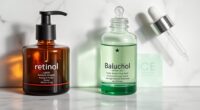
To protect your skin barrier, use gentle cleansers that don’t strip natural oils and apply a moisturizer with ceramides and hyaluronic acid regularly. Wear sunscreen daily to shield against UV rays, and cover up in harsh weather with protective clothing. Keep environmental stressors like pollution and wind at bay by using antioxidants and avoiding smoking or excessive alcohol. Maintaining these habits strengthens your skin’s resilience—learn more about keeping your skin healthy and protected.
Key Takeaways
- Use broad-spectrum sunscreen daily to shield skin from UV damage and environmental stressors.
- Incorporate ceramides, hyaluronic acid, and glycerin in your moisturizer to strengthen and hydrate the skin barrier.
- Protect your skin from pollution and harsh weather by wearing protective clothing and using antioxidant-rich products.
- Avoid over-cleansing and choose gentle cleansers that preserve natural oils and lipids.
- Maintain a healthy lifestyle by staying hydrated, avoiding smoking, and reducing exposure to environmental stressors.

Have you ever wondered what keeps your skin healthy and protected? The answer lies in your skin barrier—a essential shield that guards against external threats and helps maintain hydration. To keep this barrier strong, understanding how moisturizer ingredients and environmental stressors influence it is fundamental. Your skin barrier is a complex structure made up of lipids, proteins, and dead skin cells that work together to prevent moisture loss and block harmful substances. When it functions properly, your skin feels resilient, smooth, and comfortable. But exposure to environmental stressors like pollution, harsh weather, and UV rays can weaken this barrier, leading to dryness, irritation, and increased sensitivity.
Your skin barrier shields against damage and helps maintain hydration. Keep it strong with the right skincare and environmental protection.
Moisturizers play an indispensable role in fortifying your skin barrier, especially when they contain the right ingredients. Look for products with ceramides, hyaluronic acid, glycerin, and fatty acids—these ingredients help replenish and restore the lipids that keep your skin hydrated and resilient. Ceramides, in particular, are naturally present in your skin, but they diminish with age or damage, so replenishing them with topical moisturizers is essential. Hyaluronic acid attracts water into your skin cells, boosting hydration, while glycerin acts as a humectant, pulling moisture from the environment into your skin. Fatty acids like linoleic and oleic acid help reinforce the lipid barrier, making it less permeable to irritants.
Environmental stressors can take a toll on your skin barrier by disrupting its delicate balance. Pollution particles, for instance, generate free radicals that damage skin cells and break down lipids, leading to a weakened barrier. Extreme weather conditions—cold winds, dry air, or intense sunlight—strip moisture from your skin and compromise its natural defenses. UV rays not only cause sunburn but also accelerate aging and impair skin repair processes. To protect against these stressors, you should adopt a consistent skincare routine that includes broad-spectrum sunscreen, protective clothing, and antioxidants like vitamin C, which neutralize free radicals.
In addition to using the right moisturizer ingredients, minimizing your exposure to environmental stressors can make a significant difference. Keep your skin clean, but avoid overwashing, which can strip away natural oils. Use gentle cleansers that preserve your skin’s Lipid barrier, and always apply moisturizer after cleansing to lock in hydration. During harsh weather, shield your skin with scarves or hats and consider using humidifiers indoors to combat dry air. Staying hydrated, eating a balanced diet rich in antioxidants, and avoiding smoking or excessive alcohol consumption also support your skin’s resilience.
Frequently Asked Questions
Can Diet Affect My Skin Barrier Health?
Yes, your diet can affect your skin barrier health. When you maintain a nutritional balance, you provide your skin with essential vitamins, minerals, and fatty acids that strengthen its protective layer. Poor dietary habits, like excessive sugar or processed foods, can weaken your skin’s barrier, leading to dryness and irritation. Eating nutrient-rich foods supports ideal skin function, helping to keep your skin barrier resilient and healthy over time.
How Does Climate Change Impact Skin Barrier Function?
You might worry about climate change, but it directly impacts your skin barrier too. Climate-induced dehydration saps moisture, weakening your skin’s protective layer, while increased environmental toxin exposure causes inflammation and damage. These factors make your skin more vulnerable, causing redness, irritation, and premature aging. To shield your skin barrier, stay hydrated, use barrier-strengthening skincare, and protect yourself from pollutants. Don’t let climate change silently undermine your skin’s health.
Are Natural Remedies Effective for Repairing a Damaged Skin Barrier?
Natural remedies can support skin barrier repair, but their effectiveness varies. Ingredients like honey, aloe vera, and coconut oil have soothing, moisturizing properties that may help heal damaged skin. However, for serious barrier damage, you should consult a dermatologist, as natural remedies alone might not suffice. Incorporate these remedies as complementary treatments alongside proper skincare, hydration, and protection to optimize skin barrier recovery.
What Ingredients Should I Avoid to Protect My Skin Barrier?
Think of your skin barrier as a fortress; you need to keep it fortified by avoiding harsh chemicals and synthetic fragrances. These ingredients act like invaders, weakening your skin’s defenses. Steer clear of products with alcohol, artificial dyes, and strong surfactants. Instead, choose gentle, fragrance-free cleansers and moisturizers. Protect your skin by reading labels carefully—what’s not there, keeps your barrier safe and strong.
How Often Should I Update My Skincare Routine?
You should update your skincare routine every few months to maintain skincare consistency and adapt to your skin’s changing needs. Pay attention to how your skin responds to products and adjust accordingly, customizing your routine as needed. Seasonal shifts, age, and lifestyle can all influence your skincare requirements, so reevaluate regularly. This proactive approach helps protect your skin barrier while ensuring your routine stays effective and tailored to you.
Conclusion
Think of your skin barrier as a castle wall, shielding your inner kingdom from invaders. When you nurture it with gentle care and proper hydration, you keep it strong and resilient. But neglect it, and cracks may appear, inviting damage and dryness. Protecting your skin is like tending to a delicate garden—consistently watering and shielding it from harsh elements guarantees it stays vibrant and healthy. Guard your barrier, and it’ll guard you in return.