

Understanding SPF basics involves knowing how it protects you against UVA and UVB rays. SPF indicates how long you can stay in the sun without burning; higher SPF offers more protection. UVA rays penetrate deep and cause skin aging, while UVB rays affect the surface and cause burns. Products labeled with PA also show how well they protect against UVA. If you keep exploring, you’ll discover how to choose the best sun protection for your needs.
Key Takeaways
- SPF measures protection against UVB rays, which cause sunburn and contribute to skin cancer.
- UVA rays penetrate deeper, accelerating skin aging and also play a role in skin cancer.
- PA rating indicates UVA protection; higher PA means better UVA defense (e.g., PA++, PA+++).
- Broad-spectrum sunscreens protect against both UVA and UVB rays for comprehensive skin protection.
- Using SPF, UVA/UVB, and PA together offers optimal defense against sun damage and skin aging.
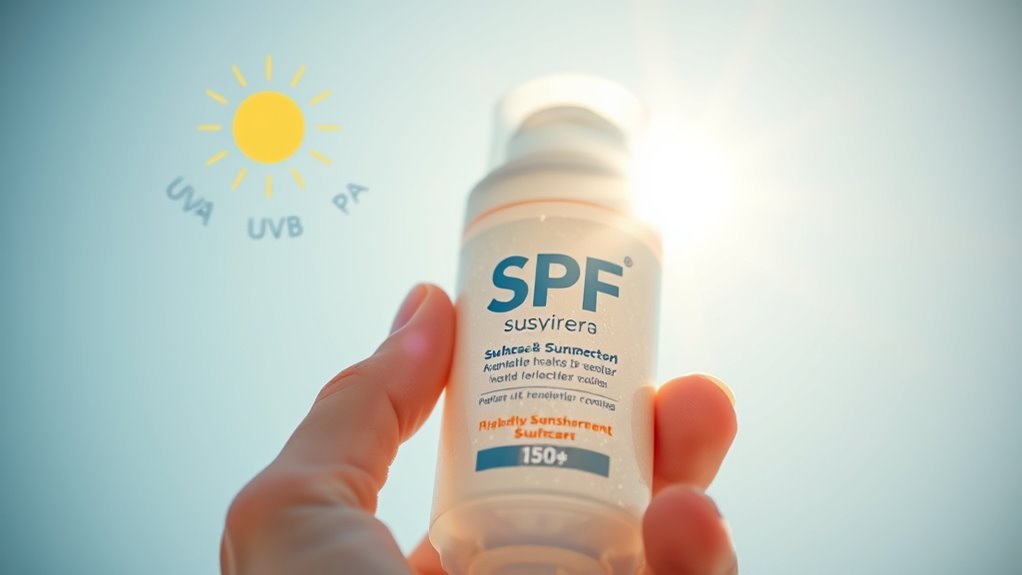
Have you ever wondered how to protect your skin from the sun’s harmful rays? It’s a common concern, especially when you want to enjoy outdoor activities without risking skin damage. The key to effective sun protection lies in understanding broad spectrum protection and how to apply SPF correctly. Broad spectrum sunscreens shield you from both UVA and UVB rays, which are responsible for skin aging, burns, and the development of skin cancer. Choosing a sunscreen with broad spectrum protection ensures you’re defending against the full range of ultraviolet radiation. When it comes to SPF application tips, applying enough sunscreen is vital; most people don’t use enough, which diminishes its effectiveness. A good rule of thumb is to use about one ounce—roughly the size of a shot glass—for your entire body and to reapply every two hours, or more often if you’re swimming or sweating. Remember, SPF, or Sun Protection Factor, indicates how long you can stay in the sun without burning compared to unprotected skin. For example, SPF 30 means you can stay in the sun 30 times longer before burning, but this doesn’t mean you can skip reapplication. It’s essential to apply sunscreen generously and evenly, covering all exposed areas. Don’t forget often-missed spots like your ears, the back of your neck, and your feet. When applying SPF, make sure your skin is dry, and don’t rub it in too quickly; give the sunscreen a few minutes to set. If you’re using spray sunscreens, spray generously and evenly, then rub it in to ensure complete coverage. It’s also wise to use other sun protection measures, like wearing broad-brimmed hats, sunglasses, and protective clothing, especially during peak sunlight hours. The SPF label on your sunscreen should be at least 30 for most outdoor activities, but higher SPF options, like 50, offer extra protection for sensitive skin or prolonged exposure. Keep in mind that no sunscreen provides 100% protection, so combining SPF with physical barriers offers the best defense. Reapplication is your best friend—make it a habit to reapply every two hours, or immediately after swimming or sweating heavily. To maximize your sun safety, understanding ultraviolet radiation and how it affects your skin can help you make more informed choices. By following these SPF application tips and choosing products with broad spectrum protection, you give your skin the best chance to stay healthy and youthful. Sun safety isn’t just about a bottle of sunscreen; it’s about making informed choices so you can enjoy the outdoors without unnecessary risks.
Frequently Asked Questions
How Does SPF Relate to UVA and UVB Protection?
SPF primarily measures your sun protection against UVB rays, which cause sunburn and contribute to skin aging. While higher SPF offers more UVB protection, it doesn’t necessarily mean better UVA defense. To effectively prevent skin aging and damage, choose sunscreens labeled with broad-spectrum protection, which guard against both UVA and UVB rays. This guarantees thorough sun protection, keeping your skin healthier and younger-looking over time.
Can SPF Ratings Be Misleading or Inaccurate?
Yes, SPF ratings can be misleading or inaccurate. Some products may have misleading labels, suggesting higher protection than they actually provide. Inaccurate ratings can result from inconsistent testing methods or false claims by manufacturers. You should always check the sunscreen’s ingredients and application instructions, rather than relying solely on SPF numbers. Remember, no sunscreen offers 100% protection, so reapplying regularly is essential for effective sun safety.
Does Higher SPF Mean Better Protection Against UVA Rays?
A higher SPF mainly means better protection against UVB rays, which cause sunburn. However, it doesn’t necessarily mean better protection against UVA rays, which contribute to premature aging and skin damage. Look for sunscreens with broad-spectrum ingredients like zinc oxide or avobenzone, as these protect against both UVA and UVB. So, don’t just rely on SPF numbers; check the label for UVA protection to guarantee thorough defense.
How Often Should Sunscreen Be Reapplied During the Day?
Ever wonder how often you should reapply sunscreen? You should reapply every two hours during the day, especially if you’re sweating or swimming. Proper application frequency guarantees continuous protection, so don’t wait until you notice a tan or burn. Reapplication timing is vital, even on cloudy days. Make sure to cover all exposed skin each time you reapply for the best defense against harmful UV rays.
Are There Differences in SPF Effectiveness on Different Skin Tones?
Your skin tone can influence SPF efficacy, but sunscreen still offers protection for everyone. Lighter skin may be more prone to burning, so SPF helps prevent damage, while darker skin has more melanin, providing some natural protection. However, no matter your skin tone, using broad-spectrum sunscreen with at least SPF 30 is essential. Consistent application guarantees your skin stays protected from harmful UV rays, regardless of your natural pigmentation.
Conclusion
So, now that you understand SPF, UVA, UVB, and PA, you’re practically invincible against the sun’s relentless assault. With the right sunscreen, you could walk through a blazing inferno and come out unscathed, glowing like a superhero. Remember, your skin’s protection isn’t just a routine—it’s your ultimate shield against aging, burns, and damage. Arm yourself wisely, and turn everyday sun exposure into a mere flicker in your unstoppable, radiant future.