
Bohemian dress has deep roots in European folk traditions, emphasizing handcrafted embroidery, lace, and textiles from regions like Hungary, Romania, and Spain. It also reflects the influence of the 1960s hippie movement, which promoted natural materials, freedom of movement, and a connection to nature. This style embodies cultural storytelling, freedom, and individuality through earthy colors and symbolic motifs. If you explore further, you’ll discover even more fascinating layers behind this authentic, expressive fashion.
Key Takeaways
- Bohemian dress has deep roots in European folk traditions, emphasizing handcrafted embroidery, lace, and regional textile arts.
- It draws inspiration from traditional garments from Hungary, Romania, and Spain, reflecting local cultural stories.
- The style embodies a rejection of industrial fashion, embracing authenticity through traditional craftsmanship and textile techniques.
- Influenced by the 1960s hippie movement, it promotes natural materials, freedom of movement, and spiritual expression.
- Its earthy colors and organic textures symbolize a blend of folk heritage and countercultural ideals of individuality and artistic freedom.
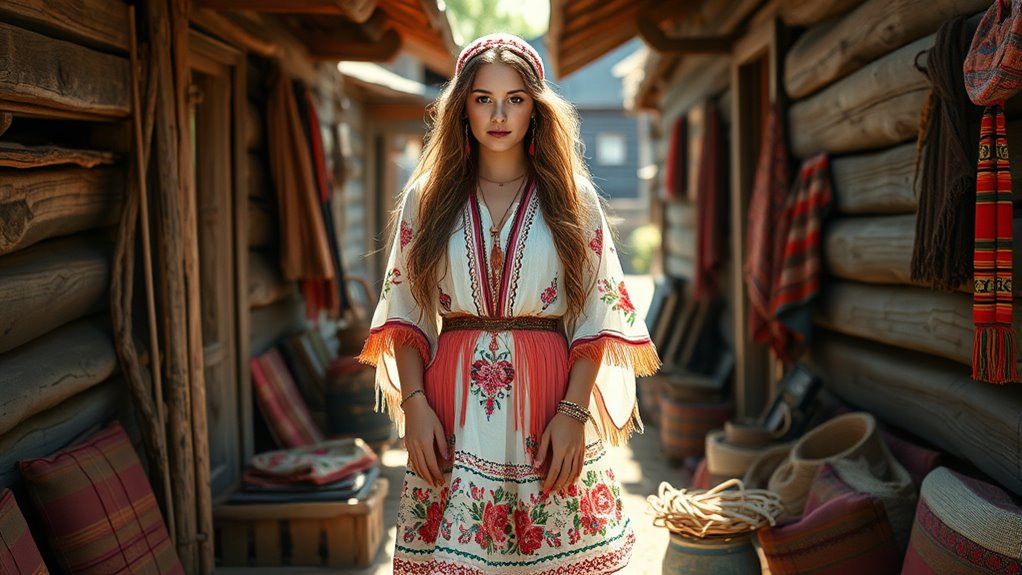
Bohemian dress, often associated with free-spiritedness and artistic expression, has deep cultural roots that trace back to various traditional styles across Europe. You might think of it as a modern fashion statement, but its origins are much richer, woven into the fabric of history, especially through influences from the hippie movement and folk traditions. During the 1960s, when the hippie movement gained momentum, young people sought to reject mainstream fashion and reconnect with a sense of authenticity and individuality. This movement embraced styles inspired by the bohemian lifestyle, drawing heavily from folk traditions that celebrated handcrafted details, natural fabrics, and vibrant patterns. You can see how these elements reflect a desire to break away from industrialized fashion and return to a more genuine, organic aesthetic.
Folk traditions across Europe played a crucial role in shaping the look of bohemian dress. You might notice embroidered blouses, flowing skirts, and layered accessories, all rooted in regional craftwork from countries like Hungary, Romania, and Spain. These traditional garments often feature intricate embroidery, lace, and beadwork, which symbolize cultural stories and local identity. When you wear or see bohemian styles, you’re essentially carrying a piece of these folk traditions, adapted for contemporary expression. The influence of these traditional crafts is a testament to how cultural heritage can evolve into a fashion statement that’s both personal and collective. Additionally, the use of authentic craftsmanship in creating these garments highlights the importance of preserving traditional techniques in modern fashion. This appreciation for craftsmanship underscores a broader cultural value that keeps traditional textile arts alive and relevant today. Moreover, the preservation of traditional textile arts ensures that these cultural practices continue to thrive within contemporary design. Recognizing the importance of these cultural influences helps to appreciate how fashion can serve as a form of cultural storytelling.
The hippie movement, which emerged as a countercultural response to societal norms, further popularized these traditional elements. You might notice the use of natural materials like hemp, linen, and cotton, often in loose, comfortable silhouettes designed for freedom of movement and self-expression. The movement also emphasized peace, love, and a connection to nature, which is reflected in the earthy color palettes and organic textures of bohemian dress. By blending folk motifs with the ideals of the hippie era, bohemian fashion became a symbol of rebellion, spirituality, and artistic independence.
Frequently Asked Questions
How Did Bohemian Fashion Influence Mainstream Clothing Trends?
Bohemian fashion greatly influenced mainstream clothing trends by introducing relaxed, eclectic styles inspired by the hippie movement. You might notice vintage revival elements like flowy skirts, embroidered accessories, and layered patterns in today’s outfits. This movement pushed fashion toward individuality and comfort, encouraging people to embrace a more free-spirited look. As a result, bohemian influences have become a staple, blending vintage charm with modern fashion in everyday wear.
What Symbols Are Commonly Found in Bohemian Dress?
You’ll notice that bohemian dress often features Native motifs and symbolic jewelry, which carry deep cultural meanings. These symbols include feathers, tribal patterns, and floral designs, reflecting a connection to nature and spirituality. Wearing these elements, you express individuality and a free spirit. By incorporating Native motifs and symbolic jewelry, you embrace a style that celebrates diverse cultural stories and personal expression, making your look both meaningful and unique.
Are There Specific Regions Associated With Traditional Bohemian Attire?
You might think bohemian attire is just a free-spirited style, but it’s deeply rooted in specific regions. You’ll find rich textile traditions and regional embroidery from places like Eastern Europe, the Balkans, and parts of North Africa. These areas influence bohemian fashion with their intricate patterns and craftsmanship, making each piece a vibrant tapestry of cultural history. Embrace these regional elements to truly celebrate the soul of bohemian dress.
How Has Bohemian Style Evolved Over the Past Century?
Over the past century, bohemian style has evolved from its roots in the hippie movement of the 1960s, embracing free-spirited and unconventional fashion. You’ve seen a vintage revival, with retro pieces and eclectic accessories coming back into trend. Today, you can mix modern trends with boho elements, creating a look that’s both timeless and current. This style continues to symbolize individuality and artistic expression across generations.
What Role Does Spirituality Play in Bohemian Fashion Choices?
It’s no coincidence that spiritual symbolism and mystical influences deeply shape your bohemian fashion choices. You’re drawn to pieces that reflect your inner beliefs and connection to a higher power. These elements add meaning and authenticity to your style, allowing you to express your spiritual journey. When you wear jewelry or clothing with symbolic motifs, you’re embracing a look rooted in sacred traditions, blending fashion with your spiritual identity effortlessly.
Conclusion
Now that you’ve uncovered the deep cultural roots of bohemian dress, you realize it’s more than just a style – it’s a story woven through history. Like a modern-day explorer, you carry that legacy with you, blending tradition with your own unique flair. So next time you choose that flowing skirt or layered necklace, remember you’re part of a vibrant tapestry that stretches back centuries, inviting you to create your own chapter in its ongoing tale.