
Discover how sustainable, ergonomic footwear like eco-friendly sandals, supportive boots, and barefoot-inspired designs can boost your comfort and style while helping the environment. By choosing shoes with natural materials, contoured support, and eco-conscious manufacturing, you uphold long-term foot health and reduce your carbon footprint. Modern innovations ensure these shoes are durable and fashionable. If you want to explore how these elements come together for healthier, greener footwear options, there’s plenty more to uncover.
Key Takeaways
- Understanding the ergonomic design principles of sandals, boots, and barefoot trends enhances comfort, support, and foot health.
- Sustainable materials like recycled plastics and natural fibers are increasingly used in eco-friendly footwear options across styles.
- Modern footwear balances durability, style, and eco-consciousness, supporting long-term foot health and environmental sustainability.
- Barefoot and minimalist trends focus on natural biomechanics, promoting better posture and foot strength.
- Consumer awareness and demand drive innovation in sustainable, ergonomic footwear, influencing trends in sandals, boots, and barefoot styles.
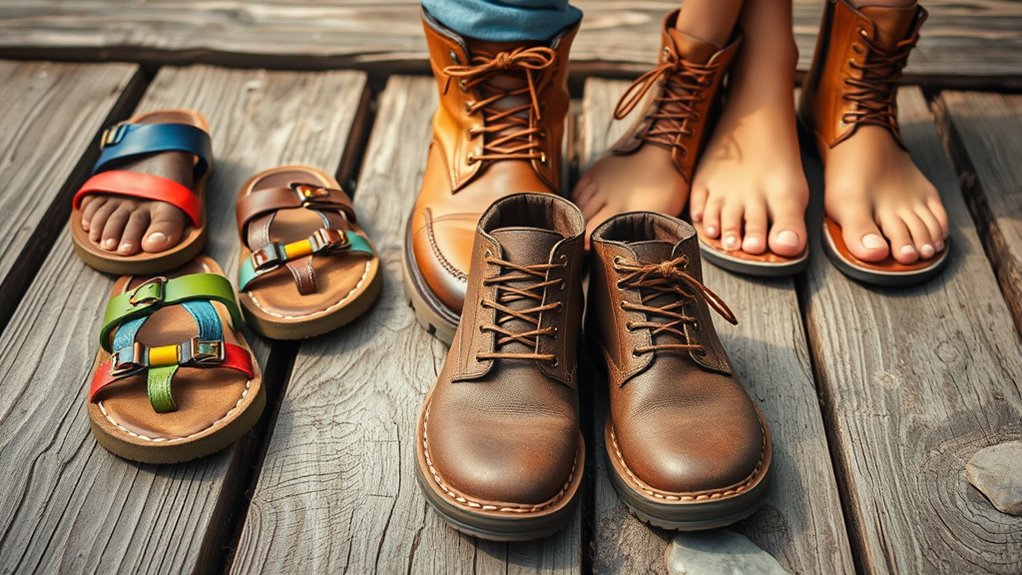
Have you ever wondered what makes a great pair of shoes? It’s not just about style or brand; it’s about how well they serve your feet and fit into a sustainable lifestyle. Today’s footwear options emphasize sustainable materials and ergonomic design, guaranteeing you get comfort while minimizing environmental impact. Sustainable materials like recycled plastics, organic cotton, and natural rubber help reduce waste and lower carbon footprints. When shoes are made with these eco-friendly components, you’re contributing to a healthier planet. Plus, they often feature innovative designs that promote better foot health, aligning with ergonomic principles. Ergonomic design focuses on supporting the natural shape and movement of your feet, reducing strain and preventing injuries. Shoes crafted with ergonomic insights often have contoured insoles, flexible soles, and proper arch support, making them more comfortable for extended wear. Many brands now prioritize these elements, blending sustainability with ergonomic comfort, so you don’t have to compromise one for the other. Additionally, incorporating ergonomic principles into footwear design enhances overall foot health and comfort. Choosing footwear with sustainable materials doesn’t mean sacrificing durability or style. Modern manufacturing techniques ensure these shoes are as sturdy and fashionable as their conventional counterparts. For example, a well-designed sandal made from recycled materials can be both eco-friendly and supportive, making it perfect for warm weather. Similarly, boots built with sustainable leather alternatives or natural fibers still offer robust protection and support for your feet during colder months. When you select shoes with ergonomic design, you’re investing in long-term comfort. Properly supported feet lead to better posture, less fatigue, and fewer aches over time. This is especially important if you spend a lot of time on your feet, whether walking, working, or exploring outdoors. Supporting local and regional brands can also encourage community-based sustainability efforts and reduce transportation emissions. Incorporating sustainable materials and ergonomic design into your footwear choices also encourages brands to continue innovating. As a consumer, your preference for eco-friendly and ergonomic shoes signals to manufacturers that there’s demand for responsible and comfortable options. Consumer demand for these features can drive further advancements in sustainable footwear technology. Moreover, understanding how physical sensations relate to foot health can help you select shoes that support your well-being. Ultimately, understanding these fundamentals helps you make more informed decisions, ensuring your shoes support your health and the environment. So, next time you’re shopping for sandals, boots, or even barefoot-inspired styles, look for those crafted with sustainable materials and designed with your foot’s natural biomechanics in mind. Your feet, and the planet, will thank you.
Frequently Asked Questions
How Do I Choose the Right Footwear for My Foot Type?
When choosing the right footwear for your foot type, you need to take into account your arch support needs. Identify your foot arch as low, high, or neutral by observing how your footprints look. Then, pick shoes that match your arch; for example, those with extra support for a low arch or cushioning for a high arch. Proper footwear ensures comfort and helps prevent foot issues.
What Are Eco-Friendly Materials Used in Modern Footwear?
When it comes to eco-friendly footwear, you’re on the right track. Many brands now embrace sustainable manufacturing, using biodegradable footwear materials like cork, hemp, and recycled plastics. These materials help reduce environmental impact and support greener choices. You can make a difference by choosing shoes made from these eco-conscious options, proving that going green doesn’t mean sacrificing style or comfort. It’s a win-win for you and the planet, no doubt.
How Do I Properly Care for and Clean Different Footwear Types?
To properly care for your footwear, start by cleaning each type according to its material. Use gentle brushes and mild soap for shoes, and consider shoe dyeing to refresh colors. For worn-out soles, try sole restoration to extend their life. Regularly wipe down sandals and boots, and avoid harsh chemicals. This keeps your shoes looking great and lasting longer, so you can enjoy them wear after wear.
Which Footwear Styles Are Best for Specific Outdoor Activities?
When choosing footwear for outdoor activities, consider trail running shoes for speed and agility on rugged paths, offering lightweight support and good grip. Hiking boots are ideal for long hikes, providing ankle stability and protection against rough terrain. Select trail running shoes for quick, less technical trails, and opt for sturdy hiking boots when tackling challenging, uneven terrain to guarantee comfort and safety during your adventures.
How Can I Prevent Common Foot Ailments Related to Footwear?
To prevent common foot ailments, focus on proper foot arch support and adequate foot padding. Make sure your shoes fit well and provide enough room for your toes to move freely. Avoid wearing worn-out footwear, and consider using insoles if needed. Regularly stretch and strengthen your feet, and choose footwear suited for your activities. These steps help reduce discomfort and protect your feet from injuries.
Conclusion
Now that you understand the core of footwear, think of your shoes as your trusted compass, guiding you through life’s journey. Whether sandals, boots, or barefoot, each step symbolizes freedom, strength, or simplicity. Your choice reflects your path—adventurous, grounded, or minimalist. Embrace your unique footwear story, and let every step be a reminder that your journey is yours to shape, one stride at a time. Walk confidently, and let your shoes tell your story.