Cultural appreciation means engaging respectfully with other cultures by understanding their significance, supporting authentic creators, and acknowledging origins. It involves genuine respect, education, and sensitivity, avoiding superficial or commercial use of cultural elements. Cultural appropriation, on the other hand, takes symbols out of context, often for trendiness or personal gain, ignoring their deep meanings. To truly honor cultures, it’s important you know the difference—and there’s more to explore on how to do so thoughtfully.
Key Takeaways
- Cultural appreciation involves respectful learning, sharing, and supporting authentic creators, while appropriation often exploits symbols without understanding their significance.
- Appreciation acknowledges cultural origins and meaning, whereas appropriation commodifies or trivializes cultural elements for personal gain.
- Respectful engagement includes education and sensitivity, contrasting with appropriation’s tendency to take elements out of context.
- Supporting community-based creators promotes genuine appreciation, unlike appropriation which can reinforce power imbalances.
- Intent matters: appreciation seeks understanding and respect, while appropriation often lacks acknowledgment or reverence.
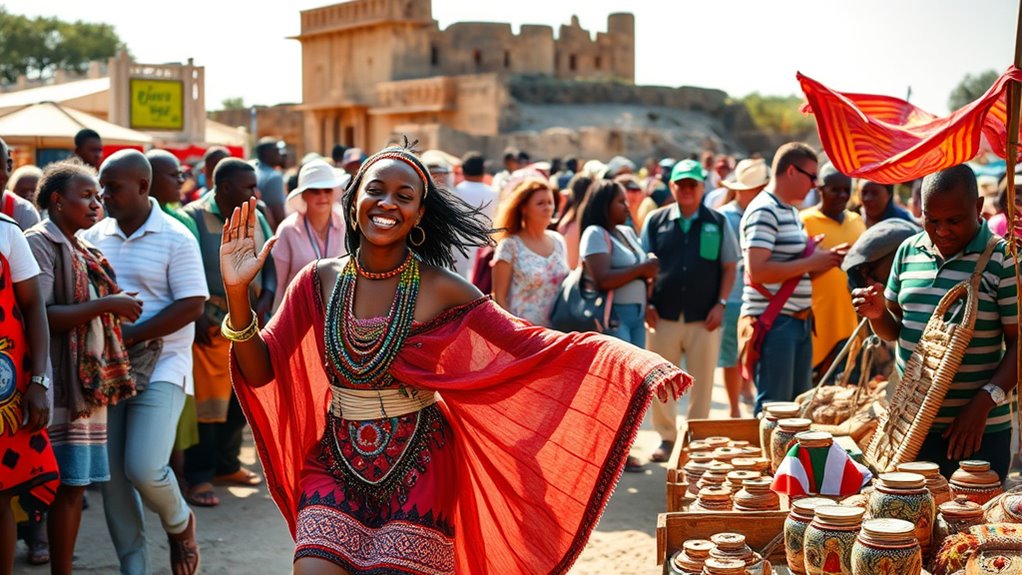
Understanding the line between cultural appreciation and appropriation is essential in today’s diverse world. When you engage with cultures different from your own, it’s easy to fall into the trap of superficial admiration or, worse, disrespect. Cultural exchange offers an opportunity to learn, share, and celebrate others’ traditions, but it requires sensitivity and understanding. Recognizing how artistic influence flows across borders can help you appreciate the richness of different cultures without crossing into appropriation. Artistic influence, after all, has shaped countless creative expressions, and when you draw inspiration from others’ traditions, it’s vital to do so ethically and thoughtfully.
Imagine you’re inspired by a cultural style—perhaps a traditional garment, a musical genre, or a spiritual symbol. If you approach it with genuine respect and a desire to understand its significance, you’re engaging in cultural exchange. This kind of appreciation can deepen your knowledge and foster connections that transcend superficial surface-level adoption. It’s about acknowledging the origins and meaning behind what you’re inspired by, rather than simply copying or diluting the cultural elements for personal gain or trendiness. When you take the time to learn about the history, context, and significance behind certain cultural artifacts, you demonstrate respect and avoid perpetuating stereotypes or misrepresentations.
However, it’s crucial to be aware of the difference between appreciating a culture and appropriating it. Appropriation often involves taking cultural symbols or practices out of context, commodifying them, or using them without understanding their importance. For example, wearing a traditional headdress as a costume or using sacred symbols as fashion accessories can be deeply offensive. These actions reduce meaningful cultural elements to mere aesthetics or trends, stripping away their significance. When you knowingly or unknowingly do this, you contribute to cultural erasure and reinforce power imbalances.
To navigate this delicate balance, you should ask yourself if your actions honor the culture’s history and significance. Are you supporting authentic creators or communities? Are you educating yourself about the cultural context? If your intent is respectful and informed, you’re more likely to engage in genuine appreciation. Remember, cultural exchange should be rooted in mutual respect and understanding, fostering connections rather than exploiting or trivializing others’ traditions. By being mindful of these distinctions, you help create a more inclusive and respectful environment where cultural diversity is celebrated rather than appropriated.
Frequently Asked Questions
How Can I Respectfully Engage With a Culture Different From My Own?
To respectfully engage with a culture different from your own, focus on cultural exchange by learning directly from community members and listening to their stories. Show genuine respect by avoiding stereotypes and asking permission before participating in cultural practices. Educate yourself about the culture’s history and significance, and support authentic creators. This respectful engagement fosters understanding, builds connections, and honors the traditions, ensuring your involvement is meaningful and considerate.
What Are Common Signs of Cultural Appropriation?
You can spot cultural appropriation when you notice superficial engagement that relies on stereotypes or trivializes the culture. Common signs include wearing cultural symbols without understanding their significance, adopting traditional attire as fashion, or making jokes based on stereotypes. If someone shows a lack of respect or genuine appreciation and reduces a culture to a caricature, it’s likely cultural appropriation rather than appreciation. Stay aware and approach cultures with respect.
How Does Power Dynamics Influence Cultural Exchange?
Power dynamics shape cultural exchange like a shadow cast by colonial legacy, influencing who has the right to share and who’s expected to listen. When a power imbalance exists, it often silences marginalized voices, turning cultural exchange into appropriation. You must recognize these hidden imbalances, respecting the history behind cultural symbols and practices, and guarantee your interactions foster genuine appreciation rather than perpetuate historical inequalities.
Can Cultural Appreciation Be Harmful if Unintentional?
Yes, cultural appreciation can be harmful even if unintentional. When you lack cultural sensitivity, you might unknowingly perpetuate stereotypes or disrespect traditions, leading to unintentional harm. Power dynamics can make this worse, as actions from a position of privilege may overshadow the culture’s significance. To avoid this, you should educate yourself, listen to communities, and approach cultural exchange with respect and humility.
What Role Does Context Play in Cultural Sharing?
You should recognize that context shapes how your cultural sharing is received. When you consider historical context and cultural significance, you’re more likely to honor traditions rather than inadvertently offend. By appreciating the deeper meaning behind customs and symbols, your actions become more respectful and meaningful. This awareness helps you navigate cultural exchanges with sensitivity, ensuring your intentions align with genuine respect and understanding, fostering positive connections rather than misunderstandings.
Conclusion
So, stay sensitive and steer clear of superficial stereotypes. Celebrate cultures with sincere respect, savoring their stories and styles. When you genuinely give, you grow—growing into a gracious global citizen. Remember, appreciation promotes understanding, while appropriation pounds with prejudice. By embracing empathy, you ignite a beautiful bond beyond borders. Let’s lift, learn, and love without looting, ensuring every encounter enriches rather than erodes. Together, we can craft a colorful, compassionate world that celebrates every culture’s core.