
Building a conscious boho wardrobe starts with choosing brands committed to ethical sourcing, ensuring fair wages and safe working conditions. Look for transparency in supply chains and opt for certifications that verify responsible practices. Supporting small or local artisans, using eco-friendly fabrics, and avoiding fast fashion also strengthen your commitment. By prioritizing these values, you create a wardrobe that respects people and the planet—continue to explore how you can make even more mindful choices.
Key Takeaways
- Choose brands with transparent supply chains and ethical certifications to ensure fair labor practices.
- Prioritize small, cooperative, or artisan brands that focus on fair wages and community support.
- Incorporate sustainable materials like organic cotton, natural dyes, and eco-friendly fabrics into your wardrobe.
- Support companies committed to safe working conditions, fair wages, and environmentally responsible manufacturing.
- Educate yourself on ethical sourcing to make mindful purchasing decisions aligned with conscious fashion principles.

Have you ever wondered if the products you buy are made responsibly? When building a conscious boho wardrobe, it’s essential to consider where your clothing comes from and how it’s produced. Ethical sourcing isn’t just about choosing pretty pieces; it’s about supporting fair labor practices and demanding transparency throughout the supply chain. Fair labor ensures that everyone involved in making your garments receives a living wage, works in safe conditions, and isn’t exploited. By prioritizing brands that uphold fair labor standards, you help promote dignity and respect for workers, whether they’re sewing beads onto a blouse or weaving fabric from natural fibers.
Supply chain transparency plays a vital role in ethical sourcing because it allows you to see the journey of your clothing from raw material to finished product. When brands are transparent, they disclose information about where their materials are sourced, who makes their products, and the conditions under which they’re made. This openness helps you make informed choices and hold companies accountable. You can look for brands that publish detailed reports or certifications indicating their commitment to ethical practices. Transparency also discourages unethical behaviors like forced labor or environmental harm, as companies are more likely to adhere to ethical standards when they’re open about their processes. Supply chain visibility is increasingly being recognized as a key factor in responsible manufacturing. Moreover, understanding ethical certifications can provide additional assurance that a brand is genuinely committed to these principles.
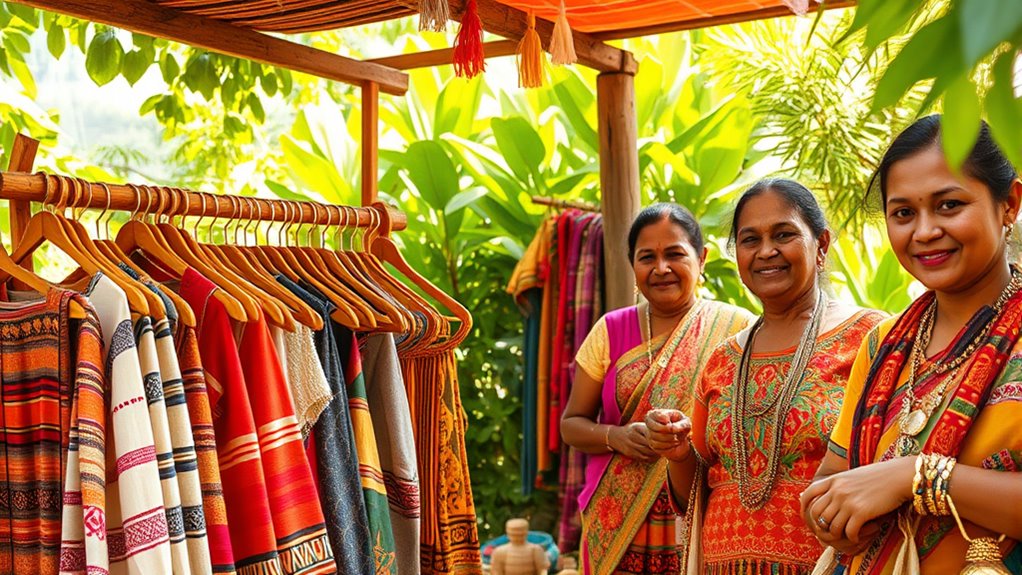
As you curate your boho wardrobe, remember that supporting brands committed to fair labor and transparency isn’t just a trend—it’s a movement toward more conscious consumerism. Seek out labels that work directly with artisans and local communities, ensuring fair wages and respectful treatment. Organic cotton, natural dyes, and eco-friendly fabrics often go hand-in-hand with ethical practices, so look for those details when shopping. Additionally, consider buying from small or cooperative brands that prioritize ethical sourcing over mass production, giving you a more authentic and responsible wardrobe.
Understanding the importance of supply chain transparency means you’re not just buying a beautiful piece of clothing—you’re investing in a story of ethical production. It empowers you to make choices that align with your values, supporting workers and communities rather than exploiting them. Recognizing the role of certifications and reports can further ensure that a brand is genuinely committed to ethical sourcing. As a conscious consumer, you can advocate for change by asking brands about their sourcing practices and choosing those that demonstrate a genuine commitment to fair labor. Every purchase becomes a statement, a way to build a wardrobe that reflects your respect for people and the planet. Building an ethical boho wardrobe isn’t just about style—it’s about making a positive impact, one garment at a time.
Frequently Asked Questions
How Can I Identify Truly Ethical Brands?
To identify truly ethical brands, you should look for companies that prioritize fair labor practices and supply chain transparency. Check their certifications, like Fair Trade or B Corp, and research their sourcing policies. Ask questions about their manufacturing processes and worker rights. Engage with brands that openly share their supply chain information and demonstrate a commitment to social and environmental responsibility, ensuring your wardrobe aligns with your values.
Are Affordable Ethically Sourced Boho Pieces Available?
Yes, you can find affordable ethically sourced boho pieces. Look for brands that prioritize fair labor practices and use sustainable materials, as these show their commitment to ethical sourcing. Many brands now offer budget-friendly options while maintaining transparency about their supply chains. By researching and reading reviews, you’ll discover stylish pieces that support fair labor and sustainable materials, helping you build a conscious, affordable boho wardrobe.
What Certifications Indicate Ethical Sourcing?
Imagine walking through a vibrant marketplace, your fingertips brushing soft, organic fabrics. Certifications like Fair Trade and Organic Certification signify that your pieces are ethically sourced. Fair Trade ensures fair wages and safe conditions, while Organic Certification guarantees eco-friendly materials. These symbols act as your guide, helping you choose pieces that align with your values, creating a boho wardrobe that’s both beautiful and conscientious.
How Does Ethical Sourcing Impact Garment Quality?
When considering how ethical sourcing impacts garment quality, you’ll find that using sustainable fibers often results in softer, more durable fabrics. Fair labor practices ensure workers produce high-quality garments with attention to detail. By prioritizing ethical sourcing, you support better craftsmanship and sustainability, leading to pieces that last longer and feel better on your skin. Ultimately, your choices promote both garment excellence and positive social impact.
Can Ethical Sourcing Reduce Environmental Impact?
Imagine a lush, green field where sustainable farming nurtures crops without harming the earth. By choosing ethically sourced garments, you help reduce environmental impact through practices like eco-friendly dyes and responsible farming. Your choices support a healthier planet, much like tending a garden that thrives without scars. Yes, ethical sourcing actively minimizes pollution, preserves resources, and promotes eco-conscious innovations, making your wardrobe a part of the solution rather than the problem.
Conclusion
By choosing ethical sourcing, you’re consciously creating a compassionate, conscientious closet. Your commitment to caring, connecting, and cultivating change transforms your wardrobe into a powerful statement of sustainability. Every ethical choice champions fair labor, fosters future-forward fashion, and fuels a future where fashion and fairness flourish side by side. So, step confidently into your style story—support sustainability, embrace ethics, and let your wardrobe be a beautiful beacon of hope and harmony.