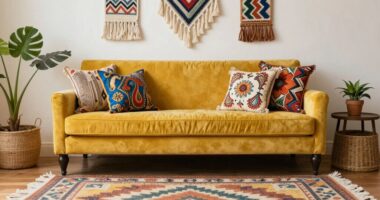
In boho interiors, warm palettes like terracotta, amber, and mustard create an inviting, energetic, and cozy atmosphere that encourages socialization and happiness. Conversely, cool shades such as turquoise, lavender, and soft blues foster calmness, serenity, and mental clarity, ideal for relaxation. Combining these tones balances lively energy with tranquility, shaping a space that feels both vibrant and soothing. To discover how these color choices influence your vibe, explore more inside.

Get your wardrobe favorites delivered free — and shop member deals
- Fast, free delivery on millions of items
- Access to Prime Big Deal Days deals on October 6–7
- Prime Video, Amazon Music and more included
Key Takeaways
- Warm palettes like terracotta and mustard create inviting, cozy atmospheres, fostering feelings of happiness and social interaction in boho interiors.
- Cool shades such as lavender and soft blues promote calmness and serenity, making spaces feel tranquil and relaxing.
- Combining warm and cool colors balances energy and calm, resulting in vibrant yet soothing boho spaces.
- Warm tones can make small or dimly lit rooms feel more intimate, while cool hues add depth and openness.
- Color choices in boho interiors reflect personal style and influence mood, enhancing the space’s overall emotional impact.

Color plays an essential role in shaping the relaxed, eclectic vibe of boho interiors. When choosing your boho color schemes, you’re not just picking pretty shades—you’re intentionally using hues to evoke specific emotions and set the mood. Warm tones like terracotta, amber, and mustard create an inviting, cozy atmosphere that encourages relaxation and socializing. These colors are often associated with comfort, energy, and vitality, making them perfect for spaces where you want to feel grounded and uplifted. On the other hand, cool palettes featuring shades like turquoise, lavender, and soft blues promote calmness and serenity, ideal for creating a tranquil retreat. The emotional impact of hues is powerful; warm colors stimulate feelings of happiness and warmth, while cool hues can instill peace and mental clarity.
In boho interiors, the beauty lies in mixing these palettes to craft a space that feels both lively and soothing. Perhaps you’ll incorporate warm, earthy base tones with pops of cool, refreshing accents. This balance helps foster a dynamic yet harmonious environment. When you understand the emotional impact of hues, you can make smarter choices that align with how you want to feel in your space. For instance, a vibrant coral might energize a creative corner, while soft mint green can offer a calming influence in your reading nook. The key is to blend these colors thoughtfully, using natural textures and layered patterns to enhance their effects. Incorporating color contrast ratios can also help you achieve visual harmony and ensure your chosen palette has the desired emotional effect. Additionally, understanding the psychology of color can deepen your ability to select shades that truly resonate with your personal style and intentions.
Furthermore, your color choices can influence how you perceive the size and lighting of a room. Warm hues tend to make a space feel more intimate and inviting, especially in smaller or dimly lit rooms. Cool colors, however, can open up a room, making it seem larger and airier. When you select a palette, consider the natural light your space receives and how different hues will interact with it. Bright, warm tones might brighten a dull room, while cooler shades can add depth and tranquility. Additionally, understanding the contrast ratio of your chosen colors can help you achieve the desired visual balance and clarity. Remember, in boho design, it’s all about creating a personalized sanctuary—so don’t be afraid to experiment with bold combinations that evoke your favorite feelings.
Ultimately, understanding the emotional impact of hues helps you craft a boho interior that feels authentic and welcoming. Whether you lean toward warm, energizing tones or cool, calming shades, your color choices will influence the vibe and mood of your space daily. By intentionally selecting colors that resonate with your emotions, you’ll turn your home into a vibrant, harmonious retreat that reflects your personality and nurtures your well-being.
Frequently Asked Questions
How Do Warm and Cool Colors Influence Mood Differently in Boho Spaces?
Warm and cool colors influence your mood differently through their color symbolism and emotional impact. Warm tones like reds and oranges create a cozy, energizing atmosphere, making you feel more passionate and lively. Cool colors like blues and greens evoke calmness and relaxation, helping you unwind. In boho spaces, choosing warm or cool palettes directly shapes your emotional experience, so pick based on whether you want vibrancy or tranquility.
Can Color Psychology Help Balance Energy Levels in Boho Interiors?
Imagine the gentle dance of colors in your space, subtly guiding your mood. Color psychology can indeed help you achieve emotional balance by creating harmony through carefully chosen hues. Warm tones energize and uplift, while cool shades promote calmness and relaxation. By thoughtfully balancing these elements, you foster a vibrant yet soothing environment that elevates your energy levels, making your boho interior a perfect sanctuary for both activity and repose.
Are There Specific Color Combinations That Enhance Boho Aesthetic Appeal?
You can enhance your boho aesthetic by choosing color combinations that create appealing color harmony and striking palette contrast. Think earthy tones paired with vibrant accents or muted hues combined with metallics for visual interest. Mixing textures and patterns in contrasting or complementary colors adds depth and personality. These combinations draw the eye, make your space feel lively, and perfectly showcase the eclectic, free-spirited vibe that defines boho interiors.
How Can Color Psychology Guide Furniture and Accessory Choices in Boho Decor?
You can use color psychology to guide your furniture and accessory choices in boho decor by selecting hues that evoke the desired emotional response. For example, warm tones create a cozy, inviting atmosphere, while cool shades promote calmness. Coordinate accessory colors to enhance this psychological impact, ensuring your furniture complements the overall vibe. Thoughtful color pairing helps you craft a space that feels balanced, vibrant, and true to your personal style.
What Are the Latest Trends in Boho Color Palettes Influenced by Psychology?
Did you know 65% of homeowners now favor muted pastels and earthy neutrals in boho interiors? You’re likely drawn to these calming shades, which psychology links to relaxation and stability. Current trends show a shift toward these palettes, blending warm and cool tones for balanced, inviting spaces. By choosing muted pastels or earthy neutrals, you create a soothing environment that reflects your desire for comfort and harmony in your decor.
Conclusion
By choosing warm or cool palettes, you can transform your boho space to evoke the mood you desire. Imagine a cozy, inviting living room painted in warm earthy tones—perfect for relaxing evenings. Or picture a breezy, calming bedroom in cool blues and greens—ideal for peaceful sleep. Your color choices shape your vibe, so consider what feeling you want to inspire. Ultimately, your palette becomes the heart of your personalized boho retreat.
Fall Picks
fall essentials
As an affiliate, we earn on qualifying purchases.