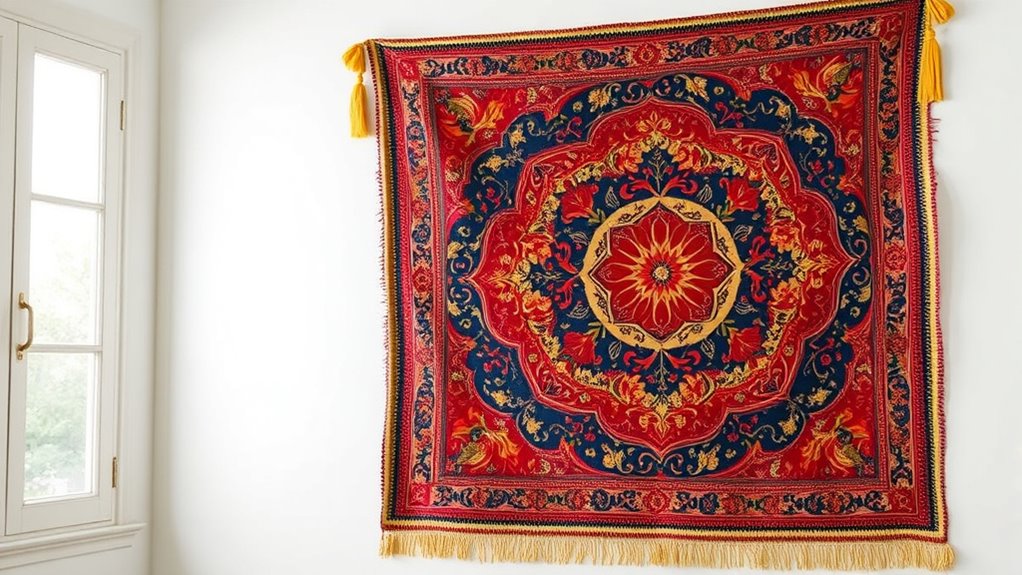

To hang tapestries without damaging walls, you can use damage-free options like removable hooks or adhesive strips such as Command strips, which are easy to apply and remove cleanly. For heavier pieces, consider installing a picture ledge or shelf bracket to rest the tapestry without direct wall contact. Corkboard frames or tension rods also work well for lighter textiles, providing both protection and style. Keep exploring to discover even more tips for hassle-free, damage-free display solutions.
Key Takeaways
- Use damage-free options like Command strips or removable hooks for easy, wall-safe tapestry hanging.
- Hang heavier tapestries on wall-mounted shelves or picture ledges to avoid wall damage.
- Opt for fabric or corkboard frames that can be hung with hooks or tension rods instead of direct wall attachment.
- Choose adhesive tapes specifically designed for walls to secure lightweight textiles without causing damage.
- Utilize decorative support structures such as fabric panels or tension rods to display tapestries damage-free.
Hanging a tapestry can instantly transform a room, but many worry about damaging their walls in the process. Fortunately, you don’t have to choose between decorating and preserving your walls. There are several adhesive alternatives and wall protection techniques that let you display your tapestries without leaving behind holes or sticky residues. These methods are especially useful if you rent or simply want to avoid the hassle of repairing wall damage later.
One popular option is using removable hooks or adhesive strips designed specifically for wall art. These products provide a secure hold while being gentle on paint and drywall. Command strips, for example, are widely used because they can be applied easily, hold substantial weight, and come off cleanly without harming the surface. You simply press the strips onto the back of your tapestry and attach them to the wall, avoiding nails or tacks altogether. These hooks and strips are versatile, allowing you to reposition your tapestry if needed, and they are perfect for lightweight or medium-weight textiles.
Use removable hooks or adhesive strips for damage-free tapestry display.
If you’re dealing with a heavier tapestry, consider using wall protection techniques that involve a bit more preparation but still avoid damaging your walls. For instance, you can install picture ledges or shelf brackets along the wall. You then rest the tapestry on the ledge, which supports it without any direct attachment to the wall itself. This approach not only prevents wall damage but also makes swapping out tapestries quick and easy. Additionally, using double-sided tape designed for fabric or posters can work well for lighter pieces, but ensure it’s removable and designed for wall use to prevent damage.
Another innovative method involves creating a fabric or corkboard frame around your tapestry, which you can hang on the wall using hooks or tension rods. This way, your tapestry stays in place without adhesives directly touching the fabric or wall surface. Plus, it adds a decorative element to your display. Using removable wall hangers that are specifically designed for delicate surfaces can further enhance your setup while maintaining wall integrity.
Frequently Asked Questions
Can Tapestries Be Hung Outdoors Safely?
Yes, you can hang tapestries outdoors safely if you choose weatherproofed fabrics and guarantee UV protection. Opt for outdoor-specific tapestries made from durable, waterproof materials that resist fading and damage from sun and rain. Use rust-resistant hooks or hardware, and consider applying a UV-protective spray to extend their longevity. Regularly check and maintain your outdoor tapestry to keep it looking vibrant and intact.
What Are Eco-Friendly Hanging Options for Tapestries?
Did you know that 70% of people prefer eco-friendly options? You can hang your tapestry outdoors using eco-friendly adhesives that are biodegradable and gentle on the environment. Reusable hooks are also a sustainable choice, allowing you to switch or remove tapestries without damaging surfaces. Both options help reduce waste and chemical impact, making your decor eco-conscious while keeping your space attractive and damage-free.
How Do Different Wall Types Affect Hanging Methods?
Different wall types influence your hanging options considerably. For drywall, wall anchors provide strong support, while adhesive hooks work well for lightweight tapestries. If you have brick or concrete, you’ll need masonry anchors or screws. You should always consider the weight of your tapestry and wall material to choose the right method, ensuring you use appropriate wall anchors or adhesive hooks to prevent damage and securely display your artwork.
Are There Temporary Ways to Hang Tapestries?
Like a fleeting whisper in a grand hall, your tapestry can hang temporarily using lightweight tools. You can use temporary hooks or adhesive strips, which act as gentle hands, holding your art without leaving scars. These options let you change your decor effortlessly, embracing flexibility while protecting your walls. When the moment passes, simply remove them, leaving your space pristine and ready for the next chapter of your artistic story.
What Maintenance Is Required for Hanging Tapestries Long-Term?
You should regularly check your tapestry for dust and dirt, gently cleaning it with a vacuum or soft brush to prevent buildup. To prevent wall damage, avoid using nails or heavy hooks; instead, opt for damage-free hanging solutions like adhesive hooks or tension rods. This maintenance keeps your tapestry looking vibrant, while protecting your walls from scratches or marks. Regular cleaning and careful hanging help extend your tapestry’s lifespan and keep your walls pristine.
Conclusion
As you hang your tapestry, you realize it perfectly complements that old nail you forgot about—coincidence? Maybe, but it’s a reminder that with the right techniques, you can enjoy stunning wall decor without damage. Every time you glance at your tapestry, you’ll think of how simple choices turned your space into something special—like finding that perfect nail just when you needed it most. Sometimes, it’s the little details that make everything feel just right.