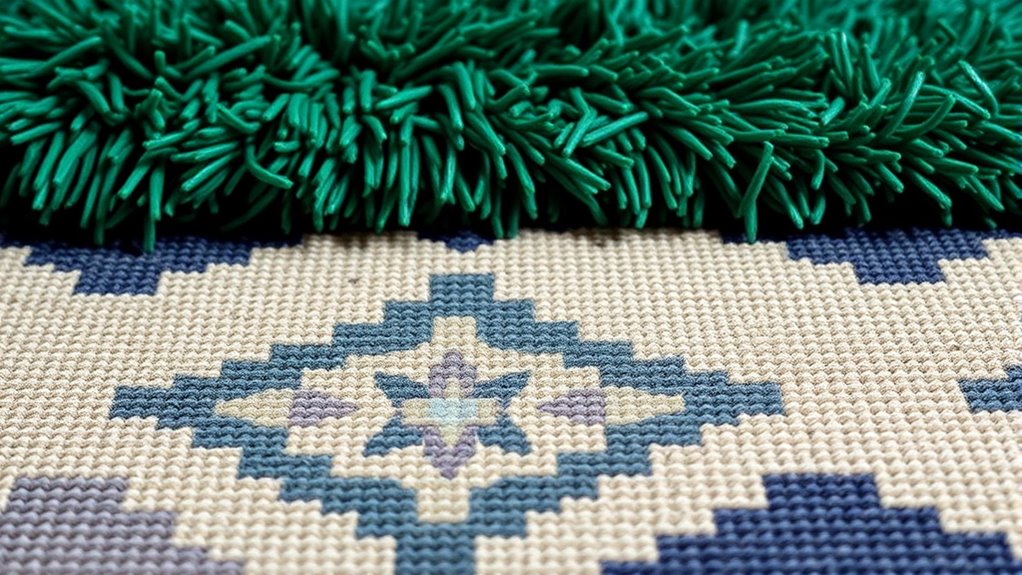

Layered rugs boost your space with rich textures and eye-catching patterns, but choosing the right materials and care routines is key. Opt for durable options like wool or polypropylene for high traffic, and mix textures such as shag or flatweave for visual interest. Regular maintenance, including gentle vacuuming and prompt spill cleaning, helps preserve their beauty. If you want to discover how to balance style and practicality in layered rugs, keep exploring these tips.
Key Takeaways
- Mix textures and patterns like plush, shaggy, and flatweave to add visual depth and interest to layered rugs.
- Choose durable materials such as wool or polypropylene for high-traffic areas to ensure longevity and ease of maintenance.
- Consider the aesthetic harmony by selecting rugs that complement each other in color, pattern, and texture for a cohesive look.
- Regularly vacuum, spot clean spills immediately, and rotate layered rugs to prevent uneven wear and fading.
- Proper storage and gentle cleaning techniques help maintain the appearance and durability of layered rugs over time.
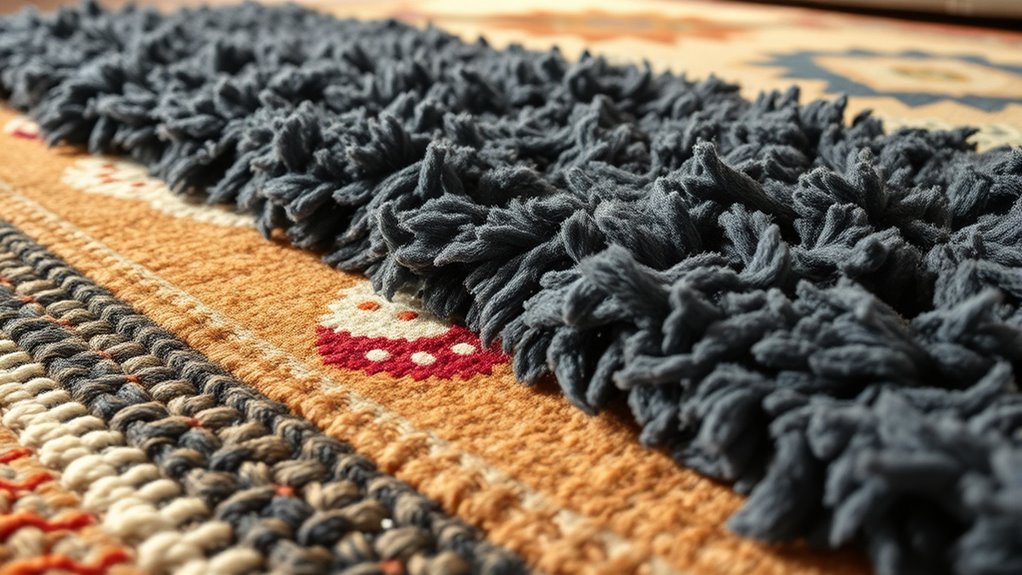
Layered rugs have become a stylish way to add depth and personality to any space. When you’re considering this trend, it’s vital to think about how to maintain your rugs and select the right materials. Proper rug maintenance ensures your layered setup stays fresh and attractive over time, while thoughtful material selection can make all the difference in durability and ease of care.
First, focus on rug maintenance. Since you’ll likely have multiple rugs layered on top of each other, cleaning and upkeep become a bit more involved. Regular vacuuming is a must, but be gentle to avoid damaging delicate fibers or causing the rugs to shift. Spot cleaning spills immediately prevents stains from setting, especially since different materials react differently to cleaning agents. For instance, natural fibers like wool or jute may require specific cleaning methods, while synthetic rugs often handle spot cleaning better. Rotate your layered rugs periodically to prevent uneven wear and fading, especially if they’re exposed to sunlight. This routine helps maintain their texture and appearance, ensuring the layers continue to add visual interest rather than look worn or mismatched. Additionally, staying informed about innovations in rug technology can help you select materials that are easier to clean and more resistant to damage. Considering proper storage when not in use can also prolong the lifespan of your rugs. Moreover, understanding the care instructions specific to each rug type ensures you maintain their quality over time. Regularly inspecting your rugs for signs of damage or wear allows for timely repairs, keeping your layered look pristine.
Regular gentle vacuuming and prompt spill cleanup keep layered rugs looking fresh and well-maintained.
Material selection is equally vital when creating layered rugs. You want to combine textures and patterns that complement each other, but also consider how the materials will hold up over time. Durable options like wool or polypropylene are excellent choices for high-traffic areas because they resist stains, wear, and fading. If you’re mixing materials, think about how they’ll feel underfoot — a plush, shaggy rug can add comfort, while a flatweave or jute rug offers a more casual, earthy vibe. Layering rugs with different textures creates a rich, inviting look, but you should also consider their maintenance needs. Synthetic fibers tend to be easier to clean and more resistant to moisture, making them ideal for busy households. Natural fibers, though beautiful, may require more careful cleaning and occasional professional treatment to keep them looking their best. Selecting the right materials also involves considering rug layering techniques, which can enhance both aesthetics and longevity.
In addition to durability, your choice of material impacts the practicality of your layered design. Lightweight rugs are easier to rearrange or replace if your style changes, while heavier rugs stay put and offer stability. When selecting your materials, think about the overall aesthetic you want to achieve and how much effort you’re willing to put into maintenance. Combining different textures and patterns can create a dynamic, layered look, but always keep in mind how the materials will age and how simple or elaborate your cleaning routine should be. With careful material selection and regular rug maintenance, your layered rug arrangement will remain a striking, functional feature of your space for years to come.
Frequently Asked Questions
How Do I Choose the Right Rug Layers for Small Spaces?
When choosing rug layers for small spaces, focus on color coordination to make the area feel cohesive and larger. Use layering techniques like placing a smaller, patterned rug over a larger neutral one to add depth without overwhelming the space. Opt for low-contrast colors and simple patterns to avoid clutter. Keep layers proportional to the room size, and verify the top rug complements the base for a balanced, stylish look.
Can Layered Rugs Work in High-Traffic Areas?
Yes, layered rugs can work in high-traffic areas if you follow rug stacking tips like choosing durable, low-pile rugs and using non-slip pads. Opt for layered rug styles that combine practicality and style, such as pairing a neutral base with a patterned top rug. Make sure the layers are securely anchored to prevent shifting, ensuring safety and longevity. Properly done, layered rugs add visual interest without sacrificing durability.
What Materials Are Best for Layered Rugs Indoors?
Perfectly practical, your layered rug setup depends on choosing materials that blend durability and design. You’ll want sturdy fibers like wool, nylon, or polypropylene, which resist wear and maintain their beauty over time. These materials support aesthetic cohesion, creating a harmonious, inviting space. By selecting resilient, attractive options, you guarantee your layered rugs remain vibrant and functional, even in bustling indoor areas.
How Do I Clean and Maintain Layered Rugs?
To clean and maintain layered rugs, start by vacuuming regularly with gentle techniques to avoid damaging the fibers. Use a handheld attachment for detailed areas, and spot clean stains promptly with a mild detergent or rug cleaner. Be cautious with moisture to prevent mold. Rotate rugs periodically to ensure even wear. By following these steps, you keep your layered rugs looking fresh and extend their lifespan effectively.
Are Layered Rugs Suitable for Outdoor Use?
Layered rugs can be suitable for outdoor use if they offer outdoor durability and weather resistance. You should look for rugs made from materials like polypropylene or other synthetic fibers designed to withstand moisture, sun exposure, and dirt. Keep in mind, layering can trap moisture if not properly ventilated, so choose weather-resistant options and regularly clean and dry the rugs to maintain their appearance and durability outdoors.
Conclusion
By layering rugs, you craft a tapestry of texture and pattern that transforms your space into a visual symphony. Think of it as painting with textiles, where each rug adds depth and personality. With a touch of practicality and a dash of style, your layered setup becomes a cozy haven—like a well-worn storybook inviting you in. Embrace the art of layering, and let your floors tell a rich, textured tale that’s uniquely yours.