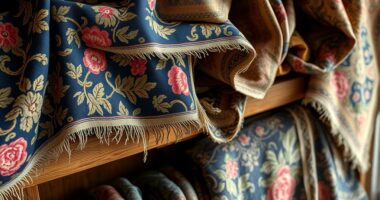
Layering textiles like rugs, throws, and tapestries instantly adds warmth, visual interest, and depth to your space. Mix different textures such as plush, shaggy, smooth, or chunky knits to create contrast and tactile richness without overwhelming the room. Be mindful of color harmony or strategic contrasts to highlight focal points. Thoughtful placement and scale make your environment inviting and cohesive. Keep exploring how balancing these elements open up even more personalized style and comfort.
Key Takeaways
- Combine different textures like plush throws with smooth tapestries to add tactile interest and visual depth.
- Use contrasting colors and patterns to create focal points while maintaining harmony in the space.
- Layer rugs beneath furniture to define zones and add comfort, enhancing the overall ambiance.
- Place wall-mounted tapestries as eye-catching backdrops that complement layered throws and rugs.
- Experiment with scale and arrangement to balance visual impact and personalize your layered textile decor.

Have you ever wondered how to stay warm and stylish at the same time? Layering textiles like rugs, throws, and tapestries is a perfect way to achieve that balance. The secret lies in understanding how to play with texture contrasts and color coordination. When you mix different textures, such as a plush, shaggy throw with a smooth, woven tapestry, you create visual interest and tactile richness. This variety not only makes your space more inviting but also adds depth to your decor. Keep in mind that contrasting textures should complement each other rather than clash; for example, pairing a sleek silk tapestry with a chunky knit rug highlights their differences without overwhelming the space.
Mix textures like plush throws and smooth tapestries to add depth and visual interest to your space.
Color coordination is equally vital in layering textiles effectively. Think about selecting colors that either harmonize or create a striking contrast. If your room features neutral tones, adding a boldly colored rug or tapestry can serve as a focal point, drawing the eye and energizing the space. Conversely, if your palette is already vibrant, choose textiles in muted shades or subtle patterns to balance the overall look. When layering, aim for a cohesive color story that ties everything together—this guarantees your space feels curated rather than chaotic. You might also consider introducing patterns that echo each other across different textiles to reinforce harmony.
Placement matters just as much as selection. Drape a tapestry on a wall to serve as an eye-catching backdrop, then layer a textured throw over your sofa or bed to add warmth. Rugs anchored beneath furniture define zones and add comfort underfoot, especially if they contrast in texture with the flooring. Combining these elements thoughtfully creates a layered effect that’s both functional and aesthetically pleasing. Be mindful of scale, too—larger textiles make a bold statement, while smaller accents subtly enhance the overall look.
Experimentation is key here. Don’t be afraid to mix different textiles and colors until you find combinations that feel right for your space. Use texture contrasts intentionally to create focal points or to soften harsher lines. Remember, layering textiles isn’t just about practicality; it’s a creative act that reflects your style. With a keen eye for color coordination and a playful approach to mixing textures, you’ll craft a cozy, stylish environment that warmly welcomes you every time you step inside.
Frequently Asked Questions
How Do I Choose the Right Textiles for Different Room Styles?
To choose the right textiles for different room styles, focus on textile pairing and style coordination. You should select rugs, throws, and tapestries that complement your existing decor, considering colors, patterns, and textures. For modern spaces, opt for sleek, minimal textiles, while cozy, rustic rooms benefit from layered, textured throws. Always think about harmony, ensuring your textiles enhance your room’s overall vibe and tie the design elements together seamlessly.
What Are Common Mistakes to Avoid When Layering Textiles?
Avoid amateur mistakes like pattern clash and scale imbalance when layering textiles. You might create chaos instead of charm if patterns compete or sizes don’t suit the space. Be mindful of mixing textures without overdoing it, and guarantee each piece complements rather than overwhelms. Keep it cohesive by balancing bold and subtle elements, and always measure your textiles to prevent the peril of disproportionate proportions.
How Can I Maintain and Clean Layered Textiles Effectively?
To maintain and clean layered textiles effectively, regularly vacuum rugs and throws using a gentle setting to protect the fabric. Address spills immediately with a clean, damp cloth, and use appropriate cleaning techniques based on fabric type. Consider fabric protection sprays to prevent stains. Rotate throws and tapestries periodically to avoid uneven wear. Always follow care labels for specific cleaning instructions, ensuring your layered textiles stay fresh and vibrant longer.
What Are Eco-Friendly Options for Layered Textiles?
You want eco-friendly layered textiles? Go for sustainable fibers like organic cotton, hemp, or bamboo—nature’s gift to your decor. Ditch synthetic dyes and choose biodegradable dyes instead; they color without poisoning the planet. Not only do you get stylish textures, but you also save the Earth’s day. It’s a win-win, really—your home stays chic, and Mother Nature gets a breather. Who knew eco could be so cozy?
How Do Lighting and Color Impact Layered Textile Aesthetics?
Lighting effects profoundly influence how your layered textiles appear, highlighting textures and creating cozy atmospheres. Warm lighting enhances earthy tones, making colors feel inviting, while cool lighting offers a modern look with vibrant hues. Achieving color harmony between rugs, throws, and tapestries ensures a balanced, cohesive aesthetic. Adjusting lighting can emphasize specific textiles or evoke different moods, helping you craft a space that feels both inviting and visually appealing.
Conclusion
Layering textiles truly transforms a space, adding warmth, texture, and personality. Some believe that the more layers you add, the more inviting and dynamic your room becomes. While overdoing it can feel cluttered, a thoughtful mix of rugs, throws, and tapestries creates a cozy, stylish haven. So go ahead—experiment with layers. Trust the theory that well-placed textiles can turn any room from ordinary to extraordinary, making your space uniquely yours.