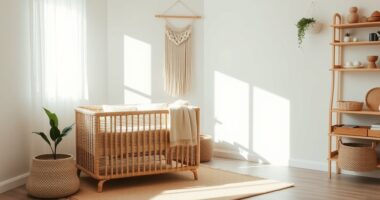

If you’re choosing between neutral and maximalist boho styles, think about the vibe you want. Neutral boho creates a calm, airy space with soft tones, subtle patterns, and natural textures, perfect for relaxation. Maximalist boho is lively and bold, mixing vibrant colors, eclectic decor, and layered textiles to showcase personality. Both let you express yourself uniquely. Curious about how to balance these styles or create your perfect space? Keep exploring to discover more tips.
Key Takeaways
- Neutral Boho features soft, muted colors and understated patterns, while Maximalist Boho uses vibrant jewel tones and bold, mixed patterns.
- Neutral style promotes calm, simplicity, and serenity; Maximalist creates energetic, lively, and eclectic atmospheres.
- Neutral Boho emphasizes natural materials and subtle textures; Maximalist incorporates diverse textures, layered textiles, and statement accessories.
- Neutral decor maintains a balanced, harmonious look; Maximalist embraces curated chaos with bold accessories and eclectic art.
- Both styles reflect individual personality but differ in mood: Neutral for relaxation, Maximalist for vibrant self-expression.
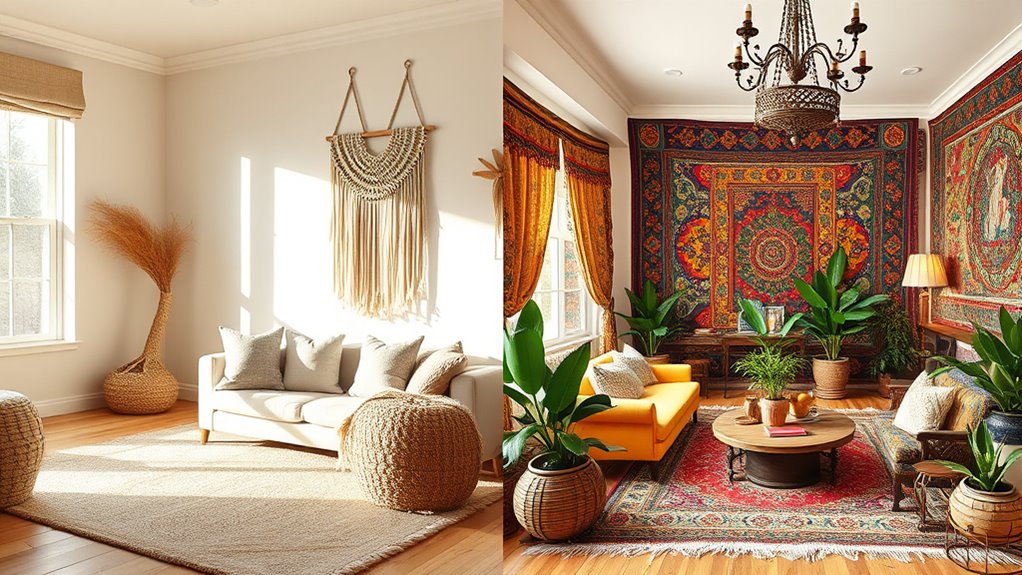
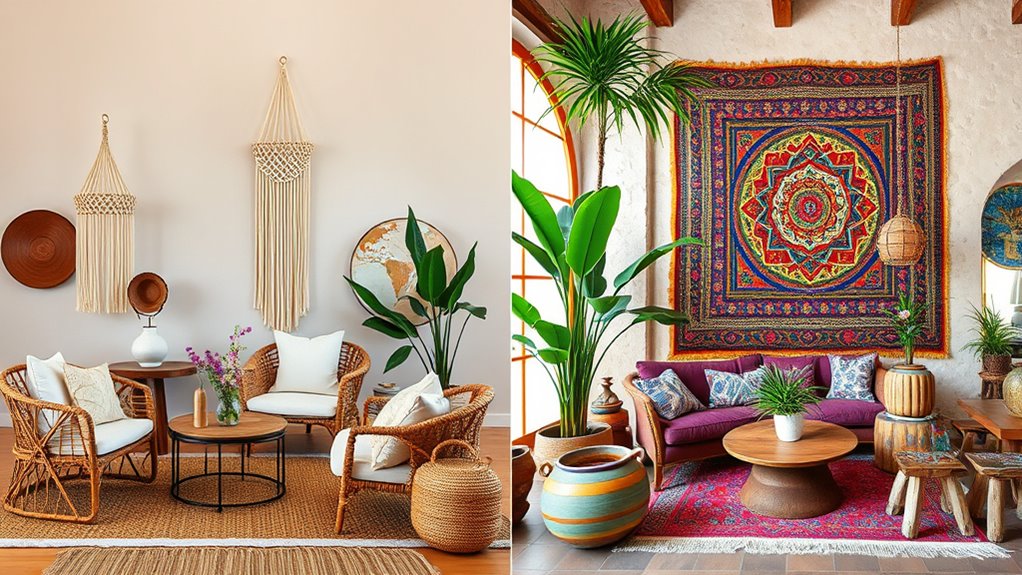
Boho style offers a versatile approach to interior design, allowing you to create spaces that reflect your personality. Whether you prefer a calm, understated look or a lively, eclectic vibe, Boho can adapt to your taste. When exploring the differences between neutral and maximalist Boho, it’s essential to understand how color palettes and decorative accessories shape each aesthetic. In a neutral Boho space, you’ll focus on soft, muted hues like creams, beiges, and gentle pastels. These colors create a calming environment that feels airy and sophisticated. You might choose a palette inspired by desert sands or ocean waves, which naturally evoke serenity. The key here is to keep the overall tone understated, so your decorative accessories play a vital role. Think of throw pillows with subtle patterns, woven baskets, or textured rugs in neutral tones. These accessories add warmth and interest without overwhelming the senses. You’ll want to select pieces that complement the subdued color scheme, emphasizing natural materials like wood, rattan, and linen. This approach allows each decorative element to stand out quietly, creating a harmonious and balanced space that feels soothing and inviting. Additionally, understanding the color psychology behind your choices can help you craft an environment that promotes relaxation and well-being.
In contrast, maximalist Boho is all about vibrant energy and bold expression. Your color palette here is rich and diverse, mixing jewel tones like emerald, ruby, and sapphire with bright accents of orange, pink, and yellow. This combination results in a lively, dynamic atmosphere where no two items need to match perfectly. Your decorative accessories become focal points—think of eclectic wall art, patterned textiles, and an abundance of layered throw pillows. You’re encouraged to mix patterns, textures, and colors freely, creating a curated chaos that feels both intentional and spontaneous. The key to mastering maximalist Boho is balancing these bold elements without making the space feel cluttered. Use decorative accessories to add depth and personality, such as vintage vases, statement lamps, or handmade crafts. These pieces should reflect your personal taste and tell a story, giving your space a unique, collected-over-time vibe. Here, more is more, and the goal is to craft an environment that feels vibrant, energetic, and bursting with character.
Both styles celebrate individuality, but they do so through different lenses. Neutral Boho offers a serene, subdued backdrop where simplicity and subtlety shine. Maximalist Boho, on the other hand, embraces abundance and expressive flair, making your home a lively canvas. Whichever route you choose, your color palettes and decorative accessories serve as your tools to craft a space that truly resonates with your personality and lifestyle.
Frequently Asked Questions
How Do I Choose Between Neutral and Maximalist Boho for My Space?
To choose between neutral and maximalist boho for your space, consider your personal style and how much color coordination you prefer. If you like calm, cohesive tones, go for neutral boho, focusing on furniture selection with natural textures and subtle hues. If you enjoy vibrant, eclectic decor, opt for maximalist boho, mixing bold patterns and colorful accessories. Your choice should reflect your personality and how lively or serene you want your space to feel.
Can I Mix Neutral and Maximalist Boho Elements Successfully?
Yes, you can successfully mix neutral and maximalist Boho elements. Layering textures and incorporating patterns help create cohesion, balancing the boldness of maximalist pieces with the calm of neutral tones. Start by using neutral backgrounds and add vibrant, patterned accessories or textiles. This approach keeps your space lively without feeling overwhelming, allowing both styles to complement each other beautifully and reflect your unique personality.
Which Boho Style Is Easier to Maintain Over Time?
Neutral Boho is easier to maintain over time because it involves simpler, more cohesive elements that require less frequent updates. You’ll face fewer maintenance challenges, like cleaning or rearranging, and enjoy longer style longevity. Maximalist Boho, with its busy patterns and numerous accessories, demands more upkeep to stay fresh and organized. So, if you prefer a low-maintenance, timeless look, neutral Boho is your best bet.
Are There Specific Color Schemes Associated With Each Boho Style?
You’ll find that Neutral Boho typically uses a soft, muted color palette, emphasizing earthy tones like beige, taupe, and cream, creating a calm and cohesive look for better design harmony. Maximalist Boho, on the other hand, embraces bold, vibrant colors with a mix of patterns and textures, making it lively and eclectic. Each style’s color scheme reflects its mood, but neutral palettes generally require less upkeep for consistent harmony.
How Do I Adapt Boho Styles for Small or Limited Spaces?
Imagine transforming your tiny space into a boho sanctuary. You can do this by choosing space-saving furniture that doubles as statement pieces and incorporating wall-mounted decor to free up floor space. Opt for multi-functional items like fold-away beds or sleek shelves. Layer in textured textiles and vibrant accents carefully, so your room feels rich without feeling crowded. Small spaces can radiate boho charm with clever, thoughtful choices.
Conclusion
Whether you prefer the calm of neutral boho or the vibrant energy of maximalist boho, your choice reflects your personality. Imagine transforming a small apartment: a neutral palette creates serenity, while bold patterns and colorful accents add lively character. Ultimately, it’s about what makes you feel most at home. So, experiment with both styles, and let your space tell your unique story—because your home should be a true reflection of you.