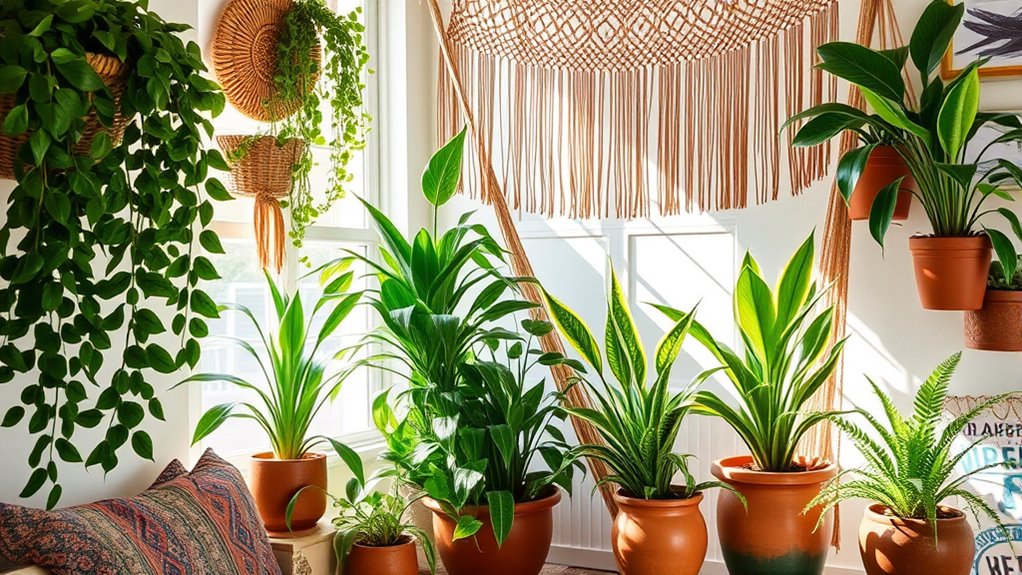

In boho spaces, you want plants that add texture and relaxed charm. Consider succulents in mismatched or vintage pots for easy care and visual interest. Add trailing greenery like pothos or string of hearts through hanging planters or ceiling hooks to create softness and movement. Mix large leafy plants with unique containers to build depth and personality. Cultivating these variety enhances your space’s warm, eclectic vibe—keep exploring to discover even more perfect green companions.
Key Takeaways
- Incorporate succulents in mismatched or vintage pots for texture and charm.
- Use trailing plants like pothos or string of hearts in macramé hangers for softness.
- Mix large leafy plants with succulents to create depth and visual interest.
- Choose imperfect, unique planters such as woven baskets or repurposed containers.
- Place plants near windows or above seating to enhance the relaxed, eclectic boho vibe.
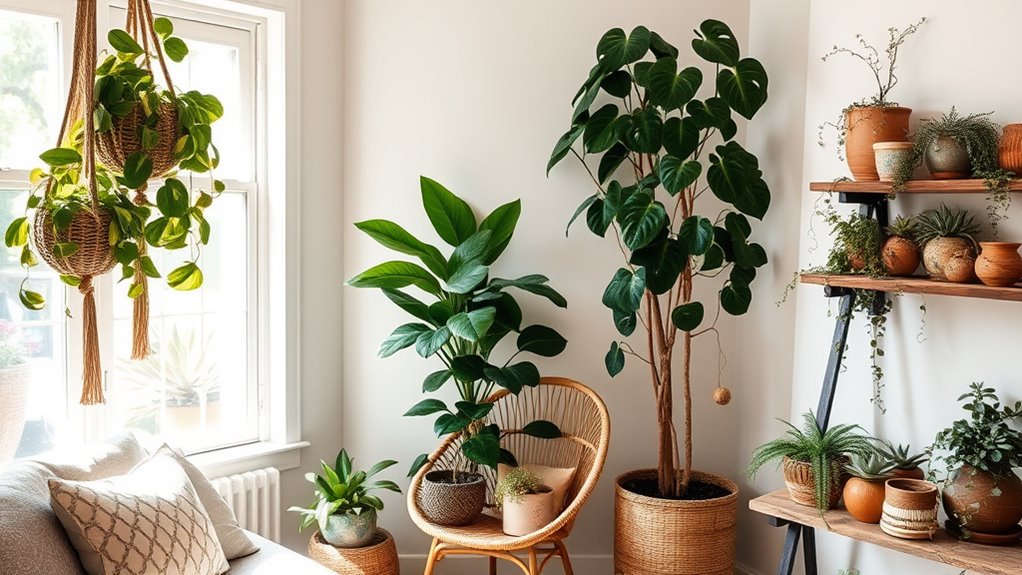
If you’re designing a boho space, incorporating the right plants can instantly enhance its relaxed, eclectic vibe. Plants are essential for creating that effortless, laid-back atmosphere that defines boho style. One of the easiest ways to add greenery is through succulent arrangements. These plants are perfect because they bring in texture and visual interest without demanding much attention. You can cluster various succulents in mismatched pots or a vintage tray to add charm and personality. Their unique shapes and muted tones blend well with the layered, eclectic aesthetic of boho decor. Plus, succulents thrive in bright, indirect light and need infrequent watering, making them low-maintenance yet striking focal points.
Hanging greenery is another key element that instantly elevates your boho space. Think of trailing plants like pothos, string of hearts, or philodendrons draping from shelves, ceiling hooks, or macramé hangers. These hanging plants introduce movement and softness, which contribute to the relaxed feel of boho interiors. You can place them near windows or above seating areas so they cascade freely, creating a lush, layered look. Using woven baskets or vintage containers for hanging greenery complements the earthy, bohemian vibe and adds texture to your space. The visual flow of hanging plants also helps to define different zones within your room, making it feel more inviting and dynamic.
Incorporating a variety of plant types—succulents, trailing greenery, large leafy plants—adds depth and personality. It’s about mixing textures, shapes, and sizes to create an inviting, lived-in look. Don’t shy away from using unusual or vintage planters that reflect your style—think ceramic pots, woven baskets, or repurposed items. Position succulents on coffee tables or shelves for quick visual interest, and let hanging greenery drape from high places to soften ceilings and corners. This layered approach makes your space feel intentionally curated yet relaxed. Remember, the key to boho design is embracing imperfection and individuality, so don’t worry about perfect symmetry. Instead, focus on creating a vibrant, eclectic environment where plants are naturally integrated, making your space feel warm, inviting, and effortlessly stylish.
Frequently Asked Questions
How Do I Choose Plants That Thrive in Low Light?
To choose plants that thrive in low light, focus on indoor gardening options like snake plants, pothos, and ZZ plants. These plants are hardy and adapt well to shaded spaces, making them perfect for enhancing your plant aesthetics. Look for varieties known for low-light tolerance, and guarantee you don’t overwater. With the right selection, you’ll create a lush, vibrant atmosphere even in dimmer corners of your home.
What Are the Best Low-Maintenance Plants for Busy Lifestyles?
You’ll find that succulents and air purification plants are perfect for your busy lifestyle. They require minimal watering and care, making them low-maintenance choices. With succulent arrangements, you add a touch of artistry without extra effort. Air purification plants like snake plants or pothos also boost your space’s freshness effortlessly. These plants coincidentally thrive on neglect and brighten your space, proving that low-maintenance greenery can be both stylish and health-boosting.
How Can I Incorporate Plants Into Small Boho Apartments?
You can incorporate plants into your small boho apartment by strategically placing them on shelves, windowsills, and hanging from the ceiling to maximize space. Use decorative plant containers that complement your boho decor style to add visual interest. Mix different sizes and types of plants for a relaxed, eclectic vibe. Keep the placement easy to access for watering and care, creating a lush, inviting atmosphere without cluttering your cozy space.
Which Plants Are Safe for Households With Pets?
Thinking of turning your home into a lush paradise without risking your furry friends? Opt for pet-safe plants like spider plants, Boston ferns, and areca palms. These non-toxic greenery options keep your pets safe while adding that boho charm. No need to play botanical Russian roulette—pick plants that are both beautiful and pet-friendly. Your home can be stylish and safe, so everyone, including your pets, can breathe easy.
How Do I Care for Hanging or Trailing Boho Plants?
To care for your hanging or trailing boho plants, you should follow specific propagation techniques like cuttings or layering to encourage growth. Maintain a consistent watering schedule, allowing the top inch of soil to dry out between waterings. Guarantee they get bright, indirect light and avoid overwatering, which can cause root rot. Regularly trim and prune to promote healthy trailing growth, keeping your space vibrant and lush.
Conclusion
So, you’ve got your boho space all set with plants that look effortlessly cool—yet somehow, you’ll find yourself obsessively watering, pruning, and moving them around for the perfect vibe. Ironically, these plants thrive on your laid-back attitude, not your constant fussing. Just sit back, relax, and let your greenery do its thing. After all, the true boho spirit is embracing imperfection—something your plants might just teach you.