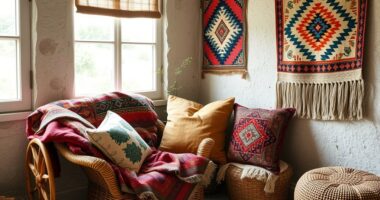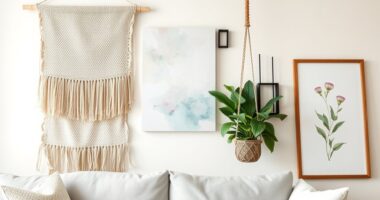
By blending wabi-sabi’s love of imperfection with boho-chic’s eclectic and textured style, you can create a space that feels authentic and relaxed. Use natural materials like weathered wood, linen, and handmade textiles to celebrate beauty in age and irregularities. Incorporate mismatched furniture, layered textiles, and personal, handcrafted touches to evoke warmth and personality. Keep balance and space in mind, and explore ways to showcase imperfection—your home will tell a genuine, enthralling story if you continue exploring these ideas.
Key Takeaways
- Combine natural materials and weathered finishes to highlight the beauty of imperfection and authenticity in home decor.
- Layer textured textiles and handmade items to create a relaxed, eclectic atmosphere that celebrates individuality.
- Use asymmetrical arrangements and mismatched furniture for a lived-in, organic aesthetic rooted in both philosophies.
- Incorporate vintage, handcrafted, and artisanal pieces to add personal character and deepen the sense of imperfection.
- Focus on simplicity and natural color palettes to foster tranquility while embracing the beauty of natural aging and irregularity.
Understanding the Core Principles of Wabi-Sabi and Boho-Chic
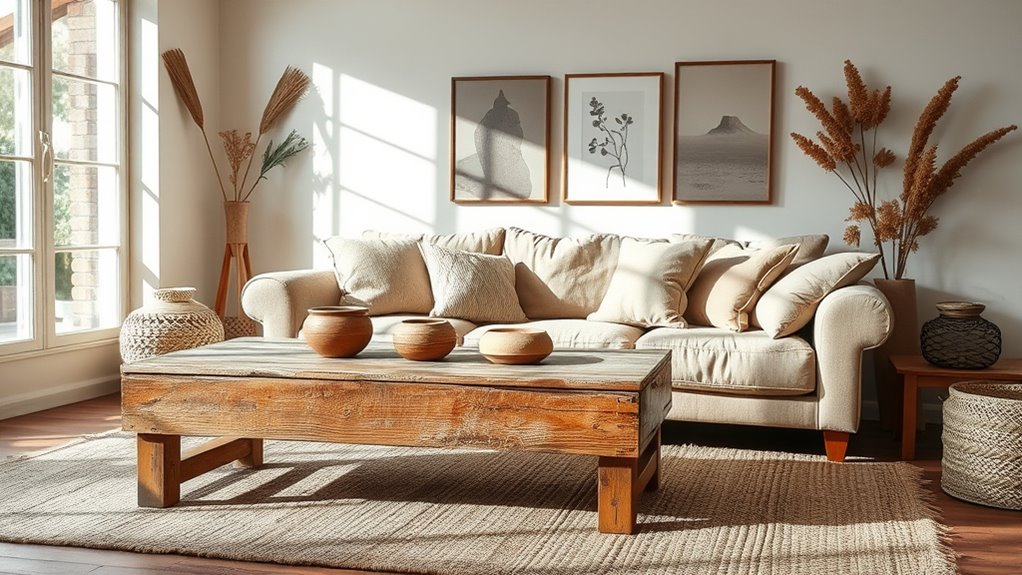
While Wabi-sabi and boho-chic come from different cultural backgrounds, they share a deep appreciation for authenticity and individuality. Wabi-sabi celebrates imperfection, embracing irregularities and the natural aging of materials to find beauty in simplicity. It encourages mindfulness, urging you to appreciate the transient and imperfect nature of objects. Incorporating authentic materials such as weathered wood, handmade ceramics, and vintage textiles enhances the connection to natural beauty and imperfection. Boho-chic, on the other hand, highlights layered textures, bold patterns, and handmade pieces that tell stories from around the world. Both styles prioritize natural materials, valuing authenticity over perfection. By combining these philosophies, you create a space that honors imperfection and promotes a relaxed, creative vibe. Incorporating contrast ratio considerations in your decor can also enhance visual harmony, creating a balanced environment that reflects both styles’ appreciation for natural beauty. Your decor becomes a reflection of mindful choices—embracing flaws, textures, and authenticity to craft a soulful environment.
Creating a Neutral and Textured Foundation With Natural Materials
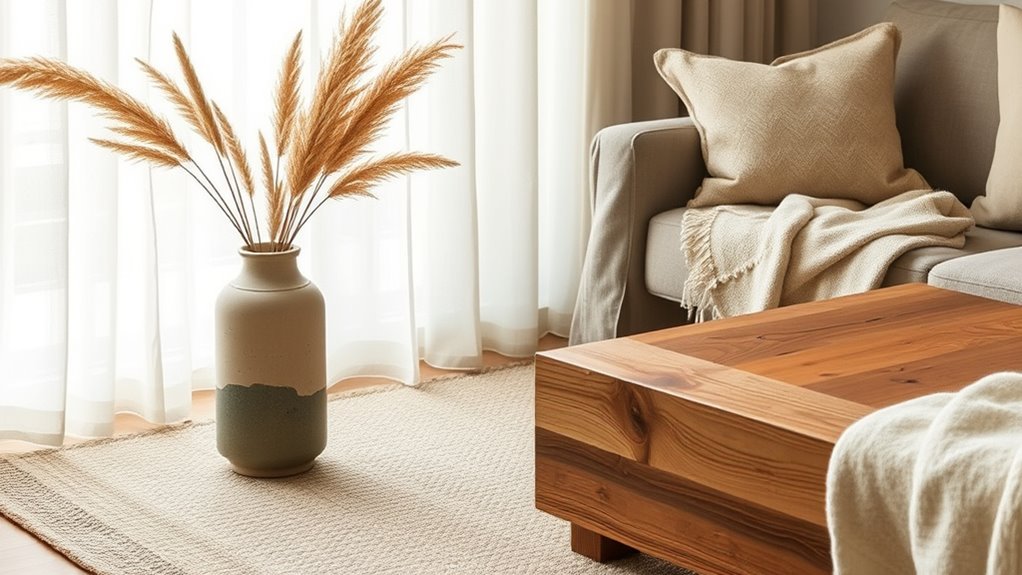
To establish a calming and authentic base for your space, focus on a neutral color palette that includes shades like beige, taupe, and soft white. Use natural materials such as jute, linen, and raw wood to add organic texture and tactile richness. Incorporate handcrafted, imperfect ceramics, woven textiles, and distressed furniture pieces that showcase natural flaws, emphasizing authenticity. Layer textured elements like crinkled linens, woven wall hangings, and unpolished stone to evoke a lived-in, imperfect charm. Balancing rustic, natural materials with minimalist decor helps highlight simplicity and the beauty of impermanence. Incorporating remote hackathons can inspire collaborative and innovative ideas for your space design. Paying attention to authenticity ensures your decor remains true to the imperfect, natural aesthetic you’re creating. Embracing sustainable practices can further enhance the organic and eco-friendly vibe of your space. For example, selecting furniture with seasonal schedules in mind can help you optimize your decorating timeline and adapt to changing trends. Exploring self-watering plant pots offers a practical way to incorporate greenery effortlessly, enhancing the natural ambiance. This foundation creates a warm, inviting environment that celebrates authenticity, imperfection, and the organic qualities rooted in nature. Your space will feel both soothing and rich with character.
Selecting Decor That Tells a Story and Celebrates Imperfection
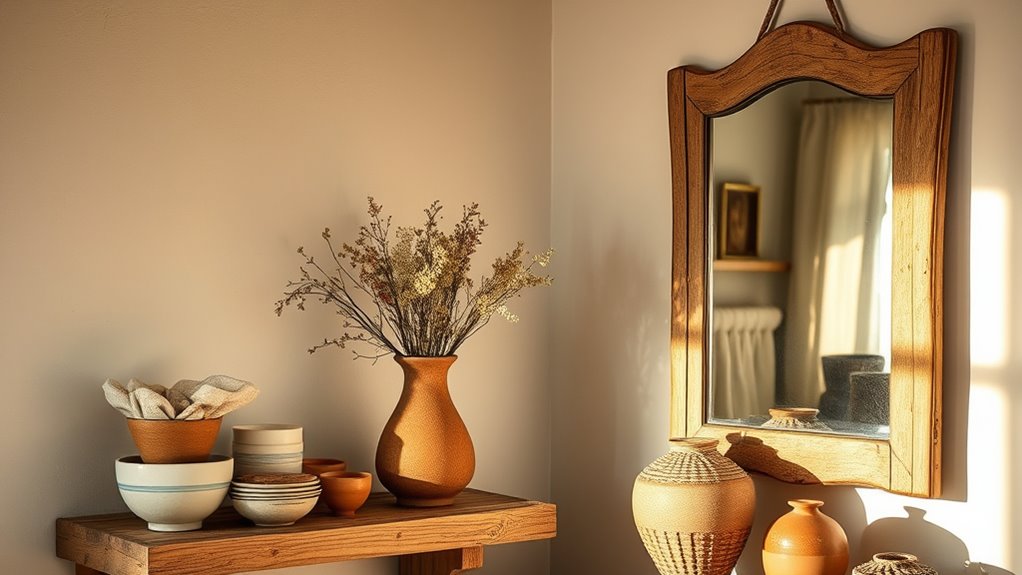
Selecting decor that tells a story and celebrates imperfection involves choosing pieces with visible handmade details, such as uneven glazing or distressed finishes, which highlight their unique character. These authentic items add depth and personality to your space. Incorporate vintage or heirloom pieces that carry personal stories, making your decor more meaningful. Focus on natural, organic materials like raw wood, clay, or woven textiles, embodying imperfection and authenticity. Mismatched furniture and asymmetrical arrangements enhance the lived-in, soulful atmosphere. Embracing versatile design allows you to seamlessly blend different styles and eras for a more dynamic and personalized environment, emphasizing the importance of authenticity in creating a warm, inviting home. Incorporating sustainable building practices can also contribute to a more genuine and environmentally conscious aesthetic. Integrating Boho elements into your decor can further enhance its eclectic and relaxed vibe, making it truly your own. Understanding craftsmanship helps you appreciate the skill behind handmade items, adding a layer of authenticity to your decor choices.
Balancing Asymmetry and Space for a Harmonious Atmosphere
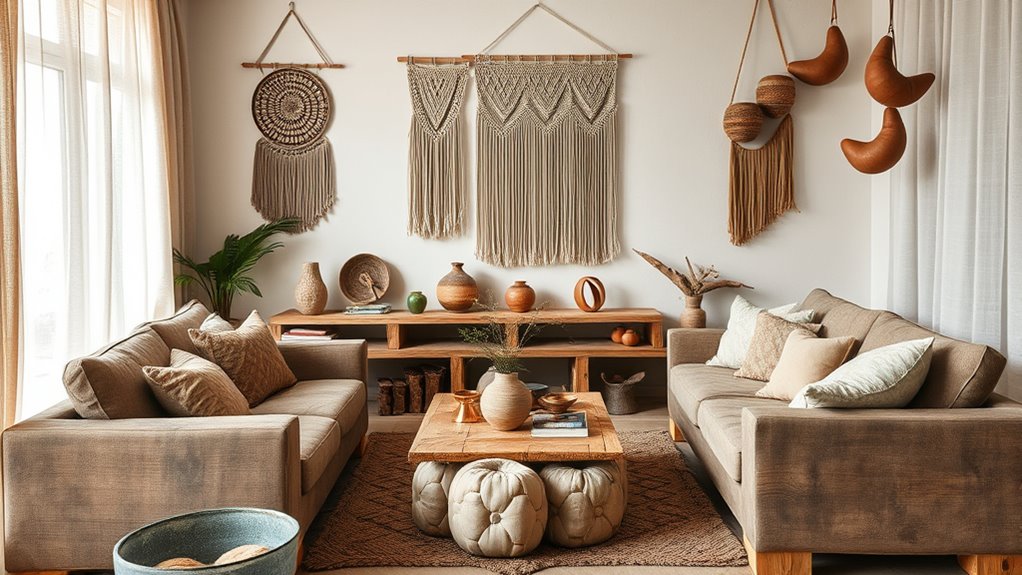
Achieving harmony in your space often involves balancing asymmetrical arrangements with intentional negative space. Use asymmetry in furniture and off-center art placements to create visual interest and mirror natural imperfection. Emphasize negative space by avoiding clutter, giving your decor room to breathe and allowing key elements to stand out. Incorporate imperfect objects like irregular ceramics or handcrafted textiles to enhance the organic feel, adding texture and authenticity. Balance open areas with thoughtfully curated imperfect decor to maintain harmony without overcrowding. Focus on a sense of flow and rhythm through deliberate spacing and asymmetry, fostering a relaxed, welcoming atmosphere. Both aesthetic principles and intentional design choices play a crucial role in cultivating a space that feels both dynamic and peaceful, embodying the Wabi-Sabi ethos of beauty in imperfection. Additionally, understanding how to change Gears on a Gravel Bike can inspire mindful adjustments in your layout and decor to promote harmony and ease of movement within your environment. Incorporating visual cues can further enhance the organic aesthetic by subtly guiding the eye and creating a cohesive flow throughout your space.
Incorporating Lighting, Art, and Personal Touches to Enhance Authenticity
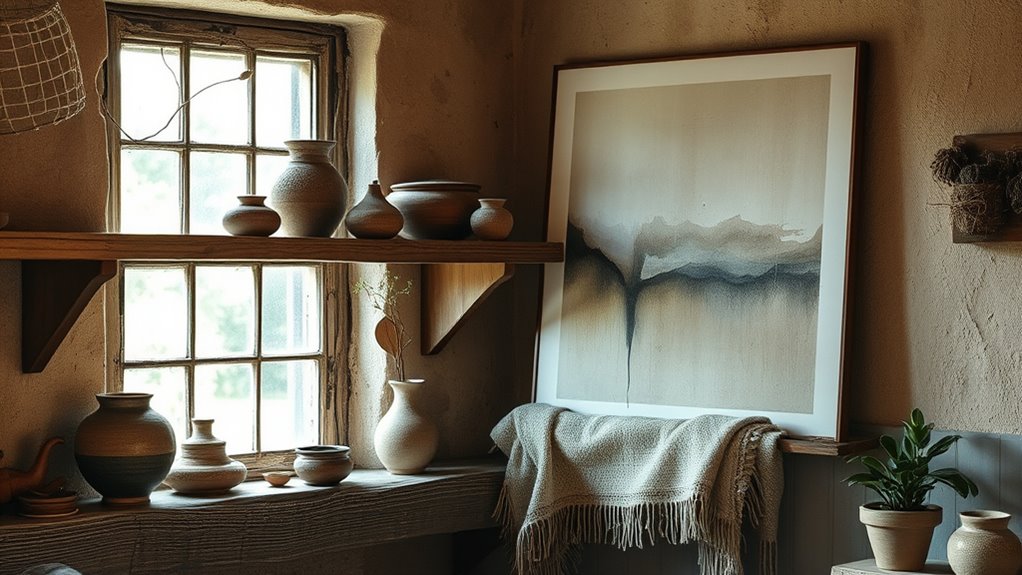
Incorporating lighting, art, and personal touches can elevate your space’s authentic, organic feel, perfectly aligning with the Wabi-Sabi and boho aesthetic. Use warm, ambient lighting like salt lamps, paper lanterns, or dimmable bulbs to create a cozy atmosphere that highlights natural textures and imperfect beauty. Display handcrafted art, such as weathered photographs or abstract paintings with organic shapes, to evoke authenticity and emotional depth. Personal items with stories—vintage heirlooms or handmade crafts—add meaningful character and individuality. Consider the following imagery:
| Cozy Lighting | Authentic Art & Personal Items |
|---|---|
| Salt lamps casting warm glow | Weathered photographs, textured art |
| Dimmed bulbs emphasizing textures | Handmade crafts, vintage heirlooms |
Additionally, incorporating wall organization systems can create visual interest and promote a sense of order while maintaining the relaxed vibe characteristic of boho decor. This approach can also enhance your space’s visual harmony by thoughtfully balancing clutter and openness. To further embrace the organic and imperfect aesthetic, incorporating natural materials such as jute, rattan, or linen can deepen the textured, authentic feel of your decor. Moreover, implementing space-maximizing solutions like multi-functional furniture or vertical storage can help keep your space organized without sacrificing its relaxed charm. For an added layer of decorative harmony, mixing textures and materials can enhance the organic aesthetic.
Frequently Asked Questions
What Is Wabi-Sabi Home Decor?
Wabi-sabi home decor celebrates the beauty in imperfection, emphasizing natural, aged, and authentic materials. You’ll find weathered wood, handmade ceramics, and organic textiles that create a calm, inviting atmosphere. The style favors earthy, muted colors and embraces asymmetry and irregularity, avoiding perfection. By choosing meaningful, high-quality pieces, you’ll foster simplicity and mindfulness, making your space uniquely authentic and full of character.
What Are the Three Principles of Wabi-Sabi?
You’re asking about the three principles of wabi-sabi. They include impermanence, which helps you appreciate the fleeting beauty of life and change; imperfection, encouraging you to value irregularities and flaws as authentic features; and incompleteness, reminding you to embrace unfinished or aged items as part of life’s natural process. Together, these principles inspire mindfulness, humility, and a deep appreciation for natural, unpolished beauty in your home.
What Is the Meaning of Wabi-Sabi Imperfection?
You might think perfection is the only way, but wabi-sabi shows you that imperfection is truly beautiful. It’s about embracing flaws—cracks, irregular shapes, weathered surfaces—as part of the object’s unique story. Instead of hiding imperfections, you celebrate them, seeing them as evidence of natural aging and craftsmanship. This perspective invites you to appreciate the authenticity and charm in everyday, imperfect objects, enriching your space with real, soulful character.
What Are the Rules of Wabi-Sabi Interior Design?
You embrace the beauty of imperfection by using natural, raw materials like wood, stone, and handmade ceramics that show their flaws. You intentionally incorporate asymmetry and mismatched pieces to create an authentic, lived-in look. Stick to neutral, earthy tones with subtle accents, and keep your space minimal by decluttering. This approach fosters calm, balance, and a sense of harmony, celebrating the imperfect and the natural in your home.
Conclusion
By blending wabi-sabi with boho, you create a space that celebrates imperfection and authenticity. Do you see how the natural textures, storytelling decor, and thoughtful asymmetry transform your home into a sanctuary of warmth and personality? Embrace the beauty of the imperfect, letting your space reflect your unique style and soul. After all, isn’t a home that embraces its flaws truly the most beautiful place to be?