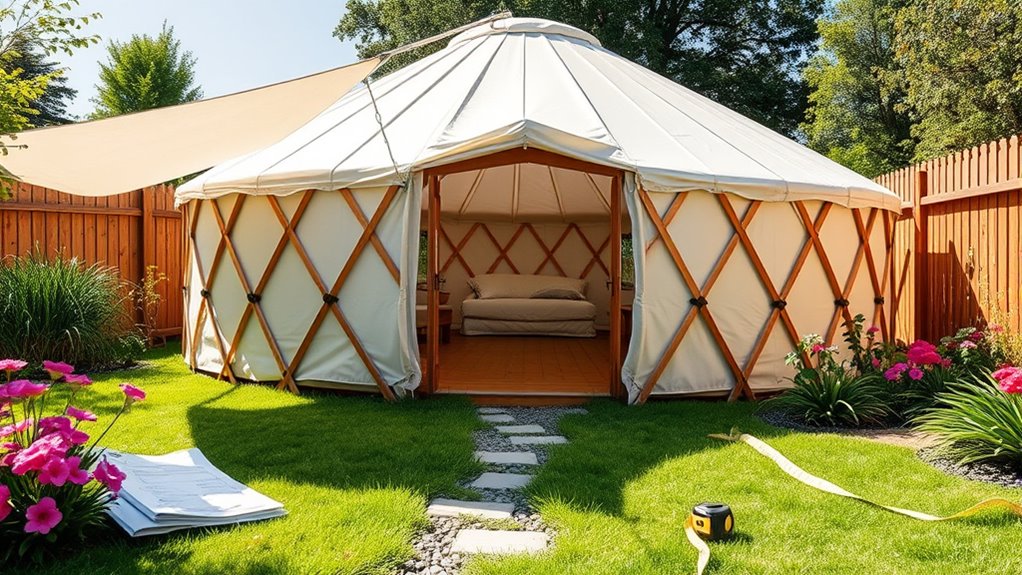

Creating a backyard yurt costs between $5,000 and $15,000 for the kit, but custom finishes and eco-friendly materials can add to your expenses. Permit requirements vary by location—some areas see yurts as temporary, others as permanent structures—so checking local regulations is essential. Think about how you’ll use the space and plan for utilities like water and electricity. To discover detailed tips for planning and budgeting, keep exploring these practical aspects.
Key Takeaways
- Yurt costs vary from $5,000 to $15,000+, depending on size, materials, and customization.
- Permit requirements differ by location, with some areas treating yurts as temporary structures, others as permanent dwellings.
- Consider the intended use to plan for utilities, insulation, ventilation, and heating needs for practicality.
- Use eco-friendly, durable materials like bamboo flooring and recycled insulation for sustainability and cost savings.
- Proper planning, permits, and multiple quotes ensure legal compliance, cost-effectiveness, and functional integration into your property.

A backyard yurt can be an attractive and versatile addition to your property, but before you start building, it is vital to understand the costs, permit requirements, and practicality involved. When designing the interior, you’ll want to focus on creating a space that’s both functional and inviting. Interior design plays a key role in transforming a simple yurt into a cozy retreat or a practical workspace. Opt for eco-friendly materials whenever possible, not only to reduce your environmental footprint but also to create a healthier living environment. Sustainable options like bamboo flooring, recycled insulation, and non-toxic paints can help you achieve a stylish yet eco-conscious interior. These materials are often durable and cost-effective, making them ideal choices for a backyard yurt. Choosing the right building materials is essential for durability and sustainability. Cost is another essential factor to weigh. The price of building a yurt varies depending on size, materials, and features. On average, a basic yurt kit can range from $5,000 to $15,000, but adding custom interior finishes, eco-friendly materials, and insulation can increase expenses. Keep in mind that investing in quality insulation and sustainable materials might cost more upfront but can save you money over time through lower energy bills and increased durability. Don’t forget to budget for foundation work, utilities, and furnishings, which can add several thousand dollars to your total costs. It’s wise to get quotes from multiple suppliers and contractors to guarantee you’re getting the best value. Permits are another critical aspect of building a backyard yurt. The requirements vary depending on your local regulations, property size, and intended use. Some areas may classify yurts as temporary structures, requiring minimal permits, while others may treat them as permanent dwellings, necessitating building permits, inspections, and compliance with zoning laws. Before you start construction, check with your city or county building department to understand what’s needed. Securing the proper permits not only keeps you legal but also ensures your yurt is safe and up to code. Failing to obtain necessary approvals can lead to fines, removal orders, or difficulties when selling your property later on. In terms of practicality, think about how the yurt will fit into your lifestyle. Will it be a guesthouse, a studio, or a full-time residence? Think about access to utilities like water, electricity, and internet, and plan for proper ventilation and heating. Selecting eco-friendly materials not only aligns with sustainable living but also enhances comfort and air quality inside your yurt. With thoughtful planning around design, costs, permits, and practical needs, your backyard yurt can become a beautiful, functional space that adds value and charm to your property.
Frequently Asked Questions
How Long Does It Typically Take to Build a Backyard Yurt?
Building a backyard yurt usually takes about 2 to 4 weeks, depending on your experience and the complexity of the design. During the yurt construction process, you’ll handle site prep, assemble the structure, and install the interior. Your building timeline can be shorter or longer based on factors like weather and available help. Staying organized and prepared makes the process smoother and helps you enjoy your new space sooner.
Can I Install a Yurt on Uneven or Sloped Ground?
Your backyard yurt can definitely sit on uneven or sloped ground—it’s not an insurmountable challenge! With proper slope adjustments and a solid foundation, you guarantee stability that’s as steady as a mountain. You’ll need to level the site and consider additional foundation supports if the slope is steep. Don’t worry; with careful planning, your yurt will be just as cozy and secure as if it were on flat ground.
What Are the Best Insulation Options for Year-Round Use?
For year-round use, you need the right insulation materials that suit your climate considerations. If you experience cold winters, opt for thick foam board or spray foam insulation to trap heat effectively. In milder climates, wool or sheep’s wool blankets work well. You should also consider vapor barriers and proper sealing to prevent drafts. By selecting insulation tailored to your climate, you’ll keep your yurt comfortable throughout the year.
Are There Specific Zoning Laws for Backyard Yurts?
Think of zoning laws like a maze you need to navigate carefully. You’ll want to check local zoning restrictions and permit requirements before installing a backyard yurt. Many areas have specific rules about accessory structures, including yurts, to ensure they fit within community standards. It’s essential to contact your local planning department, review regulations, and obtain any necessary permits to avoid surprises and keep your yurt project on the right track.
How Do I Maintain a Yurt to Ensure Longevity?
To keep your yurt in great shape, focus on regular yurt maintenance. Check the roof and walls for any leaks or damage, and clean the exterior to prevent mold and dirt buildup. Follow longevity tips like applying protective sealants and inspecting your foundation periodically. Proper ventilation also helps prevent condensation. By staying proactive with maintenance, you’ll extend your yurt’s lifespan, ensuring it remains a cozy, durable space for years to come.
Conclusion
So, now that you’ve cracked the code on backyard yurts—costs, permits, and all—you’re basically set for a life of glamping grandeur or secret ninja hideouts. Just remember, all that practicality might give way to a daily dose of “what did I get myself into?” Next thing you know, you’ll be debating whether to call it a cozy retreat or just a fancy tent. Either way, enjoy the adventure—who knew building a home could be so entertaining?