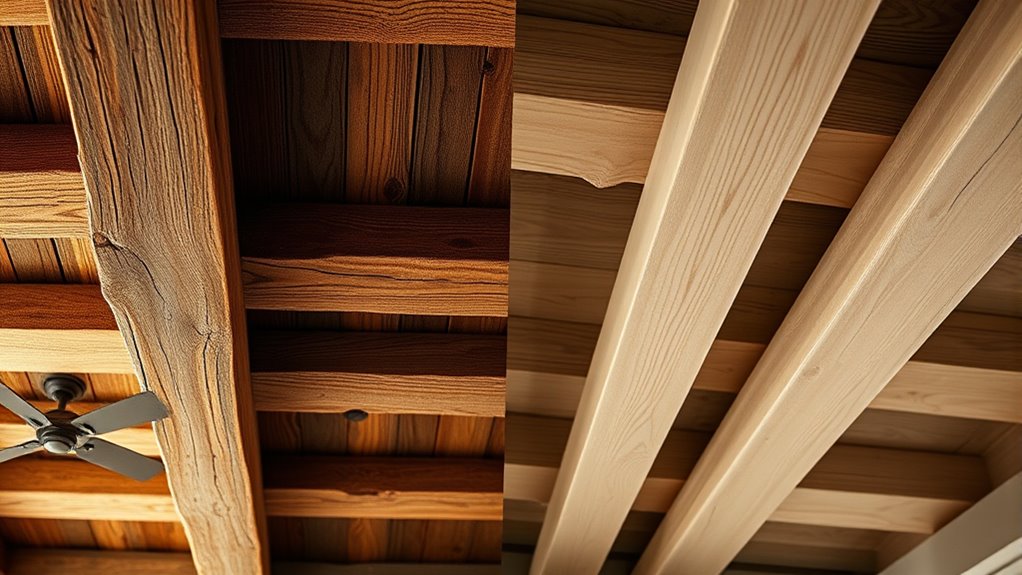

When choosing between faux and real exposed beams, consider your style and budget. Real wood beams offer authentic look, natural grain, and can be customized with stains or finishes, but they tend to be more costly and labor-intensive. Faux beams are lightweight, easy to install, and often more affordable, making them great for DIY projects or rental spaces. To find out which option fits your space and needs best, explore more about their benefits and drawbacks below.
Key Takeaways
- Real beams offer authentic, natural wood with visible grain, knots, and textures, while faux beams mimic these features with manufactured materials.
- Real wood beams can be stained, sanded, and customized easily, whereas faux beams have limited staining options.
- Faux beams are lighter, easier to install, and suitable for DIY projects, making them more budget-friendly and less labor-intensive.
- Real wood beams age beautifully and can be refinished, but may warp or crack over time; faux beams are low-maintenance and highly durable.
- The choice depends on preferences for authenticity, budget, maintenance, and the desired aesthetic effect.

Have you ever noticed the charm that exposed beams bring to a room? They add warmth, character, and a touch of rustic elegance that can transform any space. If you’re considering adding beams to your home, you’ll quickly find that you have two main options: faux beams and real beams. Both can create stunning visual effects, but understanding the differences can help you make the best choice for your style, budget, and maintenance preferences.
Real wood beams have a natural authenticity that faux options often can’t replicate. When you opt for real beams, you’re investing in genuine wood, which means you’ll have the opportunity to customize them through wood staining. Wood staining allows you to highlight the natural grain, deepen the color, or even alter the tone to match your decor. This process can be done during beam installation or afterward, giving you flexibility in achieving the exact look you want. Installing real beams involves attaching solid wood to the ceiling structure, which requires precise beam installation techniques. The process can be more labor-intensive and costly upfront, but it results in a durable, genuine feature that ages beautifully over time. Additionally, real beams can be sanded, refinished, or stained again if you decide to change your interior style later.
Faux beams, on the other hand, are crafted from lightweight materials like polyurethane or fiberglass, making them easier and quicker to install. They’re designed to mimic the appearance of real wood, often with detailed textures and paint finishes that resemble grain and knots. Faux beams can be painted or stained, but it’s important to note that their surface may not absorb stain as deeply or evenly as real wood does. This can limit your options if you want a highly customized look. Because faux beams are lighter, beam installation is generally simpler and less invasive, making them a popular choice for DIY projects or rental properties. They also tend to be more affordable and require less maintenance over time, since they don’t warp or crack like real wood might.
Furthermore, cookie policies play a role in customizing your online experience by enabling certain features that enhance site navigation and personalization.
Ultimately, your decision hinges on what you value most: authenticity and the natural beauty of real wood, or convenience and cost savings with faux options. If you love the idea of customizing your beams with wood staining to match your decor perfectly, real beams are the way to go. But if you want a quick, budget-friendly upgrade that still delivers the look of exposed wood, faux beams can be a smart choice. Either way, both options can add undeniable charm to your space, transforming a plain ceiling into a stunning focal point that elevates your entire home.
Frequently Asked Questions
How Long Do Faux Beams Typically Last?
Faux beams usually last around 10 to 20 years, depending on their material and environment. If you opt for faux beam options that mimic beadboard paneling or ceiling tiles, you’ll find they’re durable but may need maintenance over time. Proper installation and occasional cleaning can extend their lifespan. Unlike real wood, faux beams resist moisture and pests, helping them stay attractive and functional longer.
Can Faux Beams Be Painted or Stained?
Yes, you can paint or stain faux beams to match your beadboard ceiling or ceiling joists. Use a primer suitable for the material, then apply your paint or stain evenly. Faux beams are versatile, allowing you to personalize their appearance easily. Just make sure the surface is clean and dry before starting, and choose products designed for the material to achieve a natural or desired finish.
Are Real Beams More Environmentally Friendly Than Faux?
Real beams are generally more environmentally friendly than faux because they come from sustainable sources, reducing waste and emissions. They also offer greater durability, meaning less frequent replacement. When it comes to design versatility, real beams provide authentic texture and character that faux options can’t replicate fully. Overall, if sustainability is your priority, choosing real beams supports a better sustainability comparison, while still offering timeless appeal for your space.
What Are the Maintenance Requirements for Each Type?
You’ll find that real beams require regular maintenance to preserve their durability, such as sealing or staining to prevent moisture damage, while faux beams need minimal upkeep, often just cleaning. Real beams offer superior beam durability and can be refinished easily, providing unmatched aesthetic versatility. Faux beams, however, resist pests and warping but may show wear over time. Your choice depends on balancing maintenance needs with desired durability and style.
How Do Installation Costs Compare Between Faux and Real Beams?
While the true charm of real beams comes with a higher initial investment, you’ll find the installation costs for faux beams are generally more budget-friendly. Faux options typically feature lower material expenses and easier installation, saving you time and money upfront. Real beams, on the other hand, may require more skilled labor and complex procedures, leading to higher installation costs. Balancing these factors helps you choose what aligns best with your project goals.
Conclusion
Whether you choose faux or real beams, your decision shapes your space’s style and story. Faux beams offer affordability and ease, while real beams bring rustic richness and authenticity. Think about your budget, your vibe, and your vision. With a little planning, you’ll soon create a stunning, statement-making setting. So, seize the style, select the substance, and let your exposed beams beautifully bolster your home’s heart and harmony.