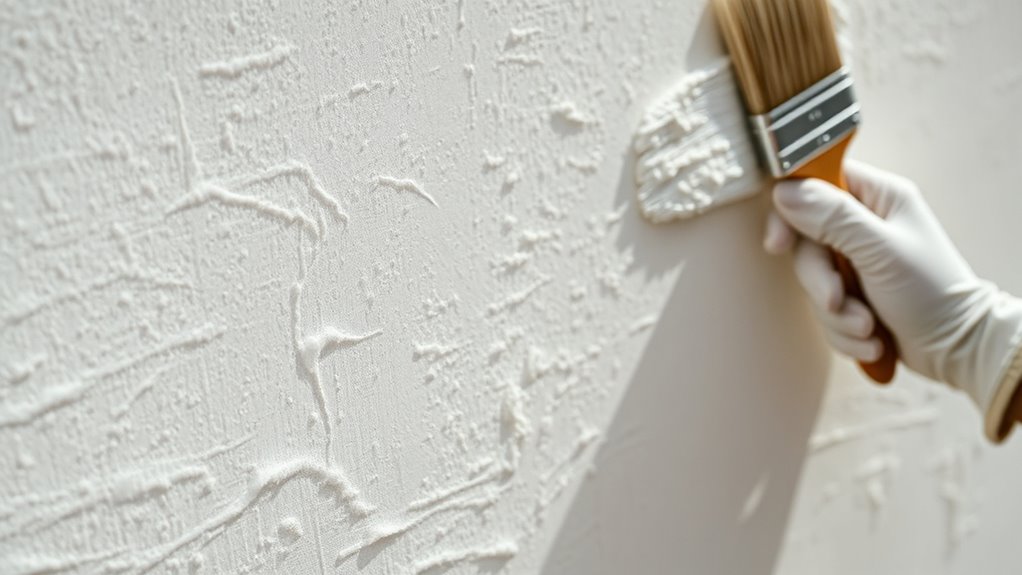

To prep your limewash walls, start by removing loose paint, dirt, and grease with a wire brush or scraper, then wash thoroughly with water and mild detergent. Confirm the surface is completely dry before applying primer or a bonding agent if needed. Mix the limewash to a smooth consistency and apply it in thin, even coats from top to bottom, allowing each to dry for about 24 hours. Keep going to uncover more tips for lasting, beautiful walls.
Key Takeaways
- Remove loose paint, dirt, and grease; clean walls thoroughly with water and mild detergent before applying limewash.
- Ensure walls are completely dry, waiting 24-48 hours post-cleaning, especially in humid conditions.
- Apply a primer or lime-based bonding agent to porous or damaged surfaces for better adhesion.
- Mix limewash thoroughly and apply multiple thin coats evenly from top to bottom, allowing 24 hours between coats.
- Achieve a durable, matte finish that ages beautifully by proper prep, application, and drying time.
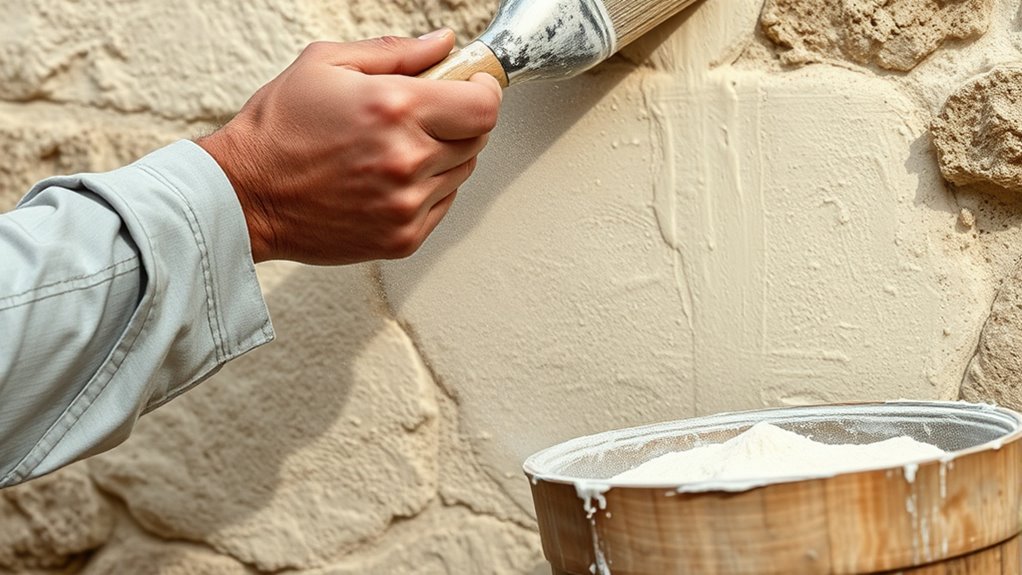
Have you ever considered how limewash walls can transform your space? These walls are more than just visually appealing; they carry a rich historical significance that dates back centuries. Limewash has been used in ancient civilizations, from Roman villas to medieval cottages, symbolizing durability and timeless beauty. When you choose limewash for your walls, you’re connecting your home to this long-standing tradition. Its natural composition means it’s eco-friendly, offering benefits that modern paints can’t match. Lime is a sustainable material, sourced from limestone, and its application involves minimal processing, reducing environmental impact. Additionally, limewash is breathable, allowing walls to release moisture, which helps prevent mold and mildew—an eco-conscious choice that promotes healthier indoor air quality. These qualities make limewash an excellent option if you’re aiming for a sustainable, environmentally responsible home upgrade.
Getting started with prepping your walls is straightforward but essential to guarantee a smooth application. First, remove any loose or peeling paint, dirt, or grease from the surface. Use a wire brush or scraper to clear away old coatings and then wash the walls thoroughly with water and a mild detergent. This step ensures good adhesion later on. If your walls are highly porous or damaged, consider applying a primer or a lime-based bonding agent to create a more uniform surface. Before applying the limewash, make sure the wall is completely dry. Moisture can interfere with the adhesion and curing process, so wait at least 24 to 48 hours after cleaning, especially if you’ve used water or a primer. If your walls are in a humid environment, give them extra time to dry thoroughly.
Once your wall surface is prepped and dry, you’re ready for application. Limewash is typically applied with a brush, roller, or spray, depending on the effect you want. For a traditional, textured look, a brush works best. Mix the limewash thoroughly, ensuring the consistency is smooth but not too runny. Apply the first coat evenly, working from top to bottom, and allow it to dry completely—usually around 24 hours—before applying additional coats. Multiple thin coats build depth and richness in color, while thick coats may crack or peel later. Keep in mind, limewash tends to become more vibrant as it dries and ages, revealing a beautiful matte finish that enhances any space. With proper prep and application, your limewash walls will not only look stunning but also last for years, connecting you to a historic tradition of eco-friendly building practices.
Frequently Asked Questions
Can Limewash Walls Be Painted Over Later?
Yes, you can paint over limewash walls later. Keep in mind that limewash durability varies, so guarantee the surface is clean and properly prepared before repainting. Use appropriate repainting techniques, such as applying a bonding primer if needed, to ensure good adhesion. This approach helps maintain the finish’s longevity and prevents peeling. Repainting limewash walls can refresh their look without damaging the original surface, making it a practical choice.
How Long Does Limewash Last Before Repainting?
Limewash durability can be astonishing—you might think it’ll last forever, but typically, you should plan to repaint every 5 to 8 years. The Repainting timeline varies based on weather and wear, but don’t wait too long, or your walls could look like they’ve seen a century’s storms! Keep an eye on color fading and surface erosion, and you’ll know when it’s time for a fresh coat.
Is Limewash Suitable for Exterior or Interior Walls Only?
You can use limewash on both exterior and interior walls, making it versatile for various projects. It’s ideal if you want to maintain historical authenticity, as limewash has been used for centuries in traditional buildings. Plus, it enhances texture, giving your walls a unique, rustic look. Whether indoors or out, limewash’s breathable qualities help prevent moisture issues, making it a practical and authentic choice for enhancing your space’s character.
What Are the Environmental Benefits of Limewash?
Ironically, choosing limewash benefits the environment. It’s made from eco-friendly materials, reducing chemical runoff and pollution. Plus, it naturally insulates walls, lowering energy consumption. You’ll love how it’s breathable, helping walls stay dry and mold-free without harmful additives. By opting for limewash, you embrace sustainability, improve air quality, and support natural insulation—making your space eco-conscious and stylish, all while doing good for the planet.
Can Limewash Be Applied on Wallpaper or Painted Surfaces?
You can’t apply limewash directly over wallpaper or painted surfaces without proper wall preparation. To guarantee surface compatibility, you need to remove wallpaper and clean the area thoroughly. Sand or prime painted surfaces to create a suitable base. This prep work helps the limewash adhere properly, preventing peeling or cracking. Always test a small area first to confirm compatibility and ensure a smooth, durable finish.
Conclusion
Now that you know how to prep and apply limewash walls, you’re all set to transform your space with a timeless finish. Remember, patience is a virtue—taking your time guarantees the best results. Don’t rush the process or you’ll risk a less-than-perfect look. With careful application, you’ll not only enhance your walls but also create a surface that stands the test of time. Keep your eye on the prize, and your efforts will surely pay off in the end.