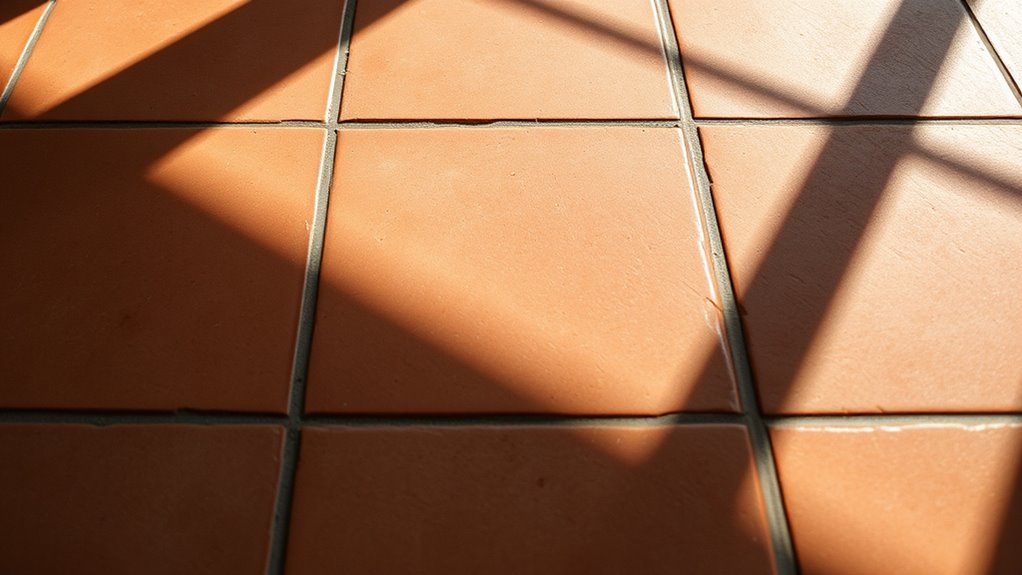

To care for terracotta tiles, start by sweeping or vacuuming to remove dirt, then clean with a pH-neutral cleaner suited for natural stone. Avoid harsh or acidic chemicals to prevent damage. Once clean and dry, you can apply a penetrating sealer to protect against stains and moisture or use a surface sealer for added gloss and easy upkeep. Regular maintenance and re-sealing help preserve their natural look and durability—keep going to discover detailed tips for ideal tile care.
Key Takeaways
- Clean terracotta tiles regularly using a pH-neutral cleaner to remove dirt without damaging the surface.
- Ensure tiles are completely dry before applying a penetrating or surface sealer for optimal adhesion.
- Follow manufacturer instructions carefully when sealing, and use even coatings with brushes or rollers.
- Re-seal periodically, especially in high-traffic or moist areas, to maintain protection and appearance.
- Proper cleaning and sealing practices preserve terracotta’s natural look and extend the tiles’ lifespan.

Terracotta tiles add warmth and rustic charm to any space, but they require proper care to maintain their beauty. One of the most important aspects of caring for these tiles is understanding how to clean them effectively. Regular cleaning techniques involve sweeping or vacuuming to remove loose dirt and debris, preventing grit from scratching the surface. For deeper cleaning, use a pH-neutral cleaner specifically formulated for natural stone or terracotta. Avoid harsh chemicals or acidic cleaners, as they can erode the surface over time. Instead, mop with a damp cloth or sponge, ensuring you don’t oversaturate the tiles, which could lead to water seeping into the porous material. After cleaning, always dry the surface thoroughly to prevent water spots and potential damage. Proper cleaning methods can also help preserve the original appearance of the tiles over time.
Sealing options are equally critical in preserving your terracotta tiles. Because terracotta is a porous material, it’s vulnerable to staining, moisture, and dirt penetration. Applying a high-quality sealer creates a protective barrier that keeps the tiles looking their best. There are different sealing options available: penetrating sealers and surface sealers. Penetrating sealers seep into the tile’s pores, providing long-lasting protection against stains and moisture without altering the natural appearance. Surface sealers, on the other hand, form a thin, protective layer over the surface, which enhances gloss and makes cleaning easier. When deciding on a sealing option, consider the location of your tiles—high-traffic areas or outdoor spaces may require more durable, water-resistant sealers.
Before sealing, make sure the tiles are thoroughly cleaned and completely dry. Any residual dirt or moisture can interfere with the sealer’s adhesion, compromising its effectiveness. Re-sealing is necessary periodically, especially in areas with heavy foot traffic or exposure to moisture, to ensure continuous protection. When applying sealers, follow the manufacturer’s instructions carefully—use a brush, roller, or sponge to apply an even coat and avoid pooling. After sealing, give the tiles ample time to cure before walking on them or exposing them to moisture again. Proper cleaning techniques combined with the right sealing options will keep your terracotta tiles looking vibrant and help extend their lifespan, preserving their natural beauty for years to come.
Frequently Asked Questions
How Often Should Terracotta Tiles Be Resealed?
You should reseal your terracotta tiles every 2 to 3 years, depending on sealing frequency and wear. Keep an eye on the surface; if water no longer beads or the tiles look dull, it’s time for resealing. Following a regular resealing schedule helps protect your tiles from stains and damage. Consistency guarantees your terracotta stays beautiful and durable, so don’t skip those resealing appointments.
Can Terracotta Tiles Be Repaired if Chipped or Cracked?
You can definitely repair a chipped or cracked terracotta tile, but it’s not always simple. You’ll need to carefully perform tile repair and crack fixing, matching the grout and glaze to restore its look. Small chips might be fixed with an epoxy or filler, while larger cracks could require professional attention. Act quickly—delaying repairs could lead to further damage, making the tile harder to restore to its original beauty.
What Cleaning Products Are Safe for Terracotta Tiles?
You should use natural cleaning products that are safe for terracotta tiles, like a mixture of mild soap and water or a pH-neutral cleaner. Avoid harsh chemicals, as they can damage the tile’s surface or affect its sealant. Always check for chemical compatibility before using any product, and test a small area first to make sure it won’t cause discoloration or deterioration. This keeps your tiles looking their best.
How Do I Remove Stubborn Stains From Terracotta?
To remove stubborn stains from terracotta, start with gentle stain removal techniques like mixing baking soda with water to create a paste. Apply it to the stain and let it sit for a few minutes before scrubbing softly with a brush. For tougher stains, consider using a pH-neutral cleaner designed for porous surfaces. Always test a small area first to avoid damage, and rinse thoroughly afterward.
Is It Necessary to Apply a Topcoat After Sealing?
You might wonder if a topcoat is necessary after sealing, but it’s not always required. Applying a topcoat can enhance sealing durability and provide extra protection against stains and wear, especially in high-traffic areas. However, for many installations, sealing alone offers sufficient protection. Consider your tile’s usage and environment—if it faces heavy traffic or moisture, a topcoat could be a wise addition to extend your tile’s lifespan.
Conclusion
With a little care and regular sealing, your terracotta tiles can transform your space into a warm, rustic haven. Imagine walking barefoot across their rich, earthy surface, the soft glow highlighting every crack and hue. By maintaining them properly, you keep that inviting, timeless charm alive—like a cozy cellar or sunlit patio. So, embrace these simple steps, and let your terracotta tiles continue to tell their beautiful, enduring story for years to come.