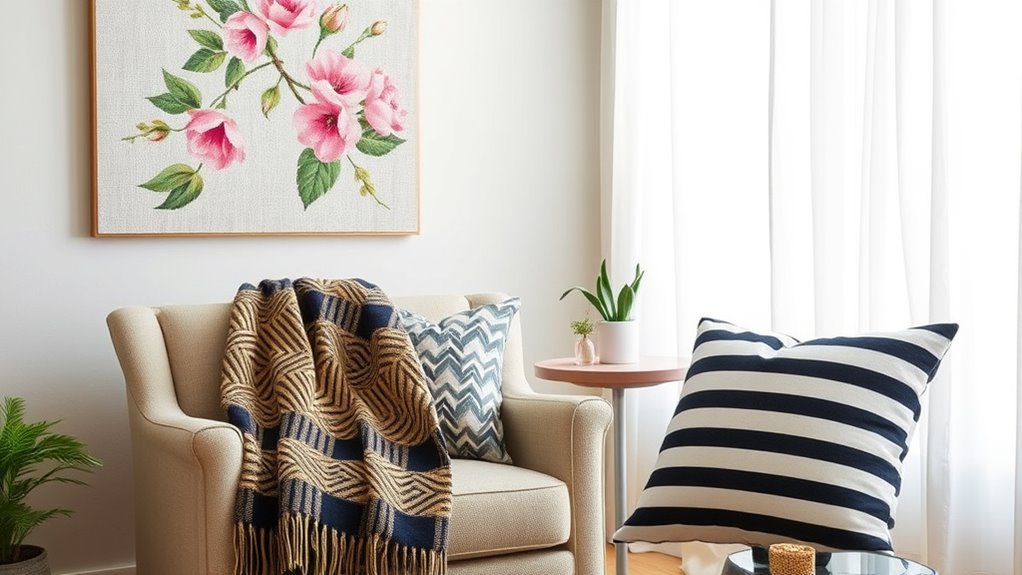

To mix patterns without feeling overwhelmed, focus on balancing textures, colors, and sizes. Use a neutral base or cohesive color palette so patterns complement each other instead of clashing. Pair small, delicate prints with larger bold ones, and keep statement patterns in check with subtle or solid pieces. Maintaining this balance creates a polished look that’s lively yet coordinated. Keep these principles in mind, and you’ll discover simple ways to elevate your style effortlessly.
Key Takeaways
- Pair small, delicate patterns with larger, bolder ones to prevent visual clutter.
- Use a single statement pattern as the focal point, keeping others subdued or solid.
- Coordinate patterns with a shared color palette for harmony and cohesion.
- Mix textures like soft knits with smooth fabrics to add depth without chaos.
- Maintain overall balance by carefully considering scale, color, and pattern placement.
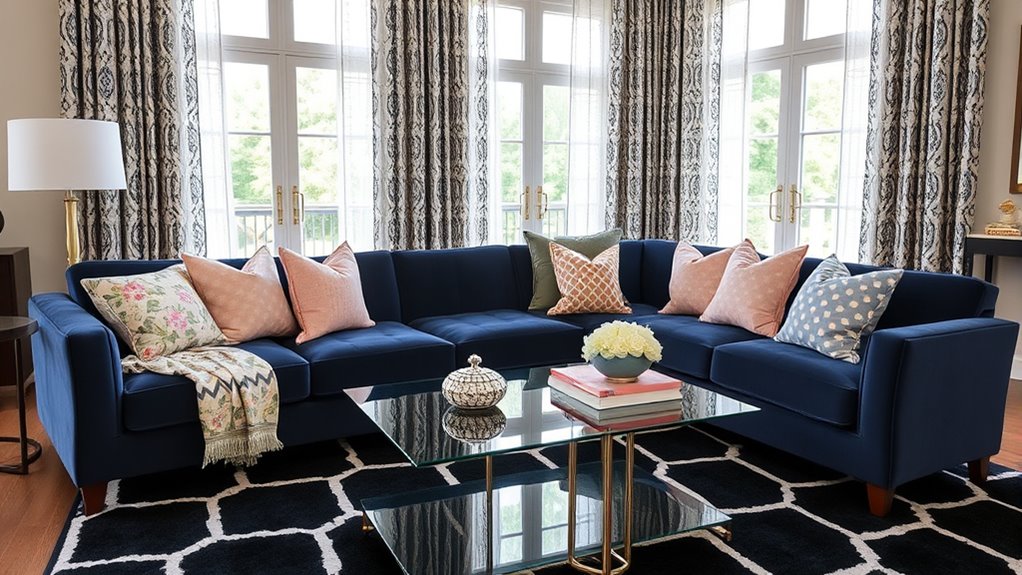
Have you ever wondered how to combine different patterns without overwhelming your outfit? It’s a common concern, especially when experimenting with bold prints. The key lies in mastering the art of texture pairing and color coordination. When you understand how these elements work together, pattern mixing becomes a fun way to express your style rather than a chaotic gamble.
Start by focusing on texture pairing. Mixing patterns with different textures adds depth and keeps your look balanced. For instance, pairing a soft, knitted sweater with a smooth, silk patterned skirt creates a tactile contrast that’s pleasing to the eye. The variation in textures prevents the patterns from clashing and helps your outfit feel cohesive. Think of it like adding layers to a painting; each texture adds a new dimension without competing for attention. When textures complement each other, your outfit appears intentional rather than accidental.
Mix patterns with textures like knits and silk for a balanced, cohesive look.
Color coordination also plays a crucial role. To avoid overwhelming your look, stick to a common color palette or use shades that coordinate well together. For example, if you’re mixing floral and striped patterns, opt for patterns that share a base color like navy or beige. This creates a visual harmony that ties everything together. Alternatively, choosing patterns with contrasting colors but similar tones can produce a striking yet balanced effect. The goal is to find a harmony that guides the eye smoothly across your outfit instead of creating visual chaos.
Another trick is to keep the scale of your patterns in check. Pairing a small, delicate print with a larger, bolder one can prevent the outfit from feeling too busy. When the patterns’ sizes differ, they complement rather than compete with each other. Remember, one pattern can serve as the focal point, while the other supports it. This approach keeps your look interesting without overwhelming your senses.
In addition, choose one pattern to be the statement piece and keep the rest subdued. For example, a patterned blazer paired with solid-colored trousers and a simple top balances the look. This way, the patterned item stands out without making the entire outfit appear chaotic. Accessories can also help—add a patterned scarf or bag that incorporates the same colors as your outfit to create cohesion.
Ultimately, pattern mixing is about balance and intention. When you pay attention to texture pairing and color coordination, you set the stage for an outfit that’s lively, stylish, and effortlessly coordinated. A good understanding of drivetrain components can also help you keep your clothing choices functional and comfortable. With practice, you’ll learn to trust your eye and craft layered looks that are fresh and unique without crossing into overwhelm.
Frequently Asked Questions
How Do I Choose the Right Patterns for My Space?
To choose the right patterns for your space, start with pattern layering by mixing different scales and textures. Keep color coordination in mind—select patterns in complementary or harmonious hues to create a cohesive look. Balance busy and simple designs, so your space doesn’t feel overwhelming. Trust your instincts, and don’t be afraid to experiment. With a thoughtful approach, your pattern choices will add personality without clutter.
Can Pattern Mixing Work in Small Rooms?
Absolutely, pattern mixing can breathe life into your small room without making it feel cramped. Think of pattern scaling like a gentle dance—larger patterns add interest, while smaller ones keep things balanced. Use color coordination to tie different patterns together seamlessly, ensuring they complement rather than compete. With thoughtful placement and a keen eye on scale, you’ll create a vibrant, inviting space that feels cozy rather than cluttered.
What Are Common Mistakes to Avoid When Mixing Patterns?
When mixing patterns, avoid mismatched scales and clashing colors, as these can create visual chaos. You should guarantee the patterns have a matching scale; for instance, pair large prints with smaller ones to maintain balance. Also, prioritize color harmony by sticking to a cohesive palette, which helps patterns complement each other rather than compete. Steer clear of overly busy combinations to keep your space feeling intentional and visually appealing.
How Do I Balance Bold and Subtle Patterns?
To balance bold and subtle patterns, start with a cohesive color scheme to unify your look. Use pattern scale thoughtfully—pair large, bold prints with smaller, subtle ones to avoid visual clutter. Limit your palette to a few colors, and let one pattern be the focal point. This approach keeps your outfit interesting without overwhelming, ensuring a harmonious mix of boldness and subtlety.
Are There Specific Patterns That Clash More Often?
Some patterns clash more often, especially busy prints like florals and geometrics, which can disrupt visual harmony. To avoid pattern clash, pair bold patterns with more subtle ones, and keep a consistent color palette. You’ll find that mixing different scales of patterns also helps. Trust your eye—if something feels off or too chaotic, it’s likely a clash. Balance boldness with subtlety to create a cohesive, harmonious look.
Conclusion
Remember, mastering pattern mixing means more than just matching; it’s about melding and making your unique style. Stay confident, stay creative, and don’t be afraid to experiment. With a little patience and playful persistence, you’ll perfect your personal pattern palette. So, step out boldly, blend bravely, and let your wardrobe whisper your wonderful, wild wardrobe stories. Pattern mixing without overwhelm is possible — it’s your turn to take the stylish, spirited plunge!