
Supporting artisans through fair trade and ethical sourcing in boho marketplaces guarantees they receive fair wages, work in safe conditions, and preserve traditional crafts. By choosing these products, you help sustain cultural heritage, promote sustainable materials, and empower small communities. Engaging with transparent, community-focused markets connects you directly with artisans, fostering trust and social impact. If you want to explore how your choices can create meaningful change, there’s more to discover below.
Key Takeaways
- Supporting fair trade marketplaces ensures artisans receive fair wages, safe working conditions, and sustainable income.
- Ethical sourcing promotes transparency, environmental sustainability, and preservation of traditional craftsmanship and cultural heritage.
- Community-focused marketplaces expand artisans’ reach, foster trust, and encourage cultural exchange through direct buyer relationships.
- Promoting eco-friendly materials and techniques helps protect the environment while supporting artisanal craftsmanship.
- Engaging in cultural education and responsible purchasing sustains indigenous art forms and strengthens community resilience.
The Significance of Fair Trade Practices in Boho Markets

Fair trade practices play a crucial role in shaping authentic and ethical boho markets. When you support fair trade, you’re helping artisans receive fair wages, work in safe conditions, and gain sustainable income, which boosts their communities. Boho markets that focus on ethical sourcing often feature handmade, ethically sourced products that highlight transparency and social responsibility. Certification programs like Fair Trade Federation ensure vendors follow strict standards, emphasizing environmental sustainability and fair labor rights. By backing fair trade, you help preserve traditional craftsmanship and cultural heritage, empowering artisans to continue their techniques. Your choices contribute to global efforts to combat exploitation, reduce poverty, and promote ethical consumerism. Supporting fair trade in boho markets isn’t just a purchase—it’s a step toward positive change. Promoting ethical sourcing ensures that artisans are compensated fairly and that their craft is valued, and it also encourages the adoption of sustainable practices that protect the environment for future generations. Incorporating tea accessories that are produced ethically can further enhance the authenticity and integrity of your purchases. Additionally, understanding the importance of attention in creative practice helps consumers make more informed and responsible choices that support sustainable and fair trade initiatives.
How Artisans Benefit From Community-Focused Marketplaces

Community-focused marketplaces open up new opportunities for you to reach a broader audience and boost your sales. They also guarantee you get fair pay and transparent terms, building trust with your buyers. By participating, you can develop your skills, preserve your traditions, and create a more sustainable livelihood. Additionally, understanding regulatory compliance can help you avoid legal issues and ensure your business operates smoothly.
Increased Market Reach
When artisans participate in community-focused marketplaces, they gain valuable exposure to both local and global audiences, considerably expanding their sales opportunities. This increased visibility means that one purchase can lead to more recognition and long-term relationships. These markets feature curated selections that highlight artisans’ cultural techniques, helping them stand out beyond their immediate communities. Through collaboration, mentorship, and shared marketing efforts, artisans can grow their businesses faster. Attracting conscious consumers who value ethical sourcing and fair trade boosts demand for their products. This broader reach often results in sustainable livelihoods and new partnerships. Additionally, embracing marketplace visibility strategies can further amplify their reach and impact, leveraging psychological principles to foster trust and emotional connections with buyers.
Fair Compensation Opportunities
Participating in community-focused marketplaces guarantees artisans receive wages that truly reflect the value of their craftsmanship. These marketplaces prioritize transparent pricing and equitable profit-sharing, ensuring you’re fairly compensated for your skills and labor. By connecting directly with buyers, you avoid middlemen, allowing you to keep a larger share of the sale revenue. Fair trade certifications and standards upheld by these markets guarantee your work is ethically valued, supporting your livelihood. Additionally, involvement often provides ongoing access to training, resources, and networks that boost your earning potential and economic independence. This fair compensation model not only sustains your craft but also empowers you to grow your skills and build a sustainable livelihood through community-driven initiatives. Recognizing the importance of fair compensation ensures sustainable growth and respect for artisans’ work.
Sustainable Sourcing and Eco-Friendly Craftsmanship

When you choose products with sustainable sourcing, you’re supporting artisans who use ethically obtained materials and fair labor practices. Eco-friendly craftsmanship highlights the use of natural, recycled, or upcycled materials, reducing environmental harm. By learning about these techniques, you can make more conscious choices that promote both cultural preservation and environmental responsibility. Incorporating sound design techniques into your understanding of sustainable practices can further empower you to make impactful, informed decisions. Additionally, understanding expert advice can help you identify authentic eco-friendly products and avoid greenwashing. The increasing integration of automation technologies in supply chains can further improve efficiency and sustainability efforts, encouraging the development of environmentally responsible supply chains.
Ethically Sourced Materials
Ethically sourced materials are key to creating products that uphold fairness and environmental responsibility. When you choose items made from fair trade practices, you’re supporting fair wages, safe working conditions, and artisans’ rights. Sustainable sourcing emphasizes renewable, recyclable, and eco-friendly raw materials, reducing ecological impact during production. Many artisan marketplaces work directly with small farmers and craftspersons worldwide, building trust-based supply chains that benefit communities. Eco-friendly craftsmanship often involves using natural dyes, upcycled components, and low-impact techniques to minimize pollution. Transparency in sourcing processes allows you to verify that products are made ethically and sustainably. By prioritizing ethically sourced materials, you contribute to fairer trade, protect the environment, and support artisans committed to eco-conscious craftsmanship. Responsible sourcing ensures that every step of the production process aligns with ethical and sustainable principles, further supporting positive social and environmental outcomes. Additionally, implementing sustainable sourcing practices can help reduce waste and lower the carbon footprint of production, making a more significant positive impact on the planet. Incorporating ethical supply chains can also foster long-term relationships with artisans and promote community development.
Artisans’ Sustainable Techniques
Artisans who embrace sustainable techniques prioritize eco-friendly practices that reduce environmental impact and support local communities. You’ll notice many use natural dyes from plants, minerals, and insects, creating vibrant, eco-conscious colors. Hand-spinning fibers and harvesting natural materials help minimize waste and energy use, preserving traditional methods. These artisans also focus on ethically sourcing materials, working directly with farmers and suppliers to ensure fair trade and transparency. Techniques like upcycling and repurposing waste materials turn trash into treasures, cutting down landfill waste and promoting circular craftsmanship. Incorporating sustainable sourcing ensures the longevity and integrity of their craft traditions while supporting environmental stewardship. Employing natural dyeing techniques reduces reliance on chemical dyes, further lowering environmental impact. Many artisans also adopt transparency in supply chains to build trust with consumers and uphold ethical standards throughout the production process. By adopting these sustainable practices, artisans not only protect the environment but also empower local economies and preserve cultural traditions, making their crafts not just beautiful but responsible choices for conscious consumers.
Promoting Cultural Preservation Through Handcrafted Goods
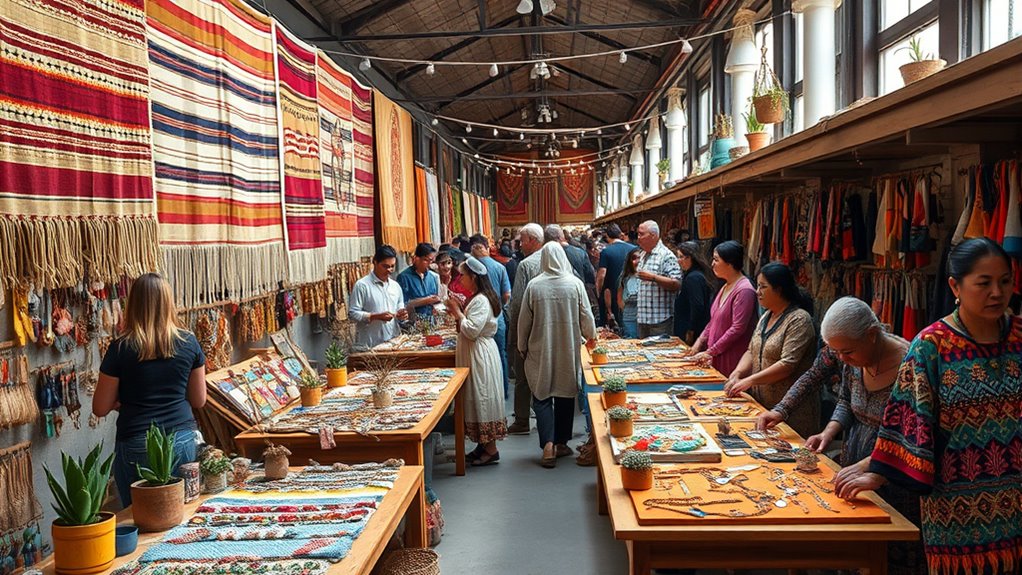
Promoting handcrafted goods plays a crucial role in preserving cultural heritage by keeping traditional techniques alive. When you support artisan-made products, you’re helping sustain indigenous art forms and preventing cultural erosion caused by mass production. Many of these goods showcase regional symbols, patterns, and materials that embody the identity of their communities. Fair trade marketplaces ensure artisans receive fair wages and work under ethical conditions, which helps safeguard cultural practices and community well-being. By choosing handcrafted items, you foster cultural exchange and appreciation, exposing others to diverse artistic traditions worldwide. Your support not only preserves unique craftsmanship but also promotes a deeper understanding of cultural diversity. Incorporating auditory processing strategies can enhance the way these cultural stories and techniques are transmitted and appreciated by future generations. This method can improve cultural transmission and ensure the preservation of traditional knowledge. Additionally, engaging in community-based cultural education programs can further strengthen the connection between artisans and their heritage. Supporting these efforts can also help maintain traditional techniques that are vital to cultural identity. Recognizing the importance of community resilience in sustaining cultural heritage emphasizes how collective efforts can preserve these traditions over time. In this way, your choices directly contribute to the ongoing vitality and recognition of traditional cultures through their handcrafted expressions.
Building Connections: Vendors, Consumers, and Global Impact

Building connections between vendors and consumers is essential for strengthening the impact of boho community markets. When you support artisans directly, you help sustain their livelihoods and promote fair trade practices worldwide. Your choices encourage cultural preservation and economic growth in underserved communities. These relationships boost transparency, ensuring artisans receive fair compensation for their handcrafted products. Many boho markets emphasize social activism and ethical standards, aligning your support with broader global goals. By engaging with vendors, you become part of a cultural exchange that raises awareness about unique artisan techniques and fosters a sense of global community. Emphasizing the importance of Free Floating concepts can further enhance these connections.
Supporting Small Businesses for a More Equitable Future

Have you ever considered how supporting small businesses can create a more equitable future? When you shop locally, you help boost the economy by creating jobs and keeping wealth within your community. Your support also encourages ethical sourcing and fair trade, ensuring artisans are paid fairly for their craftsmanship. By choosing small businesses, you get unique, handcrafted products that showcase local culture and talent. Supporting these vendors strengthens community ties, fostering social cohesion through direct relationships. Plus, investing in small businesses promotes sustainability by reducing environmental impact and encouraging ethical production practices. Every purchase you make can help build a fairer, more inclusive economy. Your choices matter—supporting small businesses isn’t just good for the local economy; it helps create a more just and sustainable future for everyone.
Frequently Asked Questions
How Much Does It Cost to Be a Vendor at the Boho Market?
You’re wondering about the cost to be a vendor at the Boho Market. Typically, booth fees range from $50 to $150 per event, depending on location and size. You should also budget for application fees, usually $10 to $25, and consider additional expenses like insurance, permits, transportation, setup, and branding. Planning ahead guarantees you cover all costs and have a successful market experience.
What Kind of Items Are Sold at a Boho Market?
You’ll find a variety of items at a boho market, including handcrafted jewelry, clothing, and accessories with a bohemian vibe. Vintage and upcycled home decor like tapestries and candles are popular, along with artisan-made gifts such as pottery and textiles. Ethically sourced beauty products, like natural skincare and eco-friendly bath items, also make an appearance. The focus is on unique, handcrafted pieces from small artisans that celebrate creativity and sustainability.
Is Little Market a Fair Trade Company?
Think of The Little Market as a bridge connecting you to fair trade practices. Yes, it’s a fair trade company that works directly with artisans and small farmers worldwide. They follow strict standards, ensuring fair pay and sustainable practices. By supporting them, you’re helping underserved communities and promoting ethical sourcing. As a nonprofit, they prioritize social impact, making sure your purchases empower artisans and sustain their crafts long-term.
Conclusion
By supporting boho communities and marketplaces, you help artisans thrive and cultural traditions flourish. Your choices foster fair trade, sustainable craftsmanship, and a more equitable future. Remember, “a rising tide lifts all boats,” so every purchase you make can ripple outward, empowering small businesses and preserving vibrant cultures. Together, you and these communities can create a world where beauty, fairness, and sustainability go hand in hand.