
In just 10 minutes, you can fix common wardrobe issues by tightening loose hinges and handles with a screwdriver, cleaning dirt and rust from hardware using a damp cloth or rust remover, and realigning doors for smooth operation with a simple push or minor adjustments. Regular maintenance prevents further damage and keeps your wardrobe functioning smoothly. If you want to learn more quick tips to keep your wardrobe in top shape, keep exploring.

Get your wardrobe favorites delivered free — and shop member deals
- Fast, free delivery on millions of items
- Access to Prime Big Deal Days deals on October 6–7
- Prime Video, Amazon Music and more included
Key Takeaways
- Tighten loose hinges and handles with a screwdriver for quick, secure repairs.
- Clean dirt, grime, and rust from hardware and tracks to improve function and appearance.
- Lubricate tracks and rollers with silicone spray to ensure smooth door operation.
- Realign misaligned doors by adjusting hinges or tracks for proper closure.
- Replace broken handles or knobs to refresh wardrobe look and ensure easy access.
A damaged wardrobe can be frustrating, but you don’t need to replace it entirely. Sometimes, a quick fix with the right hardware tools can breathe new life into a piece that seems beyond repair. The key is knowing what small repairs you can handle yourself, especially when you’re pressed for time. With just a few simple steps, you can restore your wardrobe’s functionality and appearance—often in less than a minute.
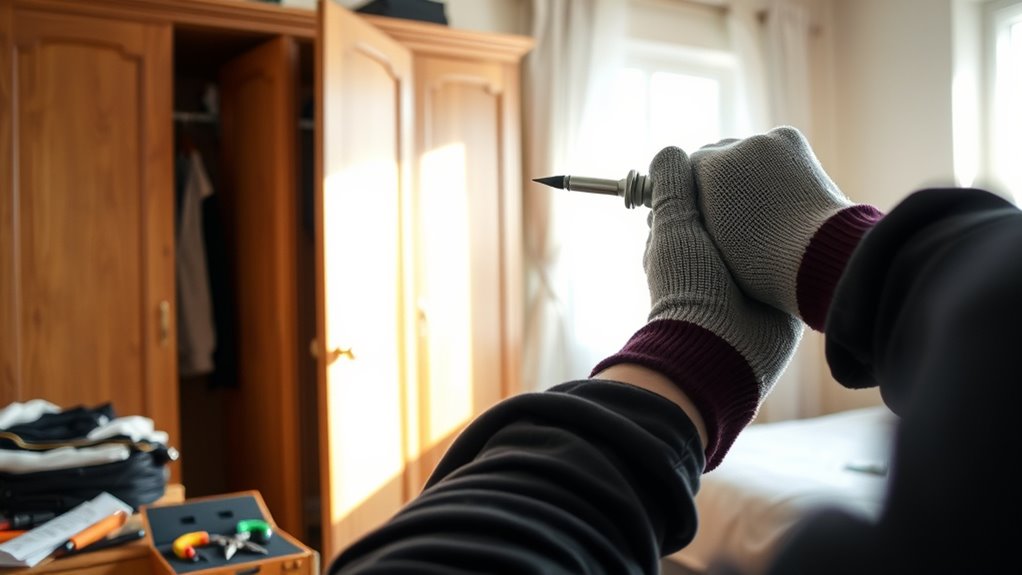
Start by inspecting your wardrobe for loose or squeaky hinges. These are common issues that can be fixed quickly with a screwdriver or a wrench. Grab your hardware tools and tighten any loose screws on hinges or handles. If you notice a hinge is broken or severely bent, replacing it is straightforward—just remove the damaged hinge and attach a new one, which you can find at any hardware store. These small adjustments can prevent further damage and keep your wardrobe functioning smoothly.
Tighten loose hinges and handles to restore your wardrobe’s smooth operation quickly.
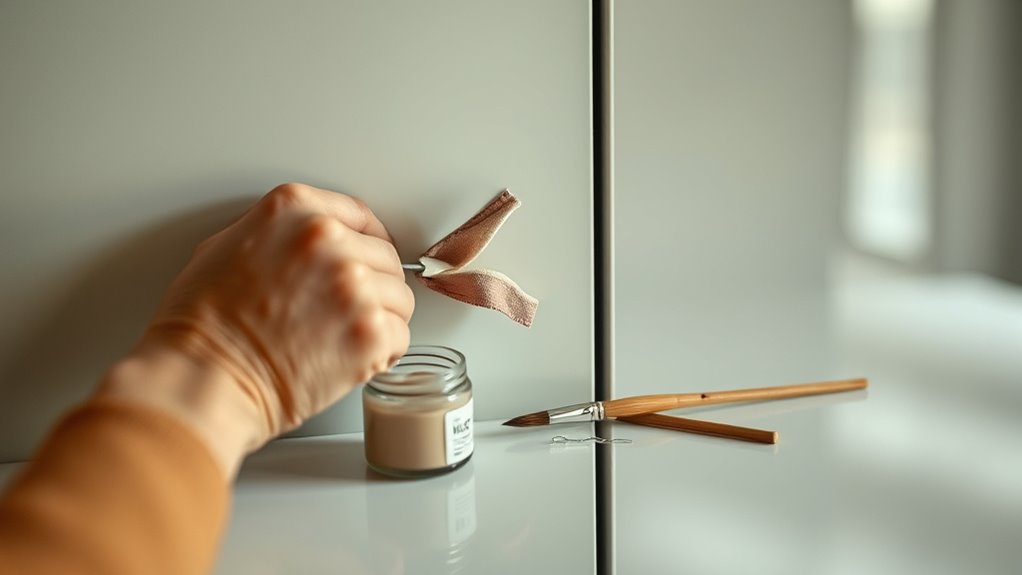
Next, focus on cleaning tips that can improve its look and longevity. Sometimes, dirt and grime build up in the corners and joints, making the wardrobe look dull or sticky. Use a damp cloth or a gentle cleaning solution to wipe down the surfaces, paying special attention to handles, hinges, and tracks. For metal hardware, a bit of rust remover or a quick scrub with a wire brush can work wonders, especially if you notice rust spots on handles or hinges. Keeping these parts clean not only enhances appearance but also prevents corrosion, which can lead to more significant damage down the line. Additionally, understanding contrast ratio can help you assess how well your wardrobe’s finish or surface reflects light, impacting its overall look. Regular maintenance also involves inspecting the hardware for signs of wear, which can help you catch issues early before they become major repairs.
If your wardrobe doors are misaligned or won’t close properly, check the tracks and rollers. Often, debris or dust can cause doors to stick or fall off track. Use a handheld vacuum or a brush to clear away dirt, then lubricate the tracks with a small amount of silicone spray or furniture polish. This simple step can realign the doors and make opening and closing smooth again, often within seconds. In addition, proper hardware tools are essential for ensuring that these repairs are done correctly and safely.
Sometimes, a handle or knob comes loose. Simply tighten the screws with your hardware tools, or replace the handle if it’s broken. This quick fix refreshes the look of your wardrobe and ensures that you don’t have to struggle with a loose grip when opening it. For more stubborn issues, like a warped door or cracked panel, it might require a longer repair, but many minor problems can be resolved swiftly with minimal effort.
In just a minute, you can address several common wardrobe issues, saving yourself time and money. Regular maintenance, using the right hardware tools, and following simple cleaning tips keep your wardrobe in top shape. These quick repairs not only extend its lifespan but also boost your confidence in handling household fixes without needing professional help. Being aware of hardware tools and their proper use can make future repairs even easier and more efficient.
Frequently Asked Questions
Can I Repair a Broken Zipper Without Professional Tools?
Yes, you can fix a broken zipper without professional tools using simple DIY sewing tips. First, assess the damage—if the slider is stuck, try lubricating it with a pencil or soap. For a separated zipper, sew it back with a needle and thread. These clothing care hacks are easy and quick, letting you repair your wardrobe on your own without special equipment, saving you time and money.
What Glue Is Best for Fixing Torn Fabric Quickly?
When it comes to torn fabric, quick fixes are a lifesaver. You want a glue that sticks like glue to paper, so fabric adhesives or quick fix glues are your best bet. They bond strongly and dry fast, giving you a near-instant repair. Look for versatile options like fabric-specific super glues or quick-drying adhesives, and apply sparingly for a seamless, durable fix that keeps your wardrobe looking sharp.
How Do I Resew a Loose Button Efficiently?
For quick fixes like resewing a loose button, start by gathering a needle and matching thread. Thread the needle and tie a knot at the end. Use a simple button sewing technique: push the needle through the fabric from underneath, then through the button’s hole, repeating several times for security. Finish by tying a knot underneath and trimming excess thread. This efficient method keeps your wardrobe looking sharp in no time.
Is It Possible to Fix a Hemline Without Sewing?
You can fix a hemline without sewing by using fabric tape or hem adhesive for a quick hemline adjustment. These adhesives bond the fabric securely, making it a great option for a temporary fix. Alternatively, you can try fabric trimming and using iron-on hem tape for a seamless look. Just measure carefully, cut excess fabric if needed, and apply the adhesive or tape to hold the hem in place.
Can I Repair Peeling Fabric on Clothing Easily?
Peeling fabric might seem like a nightmare, but you can fix it easily. Instead of fussing over sewing, try fabric paint or iron-on patches—they’re quick and effective. Apply fabric paint carefully for small areas, blending in the peeled part. For larger sections, iron-on patches seal the deal, making your clothes look fresh again. These simple solutions turn a wardrobe mishap into a minor fix, saving you time and effort.
Conclusion
Now that you know how easy it is to fix your wardrobe in just 10 minutes, there’s no reason to delay. Did you know that a well-maintained wardrobe can extend its lifespan by up to 30%? Taking small repairs into your own hands not only saves you time and money but also keeps your space looking fresh. So, grab your tools and get started—your wardrobe will thank you for it!
Halloween Picks
halloween
As an affiliate, we earn on qualifying purchases.