
To maximize your thrift store’s profitability, focus on effective pricing strategies like competitive and psychological pricing, and regularly adjust based on demand and seasonality. Manage your inventory carefully by tracking donations, sales, and organizing items for easy browsing. Highlight popular items and clear out slow movers to keep space and cash flow healthy. Keep displays fresh and inviting to attract customers. Keep exploring these techniques, and you’ll find more ways to boost your store’s success.
Key Takeaways
- Research local market prices and use competitive or psychological pricing to attract buyers.
- Regularly track inventory, conduct audits, and organize items by category for efficient sales.
- Offer discounts, bundles, and markdowns on slow-moving stock to increase turnover.
- Rotate displays and keep the store inviting to boost customer interest and retention.
- Build relationships with reliable donors and strategically display high-demand items for maximum profit.
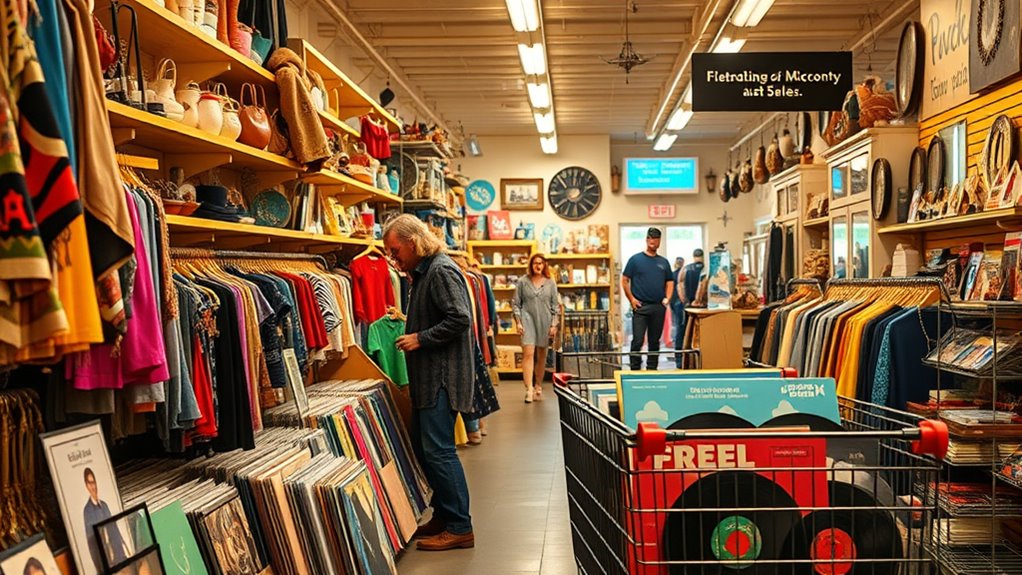
Are you looking to maximize your thrift store’s profitability and attract more customers? One of the most effective ways to do this is by honing your pricing techniques and mastering inventory management. Proper pricing not only encourages sales but also guarantees you’re covering costs and maintaining healthy profit margins. To get this right, start by researching what similar items sell for in your area. Use competitive pricing strategies, such as keystone pricing—doubling the wholesale cost—or employing psychological pricing, like setting prices just below a round number to appeal to buyers. Keep in mind that flexibility is key; be willing to adjust prices based on demand, seasonality, and the condition of items. Offering discounts on slow-moving inventory or bundling items at a special rate can also entice more customers and clear space for new inventory.
Effective inventory management is equally crucial to your success. When you know what’s in stock and where it’s located, you can prevent overstocking or running out of popular items. Implement a system—whether digital or manual—to track incoming donations, sales, and stock levels. Regularly auditing your inventory helps you identify best-sellers, slow movers, and items that may need to be marked down or removed. Keep your store organized so customers can easily find what they’re looking for, which improves their shopping experience and encourages repeat visits. Consider categorizing items by type, size, or season, and rotate displays to highlight different sections regularly. This not only keeps your store fresh but also prompts customers to explore more sections, increasing the chance of purchases. Additionally, understanding bank hours and holiday schedules can help you plan staffing and sales events more effectively, ensuring your store remains accessible when customers are most likely to visit.
Another aspect of inventory management is sourcing quality donations and establishing relationships with reliable suppliers. Accepting a diverse range of items ensures your inventory appeals to a wide audience. Be selective about what you display prominently; high-demand items should be front and center, while less desirable pieces can be stored for clearance sales. Combining smart inventory management with strategic pricing creates a cycle that boosts sales, clears space for new stock, and maximizes profit. Remember, the goal is to keep your store well-stocked with appealing items at prices that attract customers and generate sustainable revenue. By fine-tuning your pricing techniques and maintaining tight control over your inventory, you position your thrift store for long-term success and growth.
Frequently Asked Questions
How Do I Identify Valuable Items in a Thrift Store?
You can identify valuable items in a thrift store by inspecting vintage clothing for unique tags, quality fabric, and good condition. Look for antique furniture with solid wood construction, intricate details, and recognizable styles. Check for wear, markings, or labels that indicate rarity. Trust your intuition and research items online to determine their worth. With practice, you’ll quickly spot hidden gems like vintage clothing and antique furniture that can bring in great profits.
What Are the Best Days to Shop for Deals?
You should shop for deals on donation days and during seasonal discounts. Donation days often mean stores are enthusiastic to clear out inventory, so you might find better deals. Seasonal discounts, like end-of-season clearances, also offer significant savings. Plan your visits around these times to maximize your chances of snagging valuable items at lower prices. Being strategic with your shopping schedule helps you get the most for your money.
How Can I Negotiate Prices Effectively?
Negotiating prices is like playing a game—you need sharp tactics. Start with price comparison to understand the item’s true value, then use polite negotiation tactics like asking if there’s a discount for cash or bulk purchase. Be confident but respectful, and don’t be afraid to walk away if the price isn’t right. Your confidence can often persuade the seller to offer you a better deal.
Which Thrift Store Sections Yield the Highest Profit?
You’ll find the highest profit in sections like vintage clothing and antique furniture. Vintage clothing sells well because there’s a strong demand for unique, retro pieces, especially if you spot authentic brands and trends. Antique furniture also offers big margins since shoppers seek quality and character. Focus on these sections, assess condition and authenticity, and price wisely to maximize your profits. These areas are your best bets for lucrative thrift store finds.
How Do I Build Relationships With Thrift Store Staff?
You build relationships with thrift store staff by volunteering regularly and helping with store inventory management. When you volunteer, you show your commitment and reliability, making staff more likely to trust you. Engage in friendly conversations, ask about their needs, and offer assistance during busy times. Over time, your consistent presence and teamwork foster strong relationships, opening doors for better deals, early access to new inventory, and insider tips on profitable items.
Conclusion
Implementing these thrift store strategies can turn your humble shop into an unstoppable retail empire, rivaling the giants of the industry. With your keen eye for gems and a savvy approach, you’ll attract customers from miles around, making sales that seem almost magical. Remember, your thrift store isn’t just a shop; it’s a treasure trove of possibilities waiting to explode into unparalleled success. Get ready to redefine what’s possible in the world of secondhand retail!