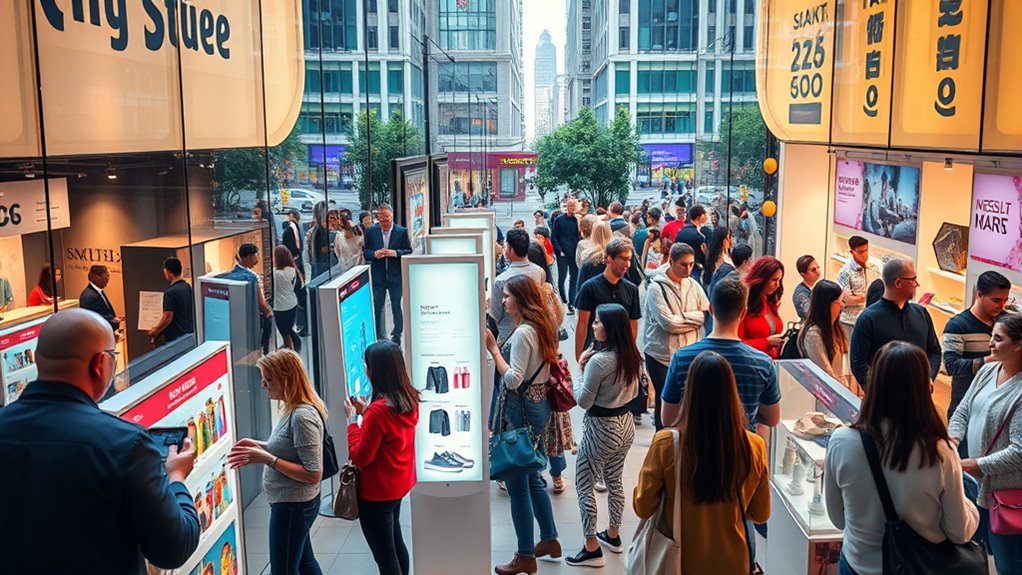

Omnichannel: Clicks to Bricks lets you enjoy seamless shopping experiences, blending online and in-store environments. You can switch effortlessly between digital and physical stores, with synchronized inventory, personalized offers, and options like buy online, pick up in-store. This approach builds trust through consistent branding and faster service, making shopping more convenient. If you’re curious about how digital integration is transforming retail, you’ll find plenty more insights ahead.
Key Takeaways
- Omnichannel strategies blend online and physical shopping to provide seamless, flexible customer experiences.
- Digital integration connects all touchpoints, enabling real-time updates and synchronized inventory and customer data.
- Personalized recommendations and targeted offers enhance customer engagement across both digital and brick-and-mortar channels.
- Features like buy online, pick up in-store (BOPIS) simplify shopping and reduce friction for consumers.
- Consistent branding and reliable service across all channels build trust and prepare retailers for future multi-channel innovations.
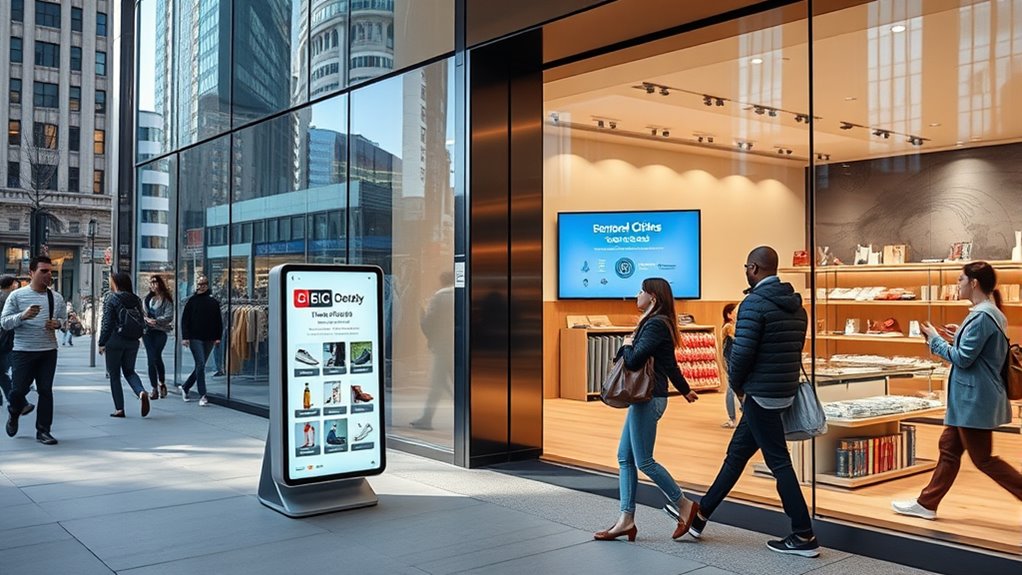
In today’s retail landscape, the lines between online and brick-and-mortar shopping are blurring as businesses embrace omnichannel strategies. This shift means you’re no longer confined to a single shopping experience; instead, you can seamlessly switch between digital and physical stores. To succeed in this environment, retailers focus heavily on digital integration—connecting all touchpoints so your journey feels unified. This involves syncing inventory systems, customer data, and marketing channels to create a cohesive experience. When a retailer’s online store, mobile app, and physical location work in harmony, you benefit from real-time updates, personalized offers, and smooth transactions regardless of how you choose to shop.
Customer personalization plays a pivotal role in this integrated approach. Retailers analyze your shopping habits, preferences, and purchase history to craft tailored experiences. You might receive personalized product recommendations based on your browsing behavior or targeted promotions that match your style. This level of customization makes you feel valued, encouraging loyalty and repeat business. As you move through different channels, the retailer’s system recognizes you and adapts, ensuring a consistent and relevant experience at every touchpoint. This isn’t just about marketing; it’s about genuinely understanding your needs and preferences to enhance your overall shopping journey.
Digital integration also empowers you to leverage features like buy online, pick up in-store (BOPIS), or view in-store inventory online. When you check product availability online and pick up your purchase in person, it saves time and reduces frustration. Retailers that effectively implement digital integration make it easier for you to navigate between channels, creating a frictionless experience. This interconnectedness means your data flows securely across platforms, enabling accurate personalization and inventory management, so products are available when and where you want them.
Moreover, this approach benefits you by providing consistent branding and messaging. Whether you’re browsing on your phone, tablet, or in the store, the look and feel remain familiar. You can expect the same quality of service, personalized offers, and product information no matter how you access the retailer. This consistency builds trust and makes your shopping experience more satisfying. As retailers continue to refine their digital integration and customer personalization efforts, you’ll find shopping increasingly effortless, engaging, and tailored to your unique preferences. The future of retail isn’t just about having multiple channels but making them work together seamlessly for you.
Additionally, understanding arcade machines and their mechanics can inspire innovative retail experiences, such as integrating nostalgic gaming elements into physical stores to attract and engage customers.
Frequently Asked Questions
How Can Small Retailers Implement Omnichannel Strategies Effectively?
You can implement omnichannel strategies effectively by focusing on seamless inventory management, ensuring your online and in-store stock levels are synchronized. Invest in staff training so your team can assist customers across channels confidently. Use digital tools to track customer preferences and purchase history, creating a personalized shopping experience. By integrating these elements, you’ll provide consistent service, boost sales, and build stronger customer loyalty, even as a small retailer.
What Are the Biggest Challenges in Integrating Online and Offline Channels?
Balancing the dance between online and offline channels can feel like steering a shifting tide. Your biggest challenges include aligning inventory management so stock levels stay harmonious across platforms and ensuring staff training keeps everyone in sync. You might find it tricky to unify customer data or maintain consistent branding. But with patience and strategic planning, you can turn these hurdles into opportunities for seamless integration and a richer shopping experience.
How Does Omnichannel Impact Customer Loyalty and Retention?
You’ll see that omnichannel boosts customer loyalty and retention by delivering personalized experiences across all touchpoints. When you guarantee brand consistency, customers feel more connected and confident in your brand, encouraging repeat business. By seamlessly integrating online and offline channels, you make shopping convenient and enjoyable, which keeps customers coming back. This unified approach builds trust and strengthens relationships, ultimately increasing long-term loyalty and retention.
What Technologies Are Essential for Successful Omnichannel Retail?
You need AI integration and data analytics to succeed in omnichannel retail. These technologies help you understand customer behaviors, personalize experiences, and streamline operations across channels. With AI, you can offer smarter recommendations and automate responses, while data analytics reveal insights into buying patterns. Together, they enable you to create seamless, engaging shopping experiences that boost customer satisfaction, loyalty, and retention, making your omnichannel strategy more effective and competitive.
How Do Omnichannel Strategies Vary Across Different Industries?
Ever wondered why strategies differ across industries? You’ll find that industry-specific personalization shapes your approach—retail might focus on seamless online-to-in-store experiences, while hospitality emphasizes real-time booking integrations. Cross-channel analytics help you understand customer behavior uniquely tailored to each sector. By adapting these tools, you deliver relevant experiences that resonate with your audience, making your omnichannel efforts more effective and engaging, regardless of industry differences.
Conclusion
So, seize the synergy of seamless shopping, blending the best of both worlds. By bridging the bounds between clicks and bricks, you create a mesmerizing customer experience that’s convenient and compelling. Embrace the evolution, enhance engagement, and elevate your enterprise. Remember, in this dynamic dance of digital and physical, adaptability is your advantage. Stay savvy, stay strategic, and let your omnichannel efforts turn clicks into committed, satisfied customers who keep coming back.