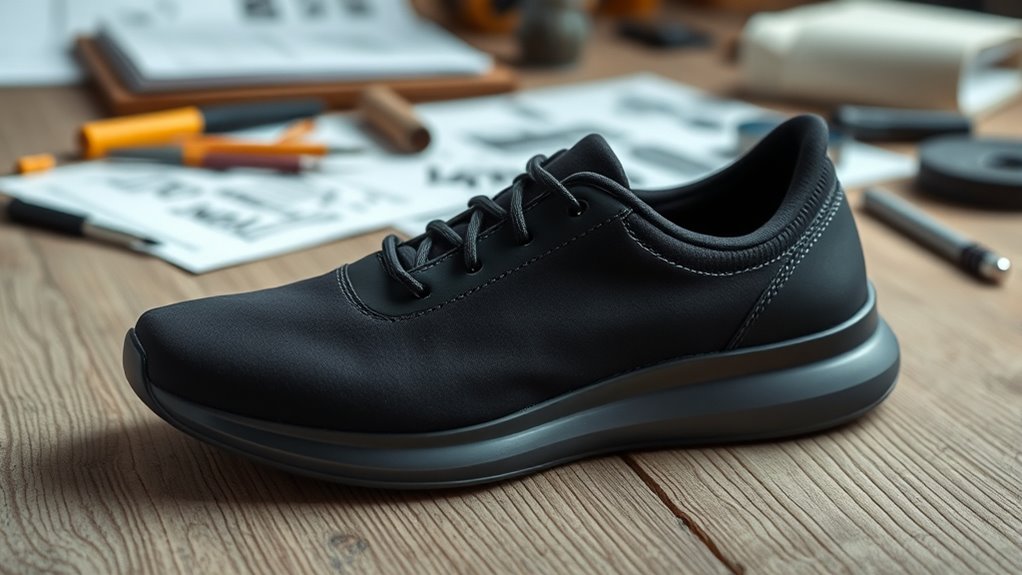

To start your footwear design journey, focus on researching sustainable materials like recycled fabrics and biodegradable soles that blend style with eco-friendliness. Incorporate ergonomic features such as arch support and cushioned insoles to guarantee comfort. Experiment with combining appealing aesthetics with functional support, keeping your target audience in mind. Prioritize understanding the story behind your designs to create shoes that stand out. If you continue exploring, you’ll uncover how to master these foundational elements for successful footwear creation.
Key Takeaways
- Research sustainable materials and ergonomic innovations tailored to target customer preferences.
- Experiment with combinations of aesthetic and functional elements to develop balanced footwear designs.
- Incorporate storytelling to emphasize ethical production, style, and comfort in your footwear brand.
- Utilize AI tools for customer insights and design optimization throughout the development process.
- Focus on mastering foundational design principles to create stylish, comfortable, and eco-friendly shoes.
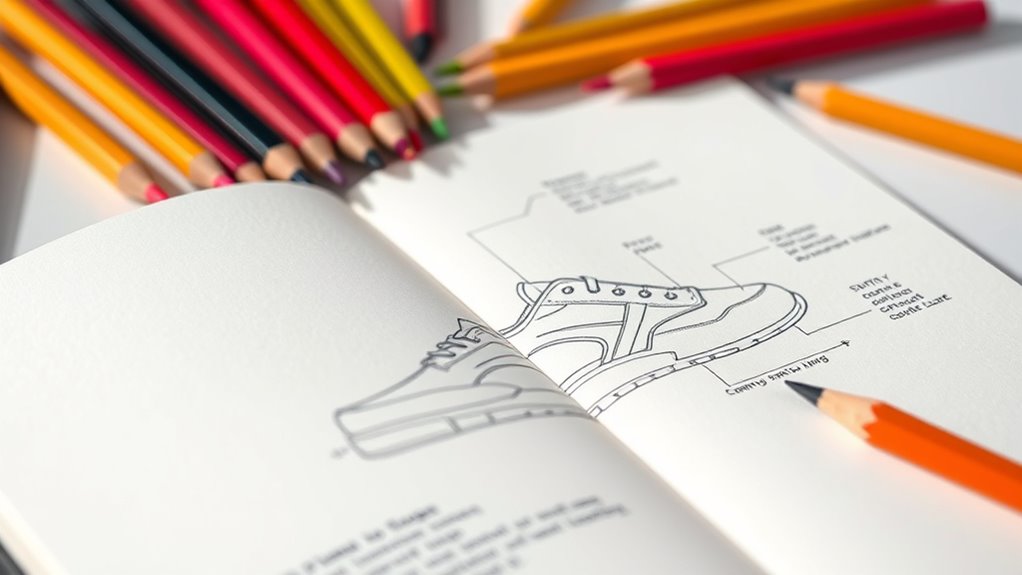
Have you ever wondered what makes a pair of shoes both stylish and comfortable? It’s a combination of thoughtful design choices and innovative materials that work together seamlessly. When you’re exploring footwear design, understanding how sustainable materials and ergonomic features play a essential role can truly elevate your creations. Sustainable materials, like recycled fabrics, plant-based leathers, and biodegradable soles, are becoming indispensable in modern footwear. By choosing eco-friendly options, you’re not only reducing environmental impact but also adding a layer of appeal for consumers who prioritize sustainability. These materials often require careful consideration in terms of durability and aesthetic quality, but they can be just as stylish as conventional ones when selected thoughtfully. Incorporating sustainable materials into your designs shows a commitment to responsible production, which is increasingly important in today’s eco-conscious market.
Equally indispensable are ergonomic features, which focus on how the shoe interacts with the wearer’s foot. You need to think about the natural shape of the foot, pressure points, and movement patterns. When you incorporate ergonomic features, like arch support, cushioned insoles, and flexible midsoles, you enhance comfort greatly. These elements help prevent fatigue, reduce pain, and promote better posture, making your shoes more appealing for everyday wear. You should also consider the overall fit, ensuring that the shoe accommodates different foot shapes and sizes. Using data from foot scans or customer feedback can inform your designs to improve comfort and support. Remember, a stylish shoe that’s uncomfortable won’t satisfy your customers in the long run. By balancing aesthetics with ergonomic considerations, you create footwear that’s both attractive and functional.
The process involves blending these two aspects seamlessly. For example, choosing sustainable materials that also lend themselves to ergonomic design—like memory foam insoles made from recycled materials—can be a game-changer. You want your shoes to stand out visually but also provide the support and comfort that keep people coming back. When designing at an entry level, start by researching the latest sustainable materials and ergonomic innovations. Experiment with different combinations to find what works best for your target audience. Keep in mind that the story behind your shoes matters: consumers increasingly look for products that are stylish, comfortable, and ethically made. Incorporating insights from AI in Business can help you analyze customer preferences and optimize your designs efficiently. By mastering these foundational elements, you’re well on your way to creating footwear that resonates on multiple levels, setting the stage for a successful design journey.
Frequently Asked Questions
What Skills Are Essential for Aspiring Footwear Designers?
You need strong skills in the design process and material selection. Understand how to create innovative and functional footwear, balancing aesthetics with comfort. Being able to sketch, use CAD software, and select suitable materials is essential. You should also be able to analyze trends, collaborate with teams, and test prototypes. These skills help you develop products that meet consumer needs and stand out in the competitive footwear industry.
How Long Does It Take to Become Proficient in Footwear Design?
You can become proficient in footwear design within 1 to 3 years, depending on your dedication. During this time, you’ll master the design process and material selection, gaining hands-on experience. Consistent practice, learning industry tools, and understanding trends accelerate your progress. Engaging in internships or projects helps solidify your skills, so stay committed, seek feedback, and continuously refine your craft to become confident in designing innovative footwear.
What Software Tools Are Commonly Used in Footwear Design?
Like a painter’s palette, the tools you’ll use in footwear design are varied. You’ll rely on software like Rhino and Adobe Illustrator for 3D modeling and sketching, while Clo3D helps visualize designs in realistic detail. For material sourcing, you’ll use databases and CAD tools to select fabrics and soles. These programs streamline your workflow, making your ideas come alive and helping you craft the perfect shoe.
How Can I Build a Professional Footwear Portfolio?
To build a professional footwear portfolio, showcase your best designs that highlight sustainable materials and ergonomic considerations. Include detailed sketches, 3D models, and prototypes to demonstrate your process. Add project descriptions explaining your material choices and how you prioritize comfort. Keep your portfolio organized and visually appealing, updating it regularly with new work. This approach emphasizes your skills and commitment to innovative, sustainable footwear design, making you stand out to employers.
What Are the Biggest Challenges in Entry-Level Footwear Design?
You face big hurdles in entry-level footwear design, often unexpectedly. Material sourcing can be tricky, as finding quality resources within budget is a constant challenge. Manufacturing logistics also test your patience, requiring coordination with suppliers and factories. Balancing creativity with practical constraints pushes you to innovate under pressure. Embracing these obstacles helps you grow, turning initial setbacks into valuable learning experiences that shape your future in footwear design.
Conclusion
Now that you understand the basics of footwear design, remember that starting with simple projects helps build your skills. For example, designing a basic sneaker for a local brand allowed a beginner to learn about materials, comfort, and aesthetics. Stay curious, keep experimenting, and don’t be afraid to make mistakes. Your journey into footwear design is just beginning—embrace each step, and you’ll turn your ideas into wearable art that makes a difference.