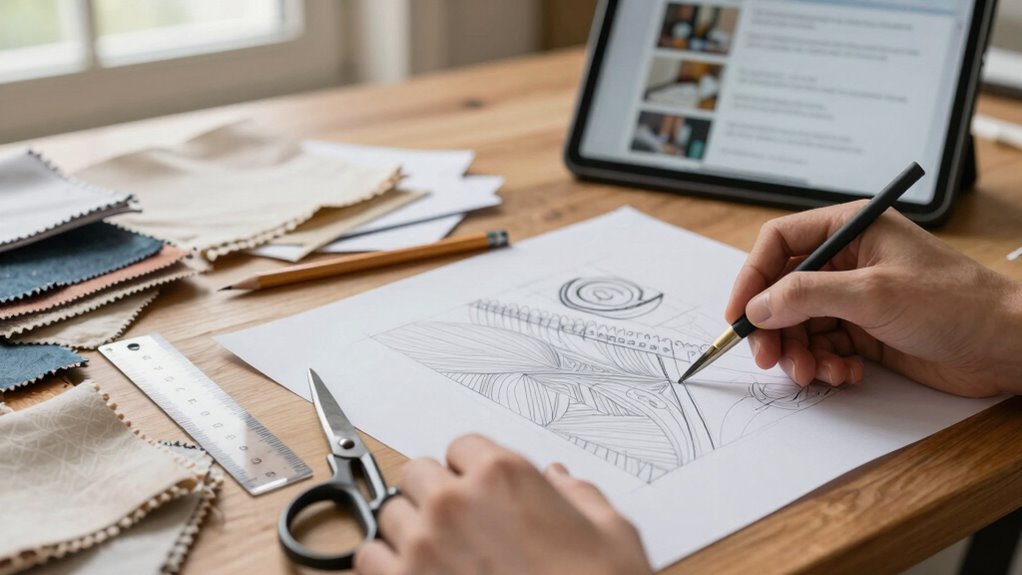

You can learn pattern drafting at home by using online tutorials, pattern drafting books, and YouTube channels to guide your practice. Start with simple patterns like bodices or skirts, and experiment with altering darts and seams to improve your skills. Use tools like rulers, French curves, and pattern paper for precision. Regularly practice creating and modifying patterns to understand fit and proportions. Keep exploring different resources; there’s always more to discover as you develop your craftsmanship.

Get your wardrobe favorites delivered free with Prime
- Fast, free delivery on millions of items
- Prime Video, Amazon Music and more included
- Member-only deals all year
Key Takeaways
- Utilize online tutorials, video courses, and pattern drafting books to learn techniques at your own pace.
- Practice drafting simple patterns like bodices and skirts to build foundational skills.
- Invest in essential sewing tools and organize them for accurate and efficient pattern creation.
- Experiment with pattern modifications and test garments to improve fit and craftsmanship.
- Join online sewing communities or forums for feedback, tips, and support from fellow learners.
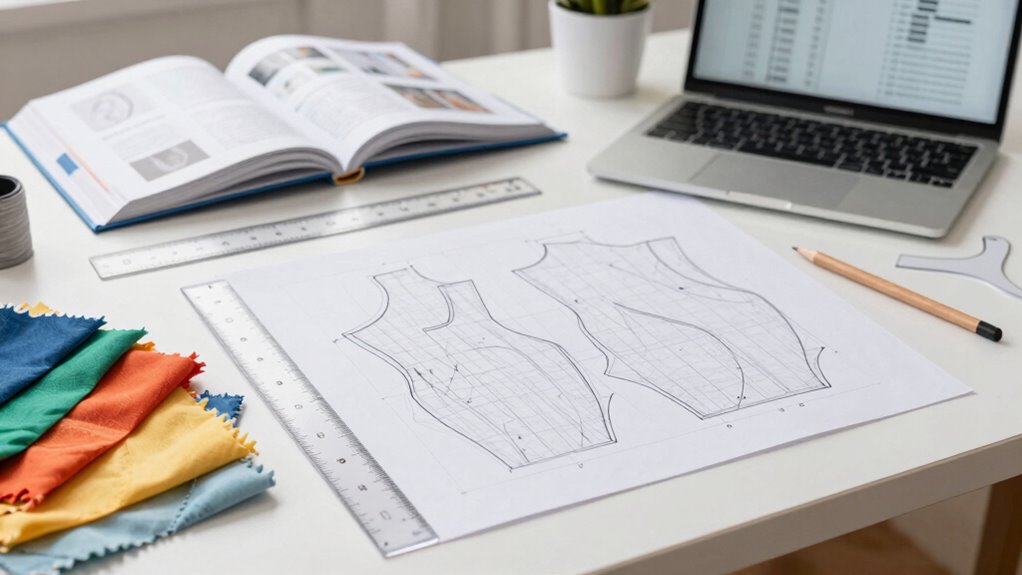
Have you ever wondered how professional designers create perfectly fitted garments? It starts with understanding pattern drafting, a skill that transforms your ideas into tangible clothing. You don’t need to attend design school to master this craft; you can learn it on your own by immersing yourself in the fundamentals and practicing diligently. The first step is to familiarize yourself with fabric selection, which is vital because the type of fabric influences how a pattern will turn out. Soft, lightweight fabrics like chiffon or silk behave differently from sturdy materials like denim or canvas. When you choose your fabric, consider the garment’s purpose, drape, and ease of sewing. This knowledge guides you in making smarter pattern adjustments and guarantees your finished piece aligns with your vision. Understanding fabric behavior can help you anticipate how different materials will respond during cutting and sewing. Additionally, recognizing how different fabrics stretch or shrink can aid in creating more accurate patterns. Gaining insight into fabric properties can also help prevent common sewing mistakes and improve your overall craftsmanship. Being aware of fabric stretch and recovery is especially important when working with knits or stretch fabrics, as it directly impacts pattern fitting and garment comfort.
Once you’ve selected your fabric, you need the right sewing tools. Basic tools like measuring tapes, rulers, French curves, and pattern paper are essential for drafting accurate patterns. Scissors—both fabric scissors and paper scissors—must be sharp and well-maintained to make clean cuts. Pins and weights help keep pattern pieces in place on the fabric, guaranteeing precision during cutting and sewing. Investing in a good set of marking tools, such as fabric chalk or marking pencils, will help you transfer pattern markings accurately. As you learn, keep your tools organized so you can focus on the drafting process without interruptions. With the appropriate tools and fabric knowledge, you’ll find it easier to understand how patterns are constructed and how to manipulate them. Developing a systematic approach to organizing your tools can significantly improve your efficiency and precision. Familiarity with pattern drafting techniques can further enhance your ability to create well-fitting garments from scratch.
Having the right tools and keeping them organized makes pattern drafting more precise and enjoyable.
Next, start with simple patterns to develop your skills. Trace basic blocks, such as a bodice or skirt, and experiment with altering darts, seams, and hemlines. Use online tutorials, pattern drafting books, and YouTube channels dedicated to DIY fashion design. Practice is key—measure your body carefully, draft initial patterns, and then sew test garments to see how adjustments affect the fit. As you gain confidence, you can move on to more complex designs, refining your technique with each project. Keep a notebook of your experiments, noting what works and what doesn’t, so you can learn from each attempt. Over time, you’ll develop an intuitive understanding of how fabric behaves and how to adapt your patterns accordingly. Consistent practice and pattern modification will help you become more skilled at tailoring garments to fit perfectly. Remember, developing an eye for proportion and fit is essential for creating garments that look professional and feel comfortable.
As an affiliate, we earn on qualifying purchases.
Frequently Asked Questions
What Materials Do I Need to Start Pattern Drafting at Home?
To start pattern drafting at home, you need basic drafting tools like rulers, measurements tape, and pattern paper. Choose fabric that’s easy to work with, such as muslin or cotton, for practice. These materials help you refine your skills without expensive investments. Focus on understanding your measurements and experimenting with drafting techniques, and you’ll develop your pattern skills steadily. Having the right tools and fabric makes the process smoother and more enjoyable.
How Long Does It Typically Take to Become Proficient?
It usually takes about six months to a year to become proficient in pattern drafting if you dedicate consistent effort—your progress might be faster than you think! Immerse yourself in fashion history and pattern terminology to deepen your understanding. Practice regularly, and you’ll notice your skills transforming into a well-oiled machine. Remember, mastery is a journey, not a sprint, so stay patient and persistent, and you’ll craft incredible designs in no time.
Are There Online Resources or Courses Recommended for Beginners?
Yes, you can find excellent online resources for beginners. Look for virtual tutorials on platforms like YouTube or dedicated pattern drafting websites, which offer step-by-step guidance. Joining online communities or forums allows you to ask questions, share progress, and get feedback. These resources provide practical tips and support, making it easier to learn pattern drafting at your own pace without attending a formal school.
Can Pattern Drafting Be Self-Taught Without Prior Sewing Experience?
Like Leonardo da Vinci sketching his masterpieces without formal art school, you can master pattern drafting without prior sewing experience. Start with basic techniques and gradually explore advanced techniques as you grow confident. Focus on fabric selection and understanding how different materials behave. With patience, practice, and online tutorials, you’ll develop your skills, transforming raw ideas into tailored designs—proof that self-teaching can be both rewarding and achievable.
How Do I Troubleshoot Fitting Issues in My Patterns?
To troubleshoot fitting issues, start by analyzing where the pattern doesn’t fit well, such as tightness or gaping. Use fitting adjustments like adding or removing seam allowances, darts, or ease. Make pattern modifications accordingly, such as blending lines or adjusting the shoulder slope. Always create a muslin or test garment first to see how your changes affect the fit, then refine until your pattern fits comfortably and looks polished.
Conclusion
You’ve now unlocked the secret garden of pattern drafting, where each stitch and dart becomes a stepping stone towards your sewing mastery. Remember, learning at home is like tending a garden—patience and practice help your skills blossom. Keep experimenting, stay curious, and don’t be afraid to make mistakes; they’re just the weeds from which your talent will grow. Before long, your designs will bloom beautifully, turning your sewing dreams into a colorful reality.
Halloween Picks
halloween
As an affiliate, we earn on qualifying purchases.