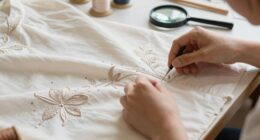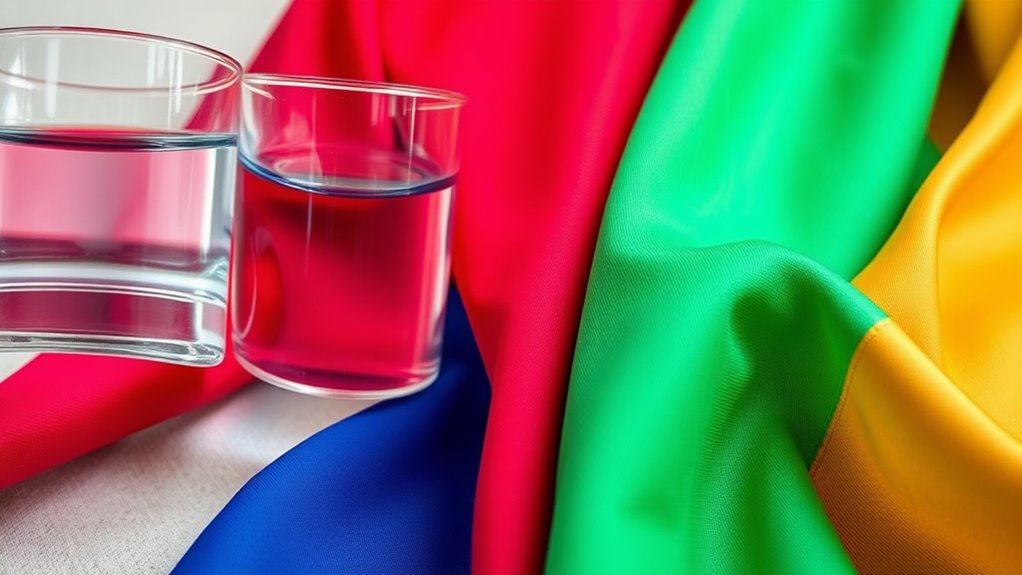
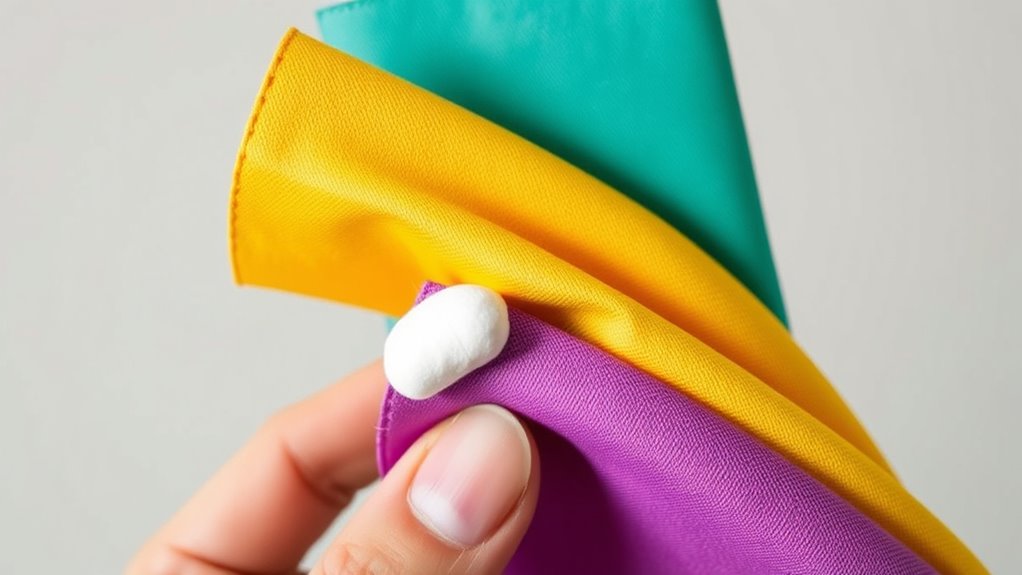
To test fabric colorfastness at home, try rubbing a white cloth or cotton swab gently on the fabric to check for dye transfer. You can also expose a small piece of fabric to direct sunlight for several hours to see if it fades. Additionally, rub firmly with a white cloth to mimic wear and tear. If you want to learn more about these simple tests and how to interpret results, keep exploring the options available.
Key Takeaways
- Perform a fabric dye transfer test by rubbing a damp white cloth on an inconspicuous area to check for dye bleeding.
- Conduct a light exposure test by leaving the fabric in direct sunlight for several hours to observe fading or color change.
- Use a white cloth to rub firmly along the fabric surface to see if dye transfers, indicating potential colorfastness issues.
- Understand how UV exposure affects dye stability and take protective measures to prevent fading over time.
- Know your fabric type and care instructions to choose suitable cleaning methods that preserve colorfastness.
Colorfastness tests are essential for determining how well a fabric or dye resists fading or bleeding when exposed to various conditions such as washing, light, or rubbing. If you’re working with new fabrics or attempting to restore or care for your clothing, understanding colorfastness helps you decide how to handle your items to prevent unwanted color transfer or damage. Conducting simple tests at home allows you to assess whether a fabric is suitable for regular washing or if special care is needed, especially when it comes to fabric dyeing or stain removal.
When testing for colorfastness, start by selecting a small, inconspicuous area of the fabric—such as inside a hem or seam. Dampen a white cloth or cotton swab with water or a mild detergent solution. Gently rub the fabric in a small circle, applying light pressure, to see if any dye transfers onto the cloth. This method helps you evaluate whether the dye is likely to bleed during laundry or when exposed to moisture, which is vital for stain removal. If dye doesn’t transfer, your fabric is probably colorfast in terms of washing; if it does, you’ll want to be cautious during cleaning to avoid staining other garments or surfaces. Additionally, knowing about fabric dye stability can help you better understand how dyes respond to different conditions and improve your fabric care routine.
Another simple test involves exposing your fabric to light. Place the fabric in direct sunlight for a few hours to observe any fading. This is especially useful for delicate or vibrant fabrics used in fabric dyeing projects, as prolonged exposure to sunlight can cause dyes to fade. If the color remains vibrant, you can be more confident in its durability. Conversely, fading indicates that the fabric may require additional protective measures, like storing out of direct light or using protective coatings. Recognizing the impact of UV exposure on dyes can help prolong the life of your fabrics and maintain their appearance over time.
Rubbing tests are also helpful for evaluating colorfastness. Take a white cloth and rub it firmly along the fabric’s surface, then check for any dye transfer. This test mimics the common wear and tear fabrics experience during everyday use. If dye smudges onto the white cloth, it suggests the fabric isn’t colorfast, which is particularly relevant when dealing with fabrics that have been recently dyed or when trying to remove stains without causing further color loss. Additionally, understanding the technology behind different fabrics can help you choose the most suitable cleaning methods to preserve their colorfastness over time. Being aware of these fabric compositions can guide you in selecting proper cleaning techniques to extend the life of your textiles.
Frequently Asked Questions
Can I Test All Fabric Types for Colorfastness at Home?
You might wonder if you can test all fabric types for colorfastness at home. While some testing methods work well for cotton or polyester, others may not be appropriate for delicate or specialty fabrics. Always consider the fabric type before testing. Use simple at-home testing methods like the vinegar or soap test for common textiles, but for delicate or expensive fabrics, professional testing guarantees accurate results without damage.
How Often Should I Perform Colorfastness Tests on My Clothes?
Did you know that nearly 60% of clothes are discarded sooner due to color fading? To extend your garment’s lifespan, you should test colorfastness regularly—about once every few months or after washing with new detergents. Testing frequency depends on how often you wear and wash your clothes. Doing these simple checks helps you catch fading early, keeping your wardrobe vibrant and your clothes looking new longer.
Are Homemade Solutions as Reliable as Professional Testing Methods?
DIY dye tests with homemade solutions can give you a quick idea of colorfastness, but they aren’t as reliable as professional testing methods. Chemical solutions used in labs are designed for accuracy, while homemade tests might be affected by variables like water temperature or concentration. If you want definitive results, it’s best to rely on professional testing, but for a general check, DIY dye tests can be helpful.
What Safety Precautions Should I Take During At-Home Tests?
Think of safety precautions like a shield you wear. Always use protective gear such as gloves and goggles to prevent skin and eye irritation. Keep a well-ventilated space, and have cleanup procedures ready, like paper towels or rags, to handle spills safely. Avoid ingesting or inhaling chemicals, and wash your hands thoroughly afterward. These steps help keep your at-home testing safe and effective, like a smooth, worry-free process.
Can Colorfastness Tests Indicate if Colors Will Fade Over Time?
Colorfastness tests can give you a good idea if colors will fade over time by checking dye stability. If a fabric passes these tests, it’s less likely to experience color fading with washing or exposure to sunlight. However, it’s not foolproof, so regular care and proper maintenance are still necessary to maintain the fabric’s original color. Conducting these tests helps you choose more durable, long-lasting textiles.
Conclusion
Now that you know how to test your fabrics’ colorfastness at home, you hold the key to protecting your wardrobe. Think of these tests as your secret shield—guarding against unexpected fading and color transfer. With just a few simple steps, you’re empowered to guarantee your clothes stay vibrant and beautiful longer. So go ahead, take control and make fading a thing of the past—because your favorite pieces deserve to stay just as stunning as the day you bought them.