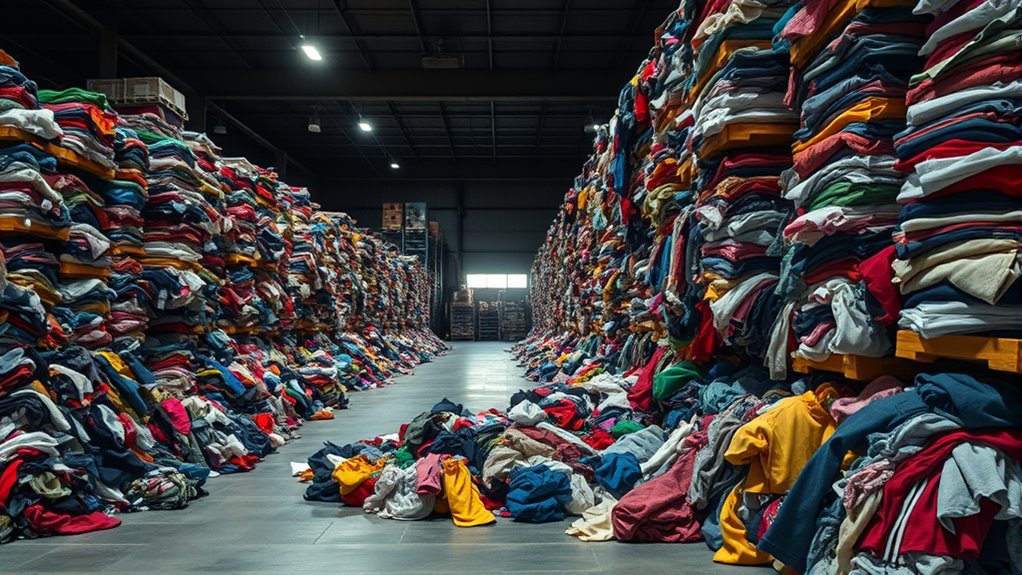

Fast fashion returns come with hidden costs that threaten the environment and clog supply chains. Each returned item increases transportation, adds to landfill waste, and releases microplastics into ecosystems. Companies often cut corners by mishandling disposal or overproducing, which worsens pollution. Your return habits directly impact resource use and waste. To understand how these small choices have big effects and discover ways to reduce harm, keep exploring what lies beneath the surface.
Key Takeaways
- Fast fashion returns increase transportation and warehousing, leading to higher carbon emissions and environmental degradation.
- Returned items often end up in landfills or secondary markets, contributing to waste and microplastic pollution.
- The logistics of handling returns strain supply chains, causing inefficiencies and greater resource consumption.
- Cost-cutting in disposal and recycling of returned goods can harm environmental standards and sustainability efforts.
- High return rates promote overproduction, intensifying resource extraction and environmental harm associated with fast fashion.
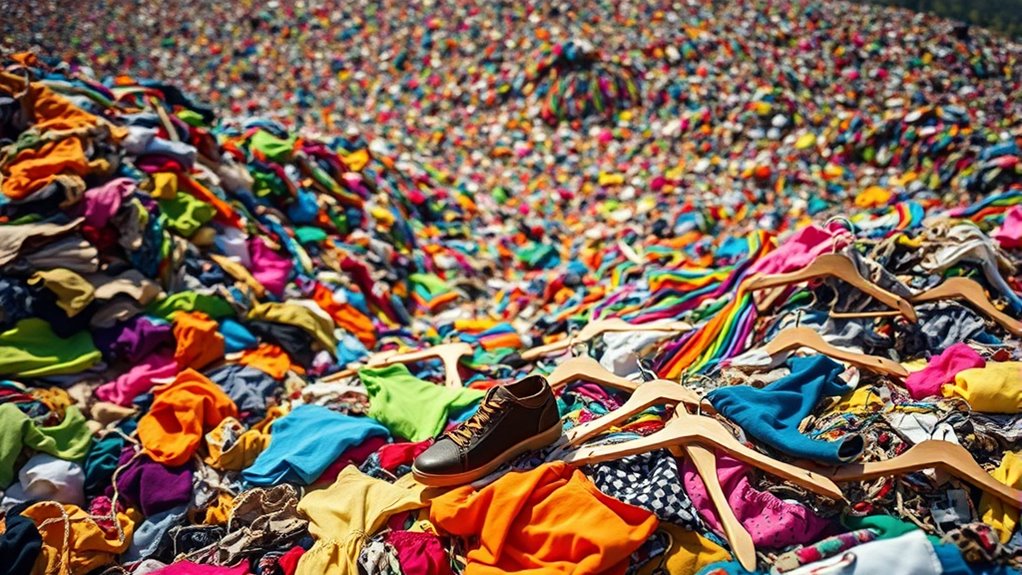
Despite the initial appeal of affordability and trendy designs, fast fashion is increasingly facing a wave of returns from consumers who’re reconsidering its impact on the environment and their wallets. When you return fast fashion items, it’s not just your wardrobe that feels the ripple effects. The supply chain impacts become evident as companies scramble to process returns, often leading to logistical complications and increased costs. These returns require additional transportation, warehousing, and handling, which in turn contribute to higher carbon emissions. The environmental footprint of fast fashion is already significant — from water consumption to waste generation — and returns amplify this damage. Every piece that’s sent back is another step in a cycle of resource use, pollution, and landfill contribution.
You might think returning an item is a simple process, but behind the scenes, it burdens the entire supply chain. Retailers have to reroute these products, often moving them across continents, which increases fuel consumption and greenhouse gas emissions. Many returned items are not resold as new but are instead discarded or sent to secondary markets, further adding to waste and pollution. This cycle exacerbates the environmental footprint of fast fashion, making it a less sustainable choice than you might assume. Additionally, the high rate of returns can lead to overproduction, as companies attempt to replenish stock quickly to meet consumer demand, further fueling environmental degradation.
The environmental costs don’t stop at logistics. Manufacturing fast fashion items already involves intensive resource extraction, with cheap materials and rapid production cycles. When you return these items, it often means they won’t be resold as new, leading to wasted materials. Some pieces might be discarded, ending up in landfills where synthetic fibers can take decades to degrade, leaching microplastics into ecosystems. The sheer volume of returns aggravates the waste problem, turning what seems like a minor inconvenience into a major environmental concern. Moreover, the supply chain’s complexity makes it difficult to trace the origin and lifecycle of these returned items, further complicating environmental efforts. Companies also face challenges in managing the environmental impact of these returns due to the lack of transparency in their supply chains.
Furthermore, the pressure to handle returns efficiently can lead companies to cut corners, sometimes at the expense of environmental standards. To offset costs, they may choose less sustainable methods of disposal or recycling. As a consumer, your return could indirectly contribute to these practices, fueling a cycle of environmental degradation. The more you return, the more the supply chain struggles to manage these products sustainably, making fast fashion’s environmental footprint even more pronounced.
In essence, when you decide to return a fast fashion item, you’re not just changing your wardrobe—you’re affecting a complex system that impacts the environment and the planet’s resources. It’s worth considering the full lifecycle of what you buy, from production to disposal, to truly grasp the cost of fast fashion returns. Understanding the environmental impact of supply chains can help consumers make more sustainable choices and reduce unnecessary returns.
Frequently Asked Questions
How Do Fast Fashion Returns Impact Local Garment Workers?
When you return fast fashion items, it often leads to overproduction and increased waste, impacting local garment workers. This cycle can fuel labor exploitation and wage theft, as brands push for cheaper prices and faster turnaround times. Your returns contribute to this demand, putting pressure on workers who may face unsafe conditions and unfair pay. By being mindful of your purchases, you help reduce these negative effects and support fairer labor practices.
Are There Eco-Friendly Alternatives to Fast Fashion Returns?
Think of eco-friendly returns as planting seeds for change. You can choose brands that use sustainable packaging and eco-friendly logistics, reducing waste and pollution. Opt for stores that encourage minimal returns or offer virtual try-ons, cutting down the environmental footprint. By making these mindful choices, you’re turning your shopping habits into a powerful act of preservation, helping protect our planet while still enjoying the latest styles.
What Are the Hidden Costs of Shipping Returned Items?
When you engage in return shipping, you might not realize the hidden costs involved. Each return adds to packaging waste, as companies often use additional materials to protect items during transit. The environmental impact of transportation also increases, leading to higher carbon emissions. These hidden costs can profoundly affect the planet, and by being mindful about returns, you help reduce unnecessary packaging waste and minimize the environmental footprint associated with your shopping habits.
How Can Consumers Reduce the Environmental Impact of Returns?
To reduce the environmental impact of returns, you can be more eco-conscious in your shopping habits. Opt for brands that prioritize sustainable packaging and eco-conscious shipping methods. Before returning items, consider if you really need to send them back, and try to consolidate multiple returns into one. These steps help minimize waste and reduce carbon emissions, making your shopping more sustainable and environmentally friendly.
Do Return Policies Vary Significantly Between Brands?
Imagine browsing your favorite store, only to find wildly different return policies. Return policy disparities are common, with some brands offering generous return windows and free returns, while others impose strict deadlines or fees. These brand return variations impact your shopping experience and environmental footprint. By understanding these differences, you can make smarter choices, reducing waste and supporting brands that prioritize sustainable, customer-friendly return policies.
Conclusion
Fast fashion returns may seem simple, but they hurt the planet, drain your wallet, and waste your time. Every item sent back, every shipment made, adds to the environmental toll, the financial burden, and the cycle of overconsumption. By choosing wisely, by reducing returns, and by supporting sustainable brands, you can break this cycle. Remember, your choices matter—your actions can make a difference for the planet, for your wallet, and for a more mindful future.