
Fabric pilling happens when tiny fuzzballs form on the surface due to fiber breakage and rubbing, especially with synthetic fabrics like polyester or nylon. To prevent pills, choose tightly woven, high-quality fabrics, and avoid rough activities or harsh laundry routines. Regularly remove pills with a fabric shaver or comb, and use gentle detergents. If you want to keep your textiles looking their best longer, there’s more to explore about effective strategies and fixes that can help.
Key Takeaways
- Pilling occurs when fiber fuzzballs form on fabric surface due to fiber breakage and entanglement, especially in synthetics.
- Prevent pilling by choosing high-quality, tightly woven fabrics and avoiding rough laundry activities.
- Shedding fibers fall off the fabric, while pilling involves fiber balls staying on the surface; proper care minimizes both.
- Regularly remove pills with fabric shavers or gentle brushing to maintain fabric appearance.
- Proper washing techniques and fabric conditioners reduce friction, slowing pilling and prolonging fabric lifespan.
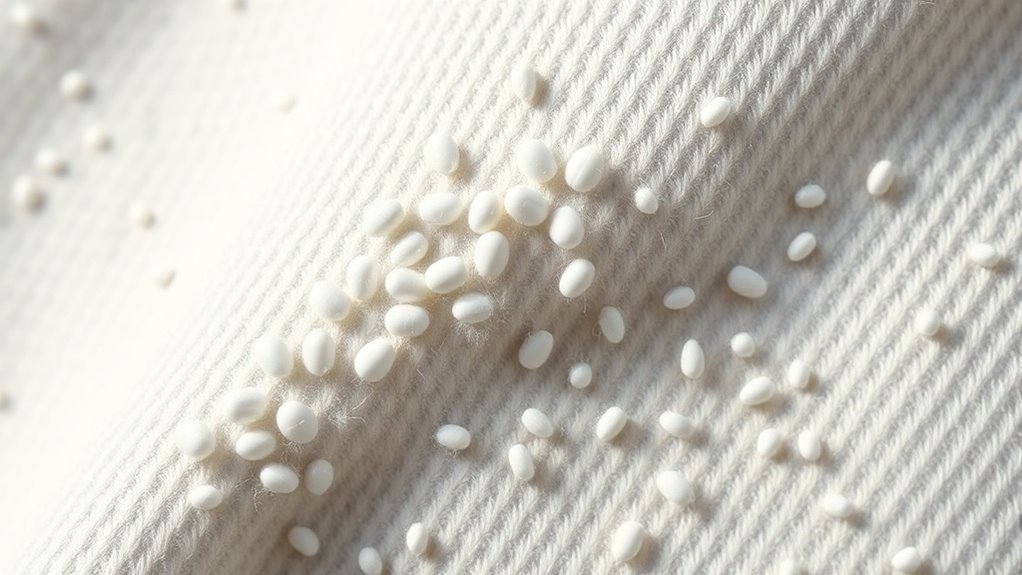
Fabric Pilling
Have you ever noticed tiny balls forming on your clothing or upholstery? Those small fuzzballs are a common issue known as fabric pilling, and understanding why they appear can help you prevent and fix them. Pilling occurs because of the way different fiber types respond to friction and wear. Natural fibers like cotton, wool, and silk tend to pill less than synthetic fibers such as polyester, nylon, and acrylic. This is because synthetic fibers often have shorter strands or fibers that are more prone to breaking off and forming pills when rubbed against other surfaces. Some fabrics combine fibers, making the pilling process more complex. For example, blends of cotton and polyester can pill differently than pure fabrics. Recognizing the type of fiber your clothing is made of can help you anticipate whether pilling might happen and how to treat it.
A common confusion arises between pilling and shedding. While both involve loose fibers, they are distinct processes. Pilling involves the formation of small balls on the surface of the fabric due to fiber breakage and entanglement. Shedding, on the other hand, refers to fibers coming loose from the fabric entirely, often seen as lint or fuzz accumulating on clothing or laundry. Shedding is more about fibers detaching and being lost from the material, whereas pilling involves fibers breaking but remaining on the surface. Knowing this difference helps you choose the right approach to care for your fabrics. Pilling can often be minimized by selecting fabrics with longer fibers and tighter weaves, which are less susceptible to fiber breakage. Conversely, shedding can sometimes be reduced by washing garments inside out, using gentle detergents, and avoiding over-drying, which can weaken fibers. Additionally, understanding fiber types can guide you in choosing more durable fabrics that resist pilling over time. Proper fabric choice is crucial, as some materials are inherently more resistant to pilling than others.
Prevention starts with understanding your fabrics. Opt for high-quality, tightly woven materials, and consider avoiding overly abrasive activities that increase friction, like vigorous scrubbing or using rough laundry brushes. Regularly inspect and maintain your clothes and upholstery, removing pills early with a fabric shaver or a fine-tooth comb. For existing pills, gently shaving or brushing the surface can smooth out the fabric. Keep in mind that some pills are inevitable over time, especially on frequently worn or washed items, but proper care can notably prolong the appearance of your fabrics. Using fabric conditioners can also help reduce friction during washing, thereby decreasing pilling. Keep in mind that some pills are inevitable over time, especially on frequently worn or washed items, but proper care can notably prolong the appearance of your fabrics. Ultimately, understanding the differences between fiber types, pilling, and shedding empowers you to select better fabrics and care routines, keeping your clothing and furniture looking newer longer. Developing a fabric maintenance routine can significantly extend the life and appearance of your textiles.
Frequently Asked Questions
Can Pilling Occur on All Fabric Types Equally?
Pilling doesn’t happen equally on all fabric types. Fiber types play a big role; natural fibers like cotton and wool tend to pill more than synthetic ones, but some synthetics can also pill easily. Fabric finishes matter too, as smooth, tightly woven fabrics resist pilling better than loosely woven or textured ones. So, your choice of fiber and finish influences how much pilling you’ll see over time.
Does Washing Machine Type Affect Fabric Pilling?
Your washing machine type can definitely influence fabric pilling. Different machines use varying washing cycles and agitation levels, which can cause more or less pilling. Using harsh cycles or aggressive agitation can loosen fibers, leading to pilling. Also, the choice of detergent types matters; some detergents contain abrasives or enzymes that can weaken fibers. To minimize pilling, opt for gentle cycles and mild detergents designed for delicate fabrics.
How Does Fabric Color Influence Pilling Visibility?
Think of fabric color as a mirror reflecting its hidden story. Lighter colors tend to hide pilling better, making it less visible, while darker shades like navy or black reveal pills more easily. Fabric dyeing and color fading influence this visibility; vibrant, well-dyed fabrics mask pilling longer, but as colors fade over time, pills become more noticeable. So, choosing the right color can help you maintain a neater look longer.
Are There Eco-Friendly Solutions to Prevent Pilling?
You can choose eco-friendly treatments and sustainable fibers to prevent pilling. Look for fabrics made from organic cotton, hemp, or recycled materials, which are less prone to pilling and better for the environment. Some eco-friendly treatments, like natural enzyme washes or plant-based solutions, help strengthen fibers and reduce pilling. By opting for these sustainable options, you actively contribute to eco-conscious fashion while keeping your clothes looking newer longer.
How Long Does It Take for Pilling to Develop?
Imagine wearing your favorite sweater, and suddenly, tiny fuzz balls start appearing after a few wears. The pilling timeline varies depending on fabric type, usage, and care, but generally, pilling develops within a few months. Your fabric’s lifespan impacts how quickly pills form, with more delicate fibers pilling faster. Regular gentle washing and proper storage can slow down this process, helping your clothes stay smoother longer.
Conclusion
Now that you understand fabric pilling, think of your clothes as a garden in full bloom. With proper care, gentle handling, and smart choices, you can keep your wardrobe looking fresh and vibrant, free from unwanted fuzz balls. Remember, pilling is like weeds trying to take over your beautiful garden—fight it early and often. By staying vigilant and caring for your fabrics, you’ll enjoy a wardrobe that stays lush, soft, and inviting for years to come.